
One cut, many kitchens: cow feet in Nigerian, Caribbean, Congolese and Surinamese cooking
Cow feet, the foot and lower leg of cattle called bokoto, turn up across many diaspora kitchens. Igbo cooks make nkwobi. Nigerians and Ghanaians make pepper soup. Caribbean kitchens make cow foot soup, cow heel soup and souse. Congolese cooks make pieds de boeuf, and Surinamese homes drop them into soup. One cut, many kitchens.
Why one cut shows up in so many kitchens
Cow feet are the foot, the trotter and the lower leg of cattle. Mostly bone, hoof, tendon, cartilage and skin, with almost no muscle meat on them. What you are really buying is collagen. Cook it slowly and the collagen breaks down into gelatine. That is what gives a pot of soup its full, sticky body and what gives stock a depth no amount of seasoning can fake.
In our trade the name most people use is bokoto, Yoruba for cow foot or cow leg. In English you will hear cow foot, cow feet, cow leg, beef feet, beef trotters, cow's trotter, cow heel, cow hoof, and in the Caribbean, bull foot. Different words, same cut.
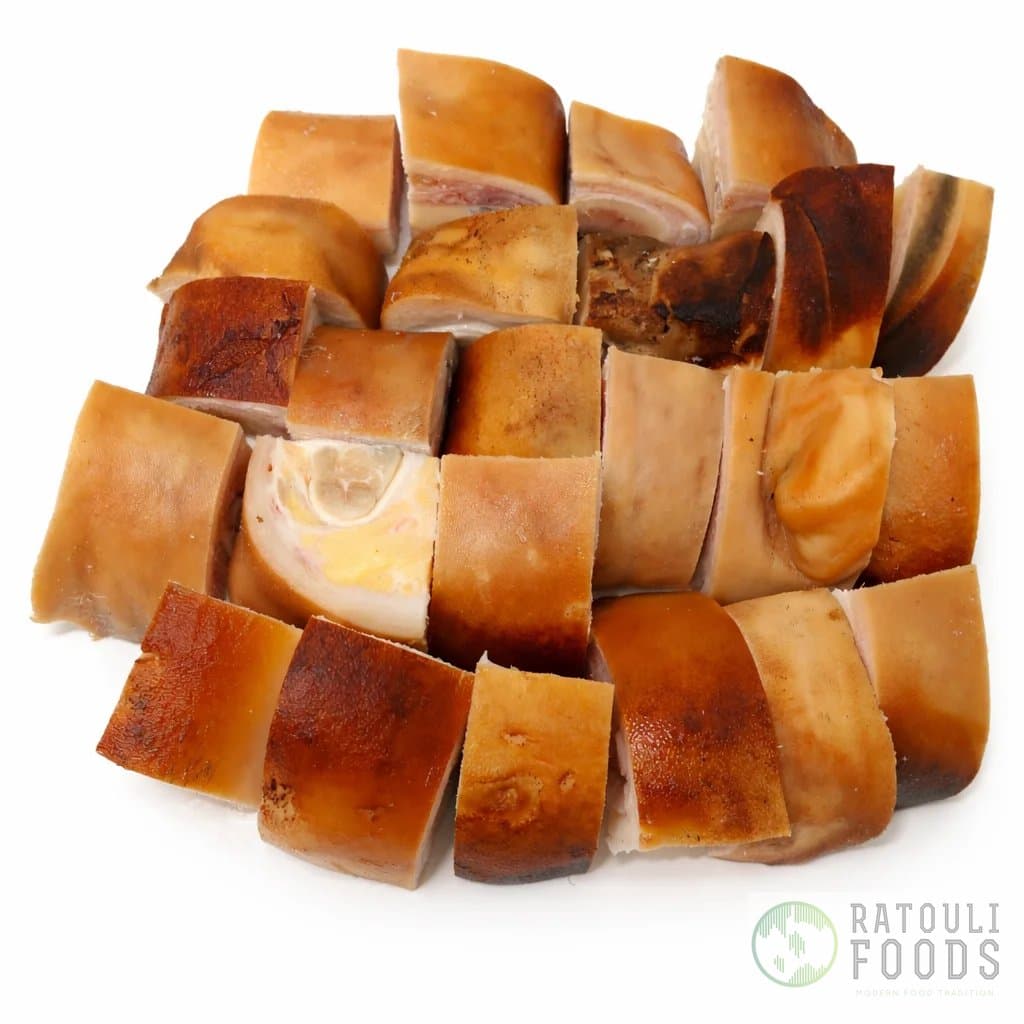
That is why it travels. A pot that needs body and a rich base is a pot that wants cow feet, and nearly every cuisine that grew up cooking the whole animal landed on the same trick. So one carton of frozen cow feet can leave a wholesaler and end up in a Nigerian pepper soup, a Jamaican kitchen, a Congolese home and a Surinamese soup pot inside the same week. We sell the burned cow feet, machine de-haired and singed over open flame. That clears the hair, lightens the colour and leaves a mild smoky note. For the full breakdown of names and parts, see our guide to what bokoto means in English and the names across cultures.
Sourcing for your store or wholesale?
Request a quote or browse the full catalogue.
Nigeria and Ghana: nkwobi and pepper soup
Start with the Igbo dish that put cow feet on the map for a lot of people: nkwobi. Cow foot cooked until tender, then dressed in a thick, spiced palm oil sauce. The sauce is the work. Palm oil set with potash or baking soda until it turns into a smooth paste, then ugba, utazi leaf, ehuru and ground crayfish for the flavour. It is served warm, usually as small chops with a cold drink, not as a main meal. Get the cow feet right and nkwobi sings. Get them rubbery and the whole plate falls down.
Then pepper soup. Across Nigeria and Ghana, cow foot pepper soup is a light, hot, peppery broth where the foot does double duty. It gives the broth its body, and the soft skin and tendon on the bone are the thing you actually eat. Same cut, a very different finish from nkwobi. One is dry, oily and spiced. The other is thin and fiery. Both lean on the gelatine the foot releases.
One thing that matters for buyers. Cow feet are bokoto, the foot and lower leg. They are not shaki, abodi, ponmo, roundabout or fuku. Those are different parts of the animal and different SKUs. If a customer asks for cow feet and you hand them tripe, you have lost the sale and the trust with it. Our separate shaki guide, abodi guide and ponmo guide keep those straight.
The Caribbean: cow foot soup, cow heel soup and souse
Cross the Atlantic and the same cut is a staple, just under different names. In Jamaica, Trinidad and Tobago, and across the islands, you will hear cow foot soup, cow heel soup and bull foot soup. All of them are built around the lower leg simmered for hours until the skin goes soft and the broth turns rich and thick.
Cow foot soup is usually a one-pot meal. The foot goes in with hard food like yam, green banana and dumplings, plus thyme, scotch bonnet and whatever else the cook keeps in the pot. Cow heel soup is the same idea with a tighter focus on the heel section, which is prized because it holds so much gelatine. When the broth cools it almost sets on the spoon, and that is exactly the point.
Then there is cow heel souse, the cold side of the cut. The cooked foot is pulled off the bone, dressed with lime, cucumber, onion, hot pepper and salt, and eaten chilled, often at the weekend. Hot soup in one house, cold souse in the next, both starting from the same box of cow feet. For wholesalers serving Caribbean shops, that flexibility is the selling point.
Congo, the Lusophone world and Suriname
In Central Africa, Congolese cooks make pieds de boeuf, which is simply cow feet in French. The feet are simmered down into a heavy, savoury stew or a thick soup, sometimes with the Ivorian smoked version, pied de boeuf fume, going into the pot for that deep, smoky base. The French-speaking diaspora across Europe asks for it by the French name, so a label that reads pieds de boeuf will move stock that bokoto on its own might not.
There is a nice thread running through the Portuguese-speaking world too. In Angola and Brazil the dish is mocoto, from the Kimbundu mbokoto or mokoto, the lower leg of the ox. That word is plausibly cognate with the Yoruba bokoto. Same cut, same root, two sides of the Atlantic. So when an Angolan customer asks for mocoto and a Nigerian customer asks for bokoto, they are reaching for the same thing.
Closer to home for us in Volendam, Surinamese kitchens put cow feet in their soups for body, the same logic as everywhere else. The Dutch terms on a label are koeienpoten, runderpoten or gebrande koeienpoten, with runderpotenbot for the leg bones sold on their own. Knowing those names is half the job when you stock for a mixed neighbourhood.
One SKU, several communities: how Ratouli Foods packs it
This is the practical part. Because the cut is the same everywhere, a shop or wholesaler does not need a separate product for each community. One cow feet SKU serves the Nigerian and Ghanaian pepper soup and nkwobi trade, the Caribbean and Jamaican cow foot and cow heel soup buyers, the Congolese pieds de boeuf customers and the Surinamese soup cooks all at once. Good for your freezer space, good for your margins.
Under our Afri-mama brand we keep it frozen at -18 C and pack it the way the trade actually buys:
| Product | Pack size | Best for |
|---|---|---|
| Cow feet, whole | 20 kg cartons | Bulk soup and stock, busy kitchens |
| Cow legs, cut | 10 x 1 kg and 20 x 500 gram | Retail packs, portion control |
| Cow leg bones | 24 x 500 gram | Stock and broth on their own |
| Cow skin from legs | Sold separately | Cooks who want the skin only |
We are an EU-approved establishment, number NL208262EG, working under HACCP with a public NVWA inspection record. We deliver DAP across NL, BE, DE, FR, ES, IT and the UK, so the price you agree is the price at your door. Demand climbs around the New Yam Festival in August, around Eid, through December and any time there is party cooking. Order ahead of those peaks, not into them.
If you want the cooking and cleaning detail before you stock it, read our guide to cleaning and cooking cow feet, the collagen and nutrition breakdown, and the cow foot versus cow leg versus cow heel explainer to label your stock correctly.
Sourcing for your store or wholesale?
Request a quote or browse the full catalogue.