
Bokoto in English is cow feet
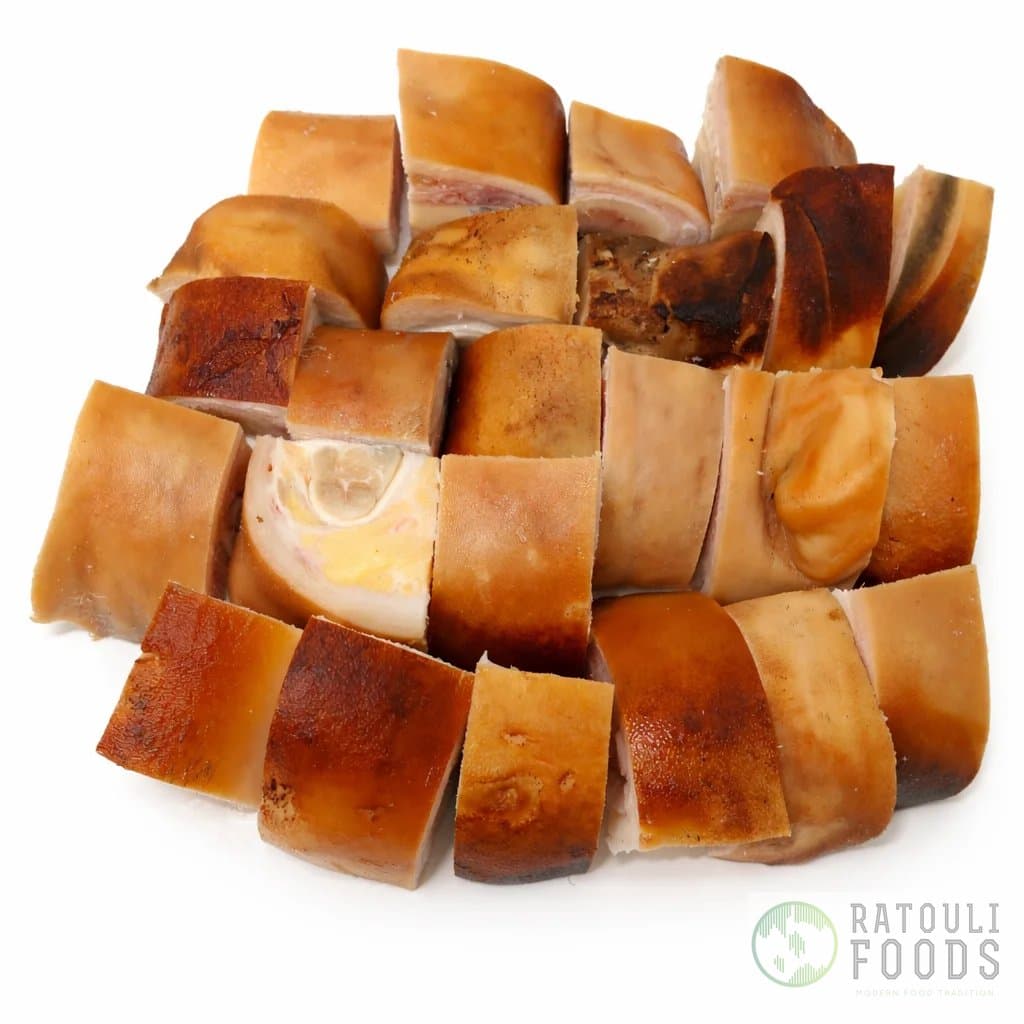
Bokoto in English is cow feet. You will also see it written cow foot, cow leg, beef feet or beef trotters. It is the foot and lower leg of cattle: bone, hoof, tendon, cartilage and skin, with very little meat on it. People cook it slow for the collagen and gelatine it gives a soup.
Bokoto in English: the short answer
Bokoto in English is cow feet. You will also see cow foot, cow leg, beef feet, beef trotters and cow heel. Same cut every time: the foot or trotter and the lower leg of the cow.
Bokoto is a Yoruba word, and it simply means cow foot or cow leg. So the name already tells you which part of the animal is in the bag. It is the burned lower-leg cut. We sell it whole, cut into sections, or as the leg bones on their own.
If you landed here asking what cow foot is, or chasing the cow leg meaning, that is the whole answer. One cut, a stack of names, and it does the same job in any kitchen that uses it.
Sourcing for your store or wholesale?
Request a quote or browse the full catalogue.
Why people search for bokoto in English
Most people who look this up are standing in front of a frozen pack or reading a recipe, and the label does not match the word they grew up with. A Nigerian buyer knows bokoto. A Jamaican shopper knows cow foot. A halal shop in the UK might tag the same thing as beef trotters, or Paya. Same cut, four labels.
It happens because this cut moves through a lot of diaspora kitchens, and every one of them names it its own way:
- Yoruba: bokoto, the most common diaspora name.
- English trade names: cow foot, cow feet, cow leg, beef feet, beef trotters, cow's trotter, cow heel, cow hoof.
- Caribbean: bull foot, the one you hear in cow heel soup and cow heel souse.
So when a recipe says cow foot and the wholesaler says bokoto, nobody made a mistake. It is the same thing wearing a different name.
What "burned" means and what is actually in the cut
What we sell is burned cow feet. Gebrand in Dutch. It means the feet are machine de-haired, then singed over open flame. The flame takes off the hair, turns the skin a light brown, and leaves a mild smoky note. German calls the same step abflammen or absengen.
Inside the cut you get bone, hoof, tendon, cartilage and skin. Very little muscle meat. Sounds thin, but that is exactly the point. All that tendon and skin is collagen. Cook it slow and the collagen breaks down into gelatine. That is what gives a soup its full, sticky body and gives stock its depth. The leg bones on their own make a serious stock.
You buy it in a few forms, depending on the dish:
- Whole, or cut and sectioned.
- Bone-in or boneless.
- Leg bones sold on their own for stock.
- Cow skin from the legs, sold separately.
The same cut in other languages
One cut feeds a lot of cuisines, so it picks up a name in most of them. If you cook across cultures, or you buy for a shop that serves a few communities at once, this is the cut that turns up under all these words.
| Language or region | What they call it |
|---|---|
| Yoruba | bokoto |
| Igbo (dish) | nkwobi (cow foot in spiced palm oil with ugba, utazi, ehuru, crayfish) |
| Caribbean / Jamaica / Trinidad | cow foot, cow heel, bull foot, cow heel souse |
| Dutch | koeienpoten, runderpoten, gebrande koeienpoten, runderpotenbot (leg bones) |
| French | pieds de boeuf, pied de boeuf fume (smoked, Ivorian) |
| German | Rinderfuesse, Kuhfuesse |
| Spanish | pata de res, mano or manita de vaca (dish: caldo de pata) |
| Italian | piedini di manzo, zampe di bovino |
| Portuguese / Angola / Brazil | mocoto, pe de boi, mao de vaca |
One detail I like. The Portuguese and Angolan mocoto comes from the Kimbundu mbokoto or mokoto, the lower leg of the ox. Plausibly the same root as the Yoruba bokoto. The word crossed the Atlantic right along with the cut.
Bokoto is the foot and leg, not tripe, skin or reed
This is where people get tripped up at the counter, so I will keep it plain. Bokoto is the foot and lower leg. Not the stomach, not the skin, not the reed. Different parts of the animal, different cuts, different cooking.
- Shaki is honeycomb tripe, the stomach. Not bokoto.
- Abodi is beef reed, the abomasum. Not bokoto.
- Ponmo is cow skin. Not bokoto, though we do sell cow skin from the legs separately.
- Roundabout is intestine, and fuku is lungs. Neither one is bokoto.
Want the deeper breakdown on those? See our guides on shaki, abodi and ponmo. For bokoto itself, hold onto the simple version. It is the foot and the leg.
We sell it under our Afri-mama brand, frozen at -18 C. Cow feet whole in 20 kg cartons, cow legs cut in 10 x 1 kg and 20 x 500 gram, cow leg bones in 24 x 500 gram, plus cow skin from the legs. EU approval NL208262EG, HACCP, public NVWA inspection record, delivered DAP across NL, BE, DE, FR, ES, IT and the UK. Demand climbs around the New Yam Festival in August, then Eid, December and party season. If you cook for a crowd, order ahead.
Sourcing for your store or wholesale?
Request a quote or browse the full catalogue.