
Cow Feet (Bokoto): The Complete Guide for Cooks, Stores and Wholesalers
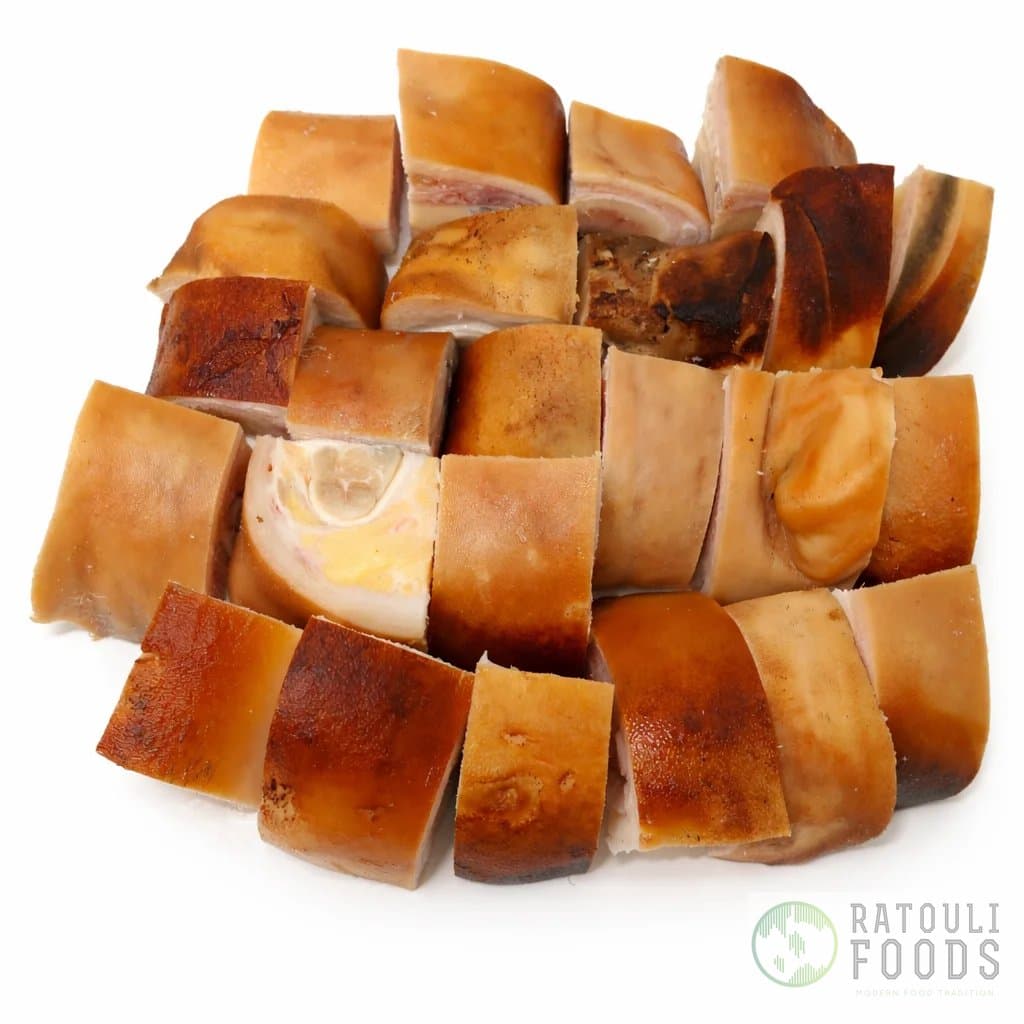
Cow feet, or bokoto, is the foot and lower leg of cattle. Bone, hoof, tendon, cartilage and skin, with almost no muscle meat. Cooks want it for the collagen and gelatine. Cook it slowly and it gives soups and stocks a full, sticky body and deep flavour. Burned bokoto is singed over flame for colour and a light smoky taste.
What cow feet (bokoto) actually is
Cow feet is the lower part of a cow's leg. The foot, the trotter, and the piece of leg above it. In one piece you get bone, hoof, tendon, cartilage and skin, with almost no muscle meat on it. That mix is the whole point. There is not much to chew the way you would chew steak, but there is plenty of connective tissue, and connective tissue is collagen.
Cook bokoto slowly and that collagen breaks down into gelatine. That is what gives cow foot soup its thick, sticky body, the thing that makes the broth coat your lips. The bones add their own depth on top. So this is not a cut you grill and plate in twenty minutes. It is a long-cook cut. Soups, stocks, braises. Give it time and it turns into something rich.
One thing to settle from the start. Bokoto is the foot and lower leg. It is not tripe. It is not skin off the back. It is not intestine. People mix these up because they come from the same animal and often end up in the same pot. There is a short section further down that keeps them apart, so you order the right thing.
Sourcing for your store or wholesale?
Request a quote or browse the full catalogue.
What burned and singed means, and why it matters
You will see cow feet sold as burned, or in Dutch gebrand. That word is about the processing, not the cooking. Burned cow feet has been machine de-haired first, then singed over an open flame. The flame takes off the remaining hair, gives the skin a light-brown colour, and leaves a mild smoky note behind.
Two reasons this matters. It is cleaner to work with, because the hair is already gone, so your prep at the stove is shorter. And the smoke carries through into the broth, which is what most diaspora cooks are after in a cow foot soup or a pepper soup. The colour also tells a buyer the foot has been handled properly, not just defrosted and bagged.
Other languages have their own word for the same step. German cooks call the singeing abflammen or absengen. Ivorian traders sell pied de boeuf fume, the smoked version. Same idea every time. Take the foot, burn the hair off, lock in a bit of smoke.
Cow feet by another name: the synonym table
One product, a long list of names. A Nigerian buyer asks for bokoto. A Jamaican cook asks for cow foot. A French-speaking Congolese customer asks for pieds de boeuf. A UK halal shop might tag the same carton as beef trotters, or even Paya. Same cut, different counter.
The top diaspora name is bokoto, Yoruba for cow foot or cow leg. Here is the working list of what you will hear and read for it.
| Name | Language / region | Notes |
|---|---|---|
| Bokoto | Yoruba (Nigeria) | The top diaspora name. Means cow foot or cow leg. |
| Cow foot, cow feet, cow leg | English trade | The everyday names on most price lists. |
| Beef feet, beef trotters, cow's trotter | English trade / UK | Same cut, often the wording on halal shop labels. |
| Cow heel, cow hoof | Caribbean / English | Cow heel is the classic name in Caribbean soup recipes. |
| Bull foot | Caribbean | Used for bull foot soup. |
| Mocoto | Brazil / Angola (Lusophone) | From Kimbundu mbokoto or mokoto, the lower leg of the ox. |
| Pieds de boeuf | French (Congo, Ivory Coast) | Pied de boeuf fume is the smoked version. |
| Koeienpoten, runderpoten | Dutch | Gebrande koeienpoten for the burned version; runderpotenbot for leg bones. |
| Rinderfuesse, Kuhfuesse | German | Singeing is abflammen or absengen. |
| Pata de res, mano / manita de vaca | Spanish | The dish is caldo de pata. |
| Piedini di manzo, zampe di bovino | Italian | |
| Pe de boi, mao de vaca | Portuguese | Mocoto is also used in Portugal. |
| Paya | South Asian (UK cross-tag) | Some UK halal shops cross-tag bokoto as Paya. |
One detail worth knowing. The Lusophone mocoto comes from Kimbundu mbokoto or mokoto, meaning the lower leg of the ox. That is plausibly cognate with the Yoruba bokoto. Two words, two continents, the same cut, very nearly the same sound. This product has travelled with people for a long time.
One SKU, many cuisines
For a store or a wholesaler this is the commercial point. You stock one product and it sells into several kitchens at once. The cook in each kitchen calls it something else and cooks it differently. The carton is the same.
- Nigerian and Ghanaian. Cow feet goes into pepper soup, the hot, fragrant broth that opens a meal or settles a stomach. The collagen gives the soup its body.
- Igbo. The signature dish is nkwobi, cow foot in spiced palm oil. More on that below.
- Caribbean and Jamaican. Cow heel soup, cow foot soup, bull foot soup, and cow heel souse in Jamaica, Trinidad and Tobago.
- Congolese. Pieds de boeuf, slow-cooked in a stew.
- Surinamese. Cow feet goes into hearty soups, the same long-cook logic.
So one pallet of bokoto in the cold store is serving a Nigerian aunty cooking pepper soup, an Igbo host plating nkwobi for guests, a Jamaican family making Saturday soup, and a Congolese cook building a weeknight stew. That spread is why bokoto moves steadily through the year and not just at one holiday.
The dishes bokoto carries
It helps to know what your customers are actually cooking. Three dishes come up again and again.
Nkwobi. The Igbo classic. Cooked cow foot tossed in spiced palm oil thickened with potash or baking soda, then seasoned with ugba, utazi, ehuru and crayfish. It comes out glossy, savoury, a little chewy. A sit-down dish you share with guests, the kind people order out and also make for a celebration.
Pepper soup. Nigerian and Ghanaian kitchens use bokoto to build a clear, hot, aromatic broth. The foot does double duty. It flavours the broth, and it gives you something to gnaw on once it has gone tender in the simmer.
Cow heel soup and souse. Across the Caribbean, cow heel soup, cow foot soup and bull foot soup are weekend and comfort cooking. The gelatine turns the soup almost gluey, in the best way. Cow heel souse, popular in Jamaica, Trinidad and Tobago, is the cooler, tangier version, dressed with lime, onion and pepper.
Different spice racks, same engine underneath. Slow heat, collagen turning to gelatine, a broth with real body.
How to clean and cook cow feet
Burned bokoto comes already de-haired and singed, so the heavy work is behind you. You still want to clean it before it goes in the pot.
- Scrape and rinse. Scrape the skin to lift any singed bits, then rinse under cold running water. Some cooks scrub it with salt or a little lemon to freshen it up.
- Parboil if you like. A short first boil, then tip that water away, gives a cleaner broth. Optional, but common.
- Cut to size. If you bought whole feet, section them so they fit the pot and cook evenly. Cut legs are already portioned.
Cooking is about patience. Bokoto needs time for the collagen to soften. On the stove that is usually two to three hours at a gentle simmer. In a pressure cooker you can bring it down to forty-five minutes to an hour. It is done when the skin and tendon are tender and the broth has gone slightly thick and sticky as it runs off the spoon. That stickiness is the gelatine, and it tells you the cut has given you everything it has.
Season for the dish you are making. Pepper soup spice for a Nigerian broth, palm oil and ugba for nkwobi, thyme and scotch bonnet for a Caribbean cow heel soup. The foot is the base. The kitchen decides the rest.
Nutrition snapshot: the stock body
Cow feet is mostly connective tissue and bone, so its food value sits in the collagen and gelatine, not in lean protein. That is the honest way to put it. There is very little muscle meat on a foot.
What you do get is the gelatine. Cook it slowly and the collagen in the skin, tendon and cartilage dissolves into the broth and gives it a full, sticky body. Same gelatine that sets a stock when it cools in the fridge. If your pot of cow foot stock turns to jelly overnight, that is a good sign, not a fault. It means you pulled plenty of collagen out of the cut.
For cooks who want a deep, rich stock, that is the value. The bones bring minerals and flavour, the connective tissue brings body. It is why a handful of cow feet, or just the leg bones, lifts a pot well past what lean meat alone would give you.
The cut variants
Bokoto is not sold in one shape. The processing varies, and matching the variant to the customer keeps both the cook and the cold store happy.
| Variant | What it is | Best for |
|---|---|---|
| Whole foot | The full foot and lower leg, uncut | Cooks who want to portion themselves; visual sell on the counter |
| Cut / sectioned legs | Legs cut into pot-ready pieces | Convenience for home cooks and busy kitchens |
| Leg bones (runderpotenbot) | The bones sold on their own | Stock and broth, excellent gelatine value |
| Boneless | Bone removed | Dishes where the bone gets in the way |
| Leg skin | Cow skin from the legs, sold separately | Cooks who want extra skin and collagen in the pot |
The leg bones deserve a mention of their own. Sold alone, they are one of the best value items for anyone making stock in volume. Almost pure collagen and bone, very little waste. Restaurants and broth makers tend to take these.
Keep bokoto distinct from the other parts
This is the section that saves you from a wrong order. Several cow parts get cooked together and traded side by side, and people blur them. Bokoto is the foot and lower leg. It is not any of these.
- Shaki is honeycomb tripe, the stomach lining. A different texture, a different cut. See the shaki guide.
- Abodi is beef reed, the abomasum, one of the cow's stomach compartments. See the abodi guide.
- Ponmo is cow skin, the hide, sold as Ponmo or Kpomo. Bokoto includes leg skin, but Ponmo is the wider skin product.
- Roundabout is intestine.
- Fuku is lungs.
When a customer says cow foot, cow heel, beef trotters, bokoto, pieds de boeuf or Paya, they want the foot and lower leg. If they say tripe, reed, skin, intestine or lungs, that is a different SKU. Get this right on the order line and the kitchen stays happy and the returns stay at zero.
Wholesale and sourcing
This is the part for stores, restaurants and importers. Ratouli Foods supplies cow feet under the Afri-mama brand, frozen at -18 C, out of Volendam. The pack formats follow how the product actually moves.
- Cow feet, whole. 20 kg cartons.
- Cow legs, cut. 10 x 1 kg and 20 x 500 gram.
- Cow leg bones. 24 x 500 gram. The stock item.
- Cow skin from legs. Sold separately for cooks who want the extra collagen.
On compliance, the plant runs under EU approval NL208262EG with HACCP, and there is a public NVWA inspection record you can check. That matters at the border, and it matters to any buyer who has been burned by a supplier with no papers. We deliver DAP, so the freight and the customs handling are on us, across the Netherlands, Belgium, Germany, France, Spain, Italy and the UK.
On timing, plan your stock around the calendar. Demand peaks at the New Yam Festival in August, around Eid, through December, and any time there is party cooking. Order ahead of those windows, not into them. If you also stock tripe and skin, the shaki, abodi and ponmo guides cover those lines the same way, so you can build a full offal range from one supplier and one delivery.
Sourcing for your store or wholesale?
Request a quote or browse the full catalogue.