
Cow feet nutrition: collagen, gelatine and what it gives a soup
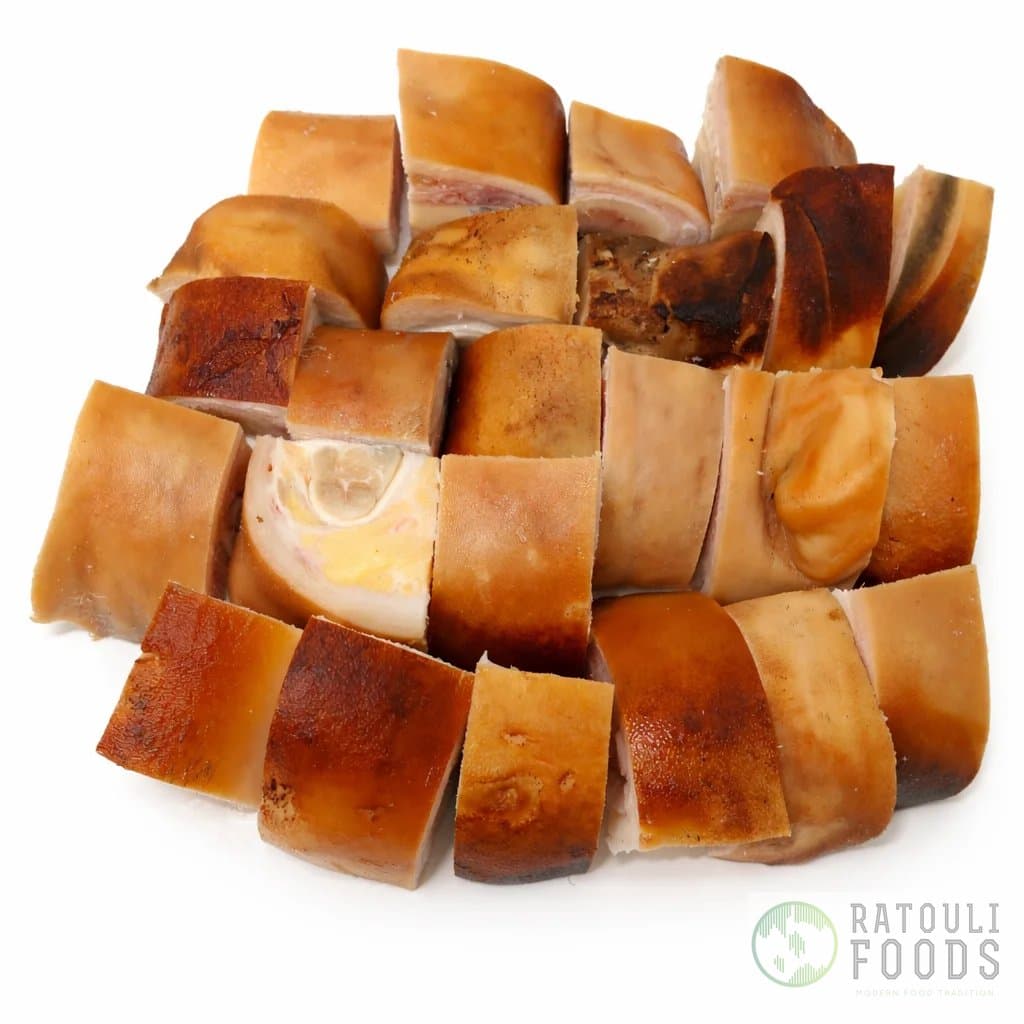
Cow feet are mostly bone, hoof, tendon, cartilage and skin. There is almost no muscle meat on them. The value is collagen. Cook it slowly and that collagen turns to gelatine, which is what gives a soup or stock its full, sticky body. The protein you get comes from the skin and tendons, not from lean meat.
What cow feet actually are
Burned cow feet, called bokoto across the West-African diaspora, is the foot and lower leg of cattle. Bokoto is Yoruba for cow foot. Open the pack and you find bone, hoof, tendon, cartilage and skin, with next to no muscle meat on it. That is the honest description, and it sets your expectations for the nutrition.
Burned, gebrand in Dutch, means the feet are machine de-haired and then singed over open flame. The flame takes off the hair, leaves a light-brown colour and gives a mild smoky note. Traders sell the exact same product under a long list of names: cow foot, cow feet, cow leg, beef feet, beef trotters, cow's trotter, cow heel, cow hoof, and bull foot in the Caribbean. Some UK halal shops cross-tag it as Paya, the South-Asian name. In Lusophone, Angolan and Brazilian kitchens it is mocoto, from Kimbundu mbokoto, the lower leg of the ox, plausibly cognate with the Yoruba bokoto. One product, one thread running right across the diaspora.
Keep one thing straight. Bokoto is the foot and lower leg, full stop. It is not Shaki, which is honeycomb tripe from the stomach. Not Abodi, the beef reed. Not Ponmo, cow skin sold on its own. Not roundabout, the intestine. Not fuku, the lungs. Different cuts, different jobs. If you cook these regularly you already know the difference, but I will say it plainly so nobody orders the wrong thing for a soup.
Sourcing for your store or wholesale?
Request a quote or browse the full catalogue.
Collagen and gelatine: where the body comes from
This is the part people care about. Collagen is the reason this cut earns a place in the pot. It is the protein in the skin, tendons and cartilage that holds the foot together while the animal is alive. Cold, it is tough and rubbery. Apply low heat and enough time, and that collagen breaks down into gelatine.
Gelatine is what gives a soup its weight. It is the difference between a thin, watery broth and one that coats the spoon and almost sets when it cools in the fridge. That sticky, full mouthfeel in a good cow foot or cow heel soup is gelatine doing its job. The bone in the foot and lower leg adds to it too, which is why the leg bones on their own make excellent stock.
The catch is time. Collagen gives up nothing in twenty minutes. You need a slow cook, often two to three hours, or a long pressure-cook, before the tendons go soft and the broth turns silky. Rush it and you get hard, chewy pieces and a flat stock. Cook it properly and the foot pays you back.
- Collagen: the raw protein in skin, tendon and cartilage, tough until cooked.
- Gelatine: what collagen becomes under slow heat, the source of body and stickiness.
- Bone: adds minerals and depth, and the cut-off leg bones are sold separately for stock.
The honest nutrition on cow feet
So is cow foot healthy? I will answer it like a trader, not a supplement seller. Cow feet are a real food with real protein, mostly from the skin and tendons rather than lean meat. That is connective-tissue protein, a different profile from a steak. It is lower in the muscle amino acids you get from muscle meat and heavier on the collagen type.
What it does well: it adds protein, it carries flavour, and it gives texture and body that lean meat cannot. What it does not do: it is not a cure, not a collagen treatment for your skin, and not a reason to skip a balanced plate. You will find big claims online about cow foot collagen fixing joints and skin. I am not going to repeat them. The honest line is simpler. It is a flavourful, protein-bearing cut that makes excellent soup, and it has fed families across West Africa, the Caribbean and Suriname for generations.
A few practical notes. The cut carries some fat and gristle, so skim the pot. Portions tend to be modest because the gelatine is rich and a little goes a long way in a shared bowl. And it works best as one element in a full dish, next to vegetables, pepper, seasoning and a starch, the way it is actually eaten in nkwobi, cow heel souse, pepper soup or a Surinamese soup.
One cut, many kitchens
The reason we keep cow feet in steady stock is simple. A single SKU feeds several cuisines at once. Buyers serving very different communities all reach for the same pack.
| Cuisine | Typical dish |
|---|---|
| Nigerian / Ghanaian | Pepper soup, and Igbo nkwobi (cow foot in spiced palm oil with ugba, utazi, ehuru, crayfish and potash or baking soda) |
| Caribbean / Jamaican | Cow foot soup, cow heel soup, bull foot soup, cow heel souse (Jamaica, Trinidad and Tobago) |
| Congolese / Ivorian | Pieds de boeuf, pied de boeuf fume (smoked) |
| Surinamese | Rich soups built on a gelatinous stock |
For a shop or a restaurant in a mixed neighbourhood, that range pays off. You stock one frozen product and cover Nigerian, Ghanaian, Jamaican, Trinidadian, Congolese and Surinamese cooks out of the same carton. Demand does not sit flat through the year either. It climbs around the New Yam Festival in August, around Eid, through December, and any time there is party cooking. Order ahead of those peaks, not into them.
If you also run Shaki, Abodi or Ponmo, treat cow feet as the gelatine-and-bone option next to them. They are not interchangeable. See our separate guides on Shaki, Abodi and Ponmo for how each one behaves in the pot.
Traceability and cold chain: why the source matters
Nutrition is only half the story. With any offal or trotter cut, where it comes from and how cold it stayed decides whether it is safe and whether it cooks down properly. A foot that thawed and refroze on the way to you gives a cloudy, off stock no matter how long you simmer it.
At Ratouli Foods, under the Afri-mama brand in Volendam, we run this as a frozen product at -18 C from packing to delivery. Every carton traces back to an EU-approved operation, approval number NL208262EG, working under HACCP, with a public NVWA inspection record you can check. That is the part a lot of cheaper supply skips, and it is the part that protects your customers.
The processing options we hold:
- Cow feet whole, in 20 kg cartons
- Cow legs cut, in 10 x 1 kg and 20 x 500 gram
- Cow leg bones, in 24 x 500 gram, ideal for stock
- Cow skin from the legs, sold separately
We deliver DAP across NL, BE, DE, FR, ES, IT and the UK, so the price you agree is the price at your door, cold chain intact the whole way. If you are weighing up cow feet for a shop or kitchen, clear sourcing plus a real frozen chain is what keeps the product right by the time it reaches your pot. Ask us for current stock and we will tell you straight what we have.
Sourcing for your store or wholesale?
Request a quote or browse the full catalogue.