
Ponmo (kpomo) is cow skin: the complete guide
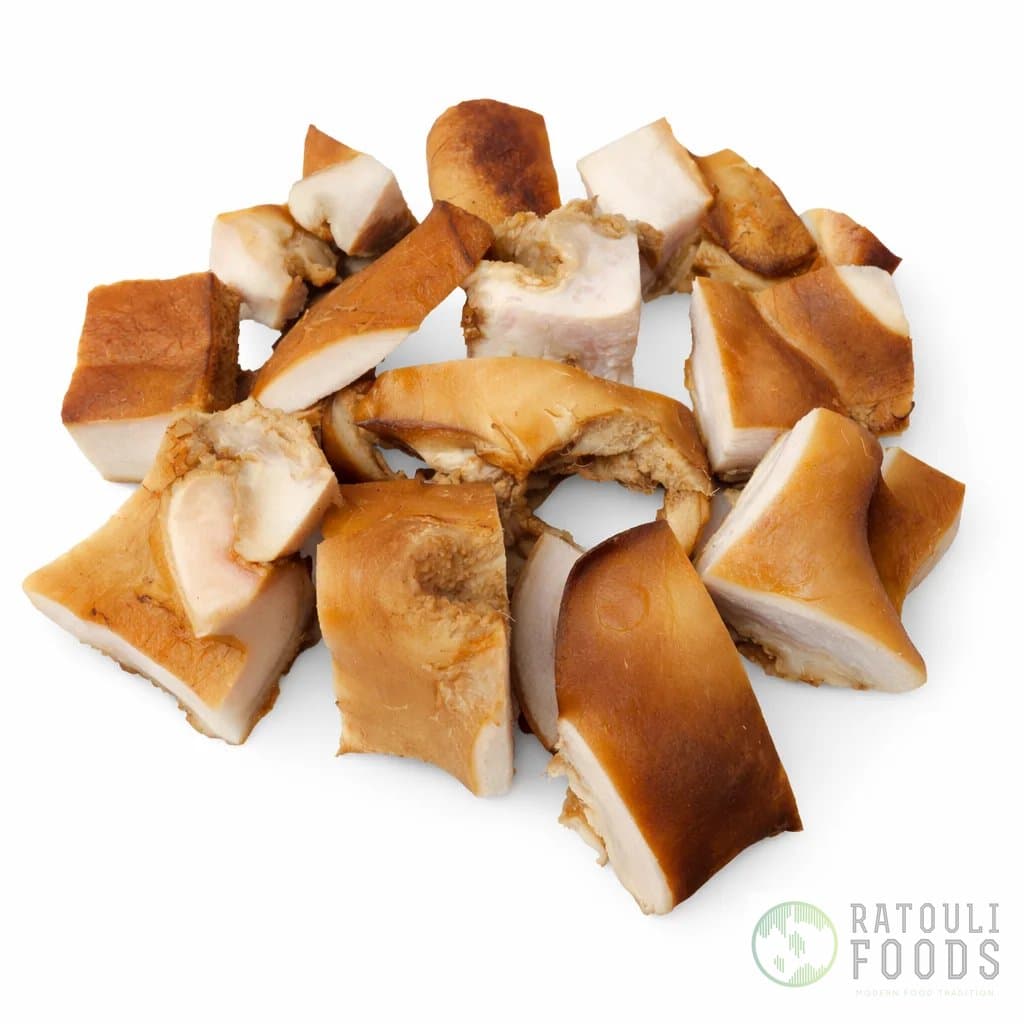
Ponmo, also spelled kpomo, is edible cow skin. The collagen-rich outer hide of the cow, cleaned and cooked once the hair is removed. It is not tripe and not intestine. It cooks down soft and gelatinous, gives body to soups, and turns up in kitchens from Lagos to London.
What ponmo actually is
Ponmo is cow skin. The hide of the cow, the same outer layer that would become leather at a tannery, except here it gets cleaned for the pot. The hair comes off, the skin is processed, and what is left is a chewy, gelatinous piece of meat that cooks across West Africa have been putting in their soups for generations.
People get this wrong all the time, so let me be plain. Ponmo is not tripe. Tripe is shaki, the stomach lining, with that honeycomb pattern. Ponmo is not the abomasum either, that is abodi, the reed. And ponmo is not intestine. One animal, different cuts, and they cook and taste nothing alike.
When someone asks me what ponmo meat is, the honest answer is that it is skin, sold and eaten as meat. It has no muscle texture. It is firmer than beef, it bounces a little under the knife, and once it simmers long enough it turns soft and silky and gives up its gelatin into whatever it is cooking in.
Sourcing for your store or wholesale?
Request a quote or browse the full catalogue.
Ponmo by another name
One ingredient, a long list of names, and the list matters if you are buying, selling, or just trying to find the thing in a shop abroad. In Yoruba it is ponmo. You will also see pomo, kpomo, kponmo, and spellings like ponmoh and pomoh. In Igbo it is kanda or akpukpo anu. Up north and in Hausa it is ganda, ganada, fata, or awo. The list keeps going.
One warning if you search in Dutch, German, Spanish, Italian or Portuguese. The literal words for cow skin in those languages bring back leather and hide, not food. So pair the European word with the African name when you search or label, or you end up reading tannery listings.
| Language / culture | Name for ponmo |
|---|---|
| Yoruba | Ponmo (also pomo, kpomo, kponmo; misspelled ponmoh, pomoh) |
| Igbo | Kanda, akpukpo anu |
| Hausa / Northern Nigeria | Ganda, ganada, fata, awo |
| Edo | Ohian |
| Igala | Ano |
| Ghanaian (Akan/Twi) | Wele (also welle, wale, kahuro) |
| French | Peau de boeuf |
| Ivorian slang | Kplo (specifically smoked beef skin, peau de boeuf fumee) |
| UK African retail | Beef mask |
| Plain English | Cow skin, cowhide, beef skin |
| Dutch (literal, pair with African name) | Koeienhuid, runderhuid |
| German (literal, pair with African name) | Kuhhaut, Rinderhaut |
| Spanish (literal, pair with African name) | Cuero de res, piel de vaca |
| Italian (literal, pair with African name) | Cotenna, cotica di manzo |
| Portuguese (literal, pair with African name) | Pele de boi, couro de boi |
Brown ponmo versus white ponmo
There are two main grades, and the difference comes down to how the hair is removed. That changes the colour, the flavour, and the bite, so know which one you want before you buy.
Brown ponmo, also called burnt ponmo, has the hair singed off over open flame. The fire gives it a smoky flavour, a darker colour, and a firmer chew. A lot of older cooks reach for this one because the smoke carries into the soup. White ponmo is scalded or boiled and shaved, no flame at all. It comes out paler and softer, and plenty of people see it as the cleaner option. Neither is better. It depends on the dish and the cook.
| Brown (burnt) ponmo | White ponmo | |
|---|---|---|
| How the hair comes off | Singed over open flame | Scalded or boiled, then shaved |
| Colour | Darker, smoky brown | Pale, off-white |
| Flavour | Smoky from the flame | Neutral, clean |
| Bite | Firmer, chewier | Softer |
| Often chosen for | Soups where the smoke matters | Cooks who want a cleaner look |
We carry both. Most of our cow skin is burned, and we keep white ponmo for the buyers who ask for it.
The premium grade: Ponmo Ijebu
Spend any time around serious ponmo cooks and you will hear about Ponmo Ijebu. It comes from the Ijebu area of Ogun State in southwest Nigeria, and it is the grade people pay more for and ask for by name.
What makes it prized is the thickness. Ponmo Ijebu is cut thicker than ordinary cow skin, so it holds up better in a long simmer and gives a heavier, more satisfying chew. When a dish is built around the ponmo itself, like peppered ponmo at a party, the thicker grade earns its place. Think of it the way you would think of a cut graded above the standard line. Same animal, but the piece and the reputation are a step up.
Ponmo versus shaki versus abodi
These three get mixed up constantly, in shops and on packing lists, and the confusion costs you money and trust. They are three different parts of the cow and they are not interchangeable. Keep them straight.
- Ponmo is the skin, the outer hide. Chewy, gelatinous, cooks down soft. That is what this guide is about.
- Shaki is tripe, the stomach lining, with its honeycomb texture. It needs its own cleaning and a long cook to go tender. We cover it in the shaki guide.
- Abodi is the reed, the abomasum, that ribbed strip some people call bible tripe. Different texture again, and it has its own following in soups like nkwobi. We cover it in the abodi guide.
One rule for anyone buying or selling: never let ponmo, shaki and abodi sit under one vague label like offal or cow parts. A buyer who ordered cow skin and got tripe is a buyer you lose. Name each one.
The dishes ponmo carries
Ponmo is a workhorse. It goes into soups and stews where it adds body and that soft, chewy bite, and it cooks down to gelatin, so it thickens the pot as it goes. It is rarely the only protein. It sits next to beef, fish or chicken and does its own job.
The short list of where it lands:
- Egusi soup, the melon-seed soup, where chunks of ponmo soak up the broth.
- Ofada stew and ayamase, the green pepper stew, where ponmo is almost expected.
- Efo riro, the rich spinach stew.
- Draw soups like okra and ogbono, where its gelatin adds to the pull.
- Abula and ewa agoyin beans, the soft party beans.
- Pepper soup, light and hot.
- Peppered ponmo, served on its own as small chops at owambe parties and off the street grill.
Cross into Ghana and it becomes wele, built straight into waakye and a long list of everyday staples. Same skin, different kitchen, same job.
How it is cleaned, and why burned-and-cut matters
Cleaning is the part that separates good ponmo from a wasted afternoon. After the hair is singed off, the burnt outer layer has to be scraped down and the skin washed properly. Done right, you get clean skin, no grit, no scorched bits. Done badly, you spend an hour scrubbing before you can even start cooking.
That is why we sell it cleaned and cut. The skin is already burned, scraped and portioned, so a busy kitchen or a shop counter can put it straight into the pot or onto the shelf. For a restaurant doing volume, that saved prep time is real money. For a home cook, it is the difference between cooking tonight and giving up.
The burned-and-cut point matters for one more reason. Burned skin carries that smoky flavour brown ponmo is known for, and pre-cut sizing means even cooking. Uneven pieces cook unevenly, and then half your ponmo is tough while the other half is mush.
A nutrition snapshot, honestly
Let me be straight, because plenty of people are not. Ponmo is lean and low in fat, and it is rich in collagen. The chewy, gelatinous quality you taste is the collagen, the same protein that gives skin and connective tissue their structure.
But collagen is not a complete protein. It is missing some of the amino acids your body needs, which is why ponmo on its own does not carry a meal the way beef or fish does. In a real kitchen that is fine, because nobody eats ponmo alone. It goes into the pot with other proteins and together they cover the gap. So treat it as what it is. A low-fat, collagen-rich ingredient that adds texture and body, eaten alongside the rest of the meal, not as a stand-in for it.
The cultural weight, and the ban that never stuck
Ponmo is not a cheap filler people put up with. It is a delicacy and a point of pride. You will hear it called the common man's protein, affordable and loved, on the table at the biggest parties and in the smallest homes. That is real, not marketing.
The clearest proof of how much it matters is what happened when the Nigerian government floated banning it. The argument was that its nutrition is low and, less openly, that the leather industry wanted the hides for tanning instead of the pot. Every time it came up, consumers pushed back hard and fast. The ban never held. People were not going to be told that a food they had loved their whole lives was suddenly off limits so a factory could have the raw material. When a country argues that publicly about a piece of skin, you are looking at something woven deep into how people eat and gather. Worth respecting.
How to store it
Ponmo holds well frozen, which is how we ship it. Keep it at -18 C and it stays good for the long haul. Frozen is the safe way to move it across borders and hold stock for the demand spikes, and it keeps the texture intact.
A few practical notes for a shop or kitchen freezer:
- Keep it at -18 C and do not let it thaw and refreeze. That cycle wrecks the texture.
- Thaw in the fridge, not on the counter, the night before you cook.
- Portion before you freeze if you can, so you only thaw what you need.
- Once thawed and cooked, treat it like any cooked meat and use it within a couple of days.
For retail, label your frozen ponmo with the African name, not just cow skin, so the customer who wants it can actually find it.
Sourcing and wholesale
This is the part for the stores, restaurants and importers. We sell ponmo under the Afri-mama brand, frozen at -18 C, cleaned and ready. Two main cuts: cow skin head mask, and cow skin from the legs. Both burned. White ponmo on request.
The basics on what you order and how it arrives:
- Cuts: cow skin head mask and cow skin from legs, both burned. White ponmo on request.
- Pack sizes: 12 x 1 kg and 24 x 500 gram. The 500 gram packs suit shop shelves, the 1 kg packs suit kitchens cooking volume.
- Frozen: -18 C throughout.
- Compliance: EU approval number NL208262EG, HACCP in place, and a public NVWA inspection record you can check.
- Delivery: DAP across the Netherlands, Belgium, Germany, France, Spain, Italy and the UK. We handle the freight, you take delivery.
Plan your stock around the calendar. Demand climbs at the New Yam Festival in August, around Eid, through December, and for every big owambe and party cook in between. If you sell to a West-African or Ghanaian community, those are the weeks you do not want to be empty. Order ahead of the spike, not into it.
If you are not sure whether you want the head mask or the leg skin, or brown versus white, ask. After 14 years in this trade I would rather spend two minutes getting your order right than watch you take delivery of the wrong cut.
Sourcing for your store or wholesale?
Request a quote or browse the full catalogue.