
Every name for cow feet: bokoto, cow heel, mocoto, pieds de boeuf and more
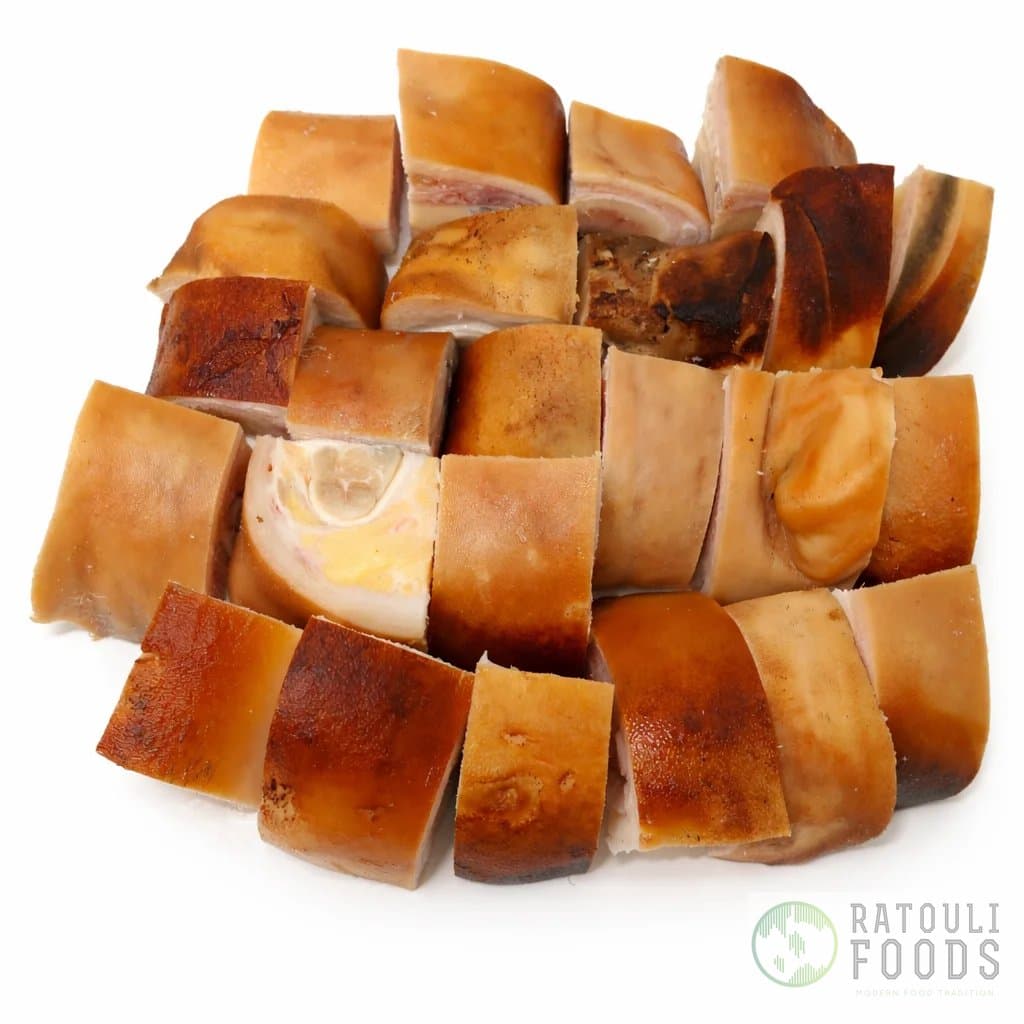
Cow feet are the foot, trotter and lower leg of cattle. Bone, hoof, tendon, cartilage and skin, with almost no muscle meat, kept for the collagen they give soups. The same cut is called bokoto in Yoruba, cow heel or bull foot in the Caribbean, mocoto in Angola and Brazil, and pieds de boeuf in French.
One cut, a dozen names
I sell one product. It lands in twenty kitchens under twenty names, and that is the whole headache with cow feet. A Nigerian customer asks for bokoto. A Jamaican wants cow heel. A Brazilian says mocoto. A Congolese buyer emails me about pieds de boeuf. Every one of them is pointing at the same thing on the same pallet.
The cut is the foot or trotter plus the lower leg of cattle. Bone, hoof, tendon, cartilage and skin, with almost no meat on it. Nobody buys it for the meat. They buy it for the collagen and gelatine. That is what gives a soup its full, sticky body and a stock its depth after a few hours on the stove.
What we sell is burned, gebrand in Dutch. The feet go through a machine de-hairer, then we singe them over open flame. The flame takes off the hair, browns the skin a little, and leaves a mild smoky note. Same foot, no different animal part. It is just cleaned the way most of these cuisines actually want it.
This guide is about the names more than anything. Label the cut right in a shop, let a cook search the word in their own language, and everyone finds it faster. So here is the map.
Sourcing for your store or wholesale?
Request a quote or browse the full catalogue.
The full name map, side by side
Here is every name I deal with, grouped by region, with the dish it usually ends up in. Run a shop and this is your labelling cheat sheet. Cook at home and you just find your word, then you know what to ask for.
| Region / language | Name for cow feet | Typical dish or note |
|---|---|---|
| Yoruba (Nigeria) | bokoto | Yoruba for cow foot or cow leg. The top diaspora name. Goes into pepper soup and stews. |
| Igbo (Nigeria) | cow foot | The dish nkwobi, cow foot in spiced palm oil with ugba, utazi, ehuru, crayfish and potash. |
| English trade | cow foot, cow feet, cow leg, beef feet, beef trotters, cow's trotter, cow hoof, cow heel | Generic wholesale and shop terms. |
| Caribbean | cow heel, bull foot | Cow heel soup, cow foot soup, bull foot soup, cow heel souse (Jamaica, Trinidad and Tobago). |
| Angola and Brazil (Lusophone) | mocoto | From Kimbundu mbokoto or mokoto, the lower leg of the ox. Likely cognate with Yoruba bokoto. |
| French | pieds de boeuf | Ivorian pied de boeuf fume for smoked, Congolese pieds de boeuf. |
| Dutch | koeienpoten, runderpoten, gebrande koeienpoten | Runderpotenbot for the leg bones sold alone. |
| German | Rinderfuesse, Kuhfuesse | Singeing is abflammen or absengen. |
| Spanish | pata de res, mano or manita de vaca | The dish caldo de pata. |
| Italian | piedini di manzo, zampe di bovino | Used in slow soups and brodo. |
| Portuguese | mocoto, pe de boi, mao de vaca | Same Lusophone family as Angola and Brazil. |
| South-Asian (UK halal shops) | Paya | Often cross-tagged as Paya and as beef trotters on the same shelf. |
Look at the bokoto and mocoto line. The Yoruba word and the Kimbundu word point at the same cut and probably share a root. That is a bit of history sitting in a frozen carton. Two diaspora food cultures using almost the same name for the same foot.
What cow heel actually means, and why the smoky version matters
Customers ask me what cow heel means all the time. Usually they saw it on a Caribbean recipe and want to know if it is the same as cow foot. It is. Cow heel is the Caribbean name for the lower leg and foot, the joint-heavy, collagen-rich end of the leg. Cow heel soup, cow foot soup and bull foot soup are the same idea, cooked a little differently from one island to the next.
The burned version works across all these kitchens because of what the flame does. Singeing over open fire pulls the hair off properly, which raw or only-scalded feet never manage cleanly. It firms the skin, gives the light-brown colour cooks expect, and adds a mild smoke that suits pepper soup, nkwobi and cow heel soup all the same. In French-speaking West Africa they want the smoked version on purpose. That is why Ivorian sellers write pied de boeuf fume.
For stock and soup the science is simple. Long, slow cooking breaks collagen down into gelatine. That is the sticky lip-coating texture in a good cow foot soup and the body in a proper stock. Three to four hours low, not a quick boil. The bones on their own, the runderpotenbot, are excellent for this when you want the gelatine without the skin and tendon in the pot.
Do not confuse it with the other offal cuts
This is where shops and new cooks get tangled, so I will be blunt. Bokoto is the foot and lower leg. Not the stomach, not the skin off the body, not the intestine. These cuts sit near each other in the freezer and get ordered together for the same dishes, which is exactly why they get mixed up.
- Shaki is honeycomb tripe, the stomach lining. Chewy, spongy, a completely different texture.
- Abodi is beef reed, the abomasum, another part of the stomach.
- Ponmo is cow skin from the body, soft and gelatinous, but not the leg.
- Roundabout is intestine.
- Fuku is lungs.
Bokoto is bone, hoof, tendon, cartilage and the skin on the leg. If you want the texture that comes from the joints and the gelatine that sets a soup, you want the feet, not any of the above. We keep them strictly separate in our own listings for that reason, and I tell every shop to do the same on the shelf and the label. If your customers also cook with tripe or skin, send them to our shaki, abodi and ponmo guides so nobody buys the wrong thing.
How we supply it, and who buys it
We sell cow feet under our Afri-mama brand, frozen at -18 C all the way through the chain. One SKU feeds several cuisines, which is the practical reason it moves. The same carton goes into Nigerian and Ghanaian pepper soup, Igbo nkwobi, Caribbean and Jamaican cow foot or cow heel soup, Congolese pieds de boeuf, and Surinamese soups.
Pack options, so you order the format that fits your kitchen or shop:
- Cow feet whole, 20 kg cartons
- Cow legs cut, 10 x 1 kg and 20 x 500 gram
- Cow leg bones, 24 x 500 gram, the stock specialist
- Cow skin from the legs, sold separately
You can have it whole or cut, bone-in or boneless, or just the bones when you only want stock. We work under EU approval NL208262EG with HACCP and a public NVWA inspection record. Delivery is DAP across NL, BE, DE, FR, ES, IT and the UK, which covers most of where these cuisines actually live in Europe.
Plan around the calendar. Demand jumps at the New Yam Festival in August, around Eid, through December, and any week people are cooking for a party. Those are the weeks the freezers empty, so order early if you stock a shop. If a UK halal customer knows the cut as Paya or beef trotters, tell them it is the same foot. One product, all these names.
Sourcing for your store or wholesale?
Request a quote or browse the full catalogue.