
Cow foot vs cow leg vs cow heel vs cow leg bones: the cuts explained
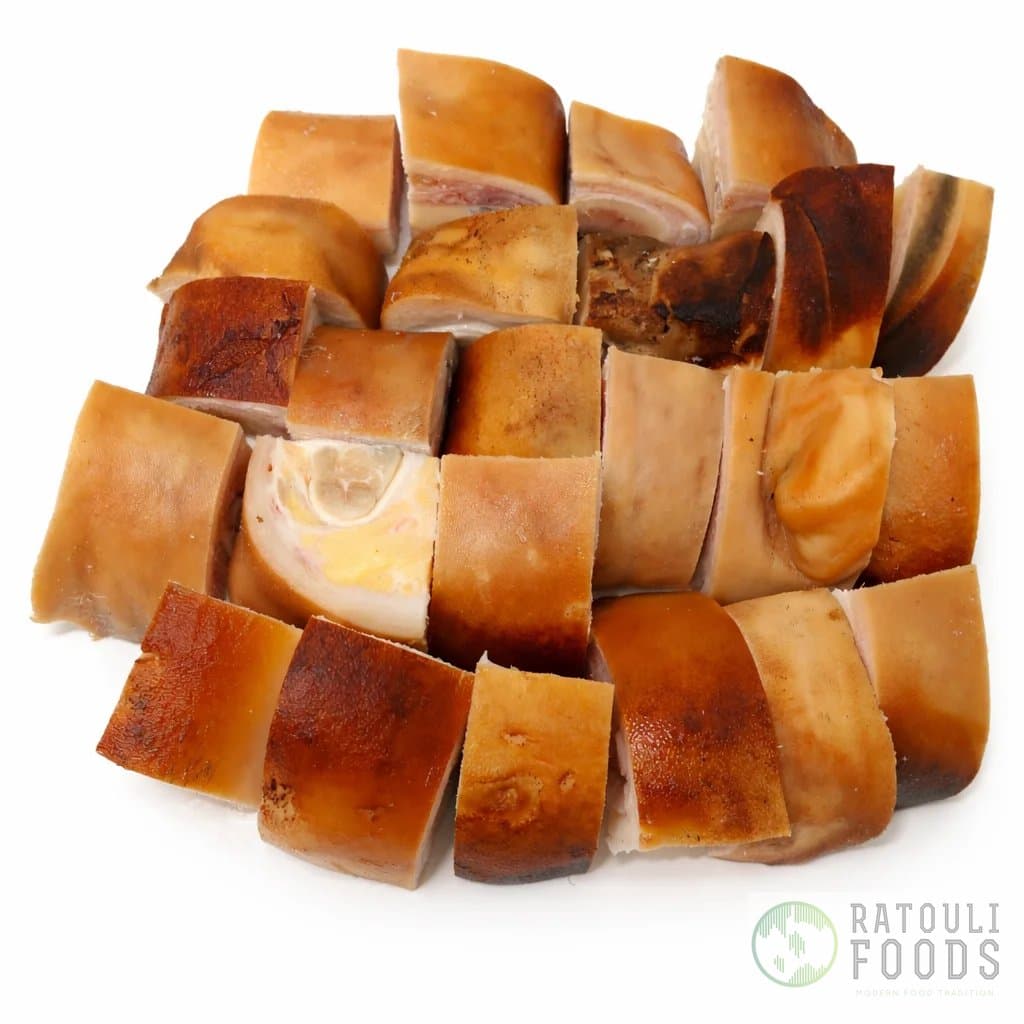
All four come from the lower leg of the cow. Cow foot is the whole trotter with hoof, skin, tendon and bone. Cow leg is that foot cut into pieces. Cow heel is the heel joint, the richest in gelatine. Cow leg bones are sold on their own for stock. Boneless is the meat and skin off the bone.
One leg, several cuts: what each name actually means
People say cow foot and cow leg as if they are two things. In the kitchen they usually are not. In the trade they are processing variants of one piece of the animal. The whole thing is bokoto, the Yoruba word for cow foot or cow leg. It is the foot, the trotter, and the lower leg: bone, hoof, tendon, cartilage and skin, with almost no muscle meat. That is the whole point of it. What you pay for is collagen. Cook it slow and the collagen turns to gelatine, and gelatine is what gives a soup that full sticky body and gives stock its depth.
Our cow feet are burned, which is the Dutch gebrand. We machine de-hair the feet, then singe them over open flame. The hair goes, the colour comes up light brown, and you get a mild smoky note. Same process we run on ponmo and shaki. Across the diaspora the same cut turns up under a long list of trade names: cow foot, cow feet, cow leg, beef feet, beef trotters, cow's trotter, cow heel, cow hoof, bull foot in the Caribbean. Some UK halal shops tag it as Paya, the South-Asian name, and again as beef trotters. It is all bokoto.
One thing I like. In Angola and Brazil the same cut is mocoto, from the Kimbundu mbokoto or mokoto for the lower leg of the ox, probably the same root as the Yoruba bokoto. Two words, two continents, one piece of the cow.
Sourcing for your store or wholesale?
Request a quote or browse the full catalogue.
The cuts side by side
Here is the whole range in one place. Whole feet, cut legs, the heel, the leg bones on their own, the boneless option, and the cow skin off the legs. Read it as cow foot vs cow leg vs the rest, then match the row to your pot.
| Cut | What it is | Best for | How we pack it |
|---|---|---|---|
| Whole cow feet | The full trotter and lower leg, bone-in, with hoof, skin and tendon. Most collagen of the lot. | Big pots, pepper soup, cow foot soup, party cooking | 20 kg cartons |
| Cut cow legs | The same foot sectioned into pieces. Bone-in, cooks faster, easy to portion. | nkwobi, everyday soups, retail packs | 10 x 1 kg and 20 x 500 gram |
| Cow heel | The heel joint specifically. The most gelatine-rich part of the leg. | Cow heel soup, cow heel souse, anything you want sticky | Part of the cut-leg packs |
| Cow leg bones | The leg bones on their own, very little skin or tendon left on them. | Clear stock and broth, where you want flavour and body but not much to chew | 24 x 500 gram |
| Boneless cow foot | Skin and connective tissue taken off the bone. No hard bone to pick around. | Soups where eaters want soft texture and no bone in the bowl | On request |
| Cow skin from legs | The skin off the lower leg, sold on its own. Close cousin of ponmo. | Adding skin and chew to a pot without buying whole feet | Sold separately |
Which cut for nkwobi, which for clear stock, which for a hearty soup
The cut you reach for depends on what you are cooking. Three jobs, three answers.
For nkwobi, use cut cow legs. nkwobi is the Igbo dish: cow foot in spiced palm oil with ugba, utazi, ehuru, crayfish and a touch of potash or baking soda. You want pieces a person can pick up and eat. Soft skin, soft tendon, a bit of cartilage, bone still in for flavour. Whole feet are too big to plate this way, and you would only end up cutting them down yourself. The 500 gram packs are about right for a home pot.
For a clear stock, use cow leg bones. This is the cleanest reason to keep the bones on their own. They give you the gelatine and the deep beef flavour with almost no skin or tendon to cloud the pot or float in the broth. You simmer, you strain, you get body and shine and nothing to fish out. Cow leg bones for stock is one of the most underrated SKUs we carry. The chefs who find it keep reordering.
For a hearty soup, take whole cow feet or the cut legs, plus heel if you can get it. Caribbean and Jamaican cow foot soup, cow heel soup, Nigerian and Ghanaian pepper soup, Congolese pieds de boeuf, Surinamese soups. These want everything in: skin, tendon, cartilage, bone, cooked down for hours until the broth thickens and the meat slides off. The cow heel is the secret weapon. It has the most gelatine, so a few pieces of heel lift the whole pot.
What a shop should actually stock
If you run a store with only so much freezer space, do not try to carry every variant at once. Stock by what your customers cook.
- Cut cow legs in 20 x 500 gram and 10 x 1 kg. This is the workhorse. It covers nkwobi, everyday soups and most home cooking, and the small packs move fast at retail. If you stock one thing, stock this.
- Whole cow feet in 20 kg cartons for the restaurants, caterers and big-pot cooks. Demand jumps hard around the New Yam Festival in August, around Eid, in December and for party cooking. Order before the rush, not during it.
- Cow leg bones in 24 x 500 gram for the stock and broth buyers, chefs and the health-conscious crowd who want bone broth. Small commitment, steady niche.
- Cow skin from legs if you already move ponmo. It goes to the same shopper who wants extra skin in the pot.
The strength of this product is that one SKU feeds several kitchens. The same carton of cow feet goes into a Nigerian pepper soup, an Igbo nkwobi, a Jamaican cow heel soup, a Congolese pieds de boeuf and a Surinamese pot. You are not stocking five products. You are stocking one that five communities all buy.
Do not confuse bokoto with the other offal cuts
This is where buyers get tripped up, so let me be exact. Bokoto is the foot and lower leg. Bone, skin, tendon, cartilage. It is not stomach and it is not gut. Keep it strictly apart from these:
- Shaki is honeycomb tripe, the stomach.
- Abodi is beef reed, the abomasum.
- Ponmo (Kpomo) is cow skin. The cow skin we sell off the legs is close to it, but classic ponmo is skin from across the animal.
- Roundabout is intestine.
- Fuku is lungs.
Order cow foot expecting tripe, or tripe expecting cow foot, and you and your customer both lose. We label by the actual cut, so the right pot gets the right thing. For the neighbouring cuts, see our guides to shaki, abodi and ponmo.
On supply: our cow feet, cut legs, leg bones and leg skin run under the Afri-mama brand, frozen at -18 C, produced in our EU-approved plant NL208262EG under HACCP with a public NVWA inspection record. We deliver DAP across NL, BE, DE, FR, ES, IT and the UK, so the price you agree is the price landed at your door. Want to talk volume before the August New Yam rush? Get in touch early.
Sourcing for your store or wholesale?
Request a quote or browse the full catalogue.