
How a UK African or Caribbean Food Shop Sources From an EU-Approved Supplier Without Border Friction
Yes, a UK African or Caribbean shop can still buy from an EU supplier after Brexit. The clean way is DAP, Delivered At Place. We ship from Volendam, handle the EU export and the UK import clearance, and the frozen offal, salted fish and stockfish land at your door at one delivered price with no customs paperwork on your side. We are EU-approved under number NL208262EG and work to HACCP. A sample carton can ship within about a week.
Buying from one EU-approved supplier into the UK after Brexit
Say you run a shop in Peckham, Tottenham, Birmingham or Manchester. Your customers come in for stockfish for the egusi soup, ponmo and shaki for the pepper pot, cow foot, and salt fish for the Saturday cook. Since Brexit, the old habit of buying loose from a wholesaler who brought in a container has gotten messier, and the price never sits still. The question lands in our inbox most weeks: can a UK shop still buy direct from the maker in the EU, and who deals with the border?
You can. On the right terms the border is our problem, not yours. Ratouli Foods is a meat and fish processor in Volendam, the Netherlands, 14 years in the trade. We make and pack frozen beef offal, salted fish and stockfish, and we ship it across the EU and into the UK. Our customers are wholesalers and specialty stores, West-African and Surinamese shops among them, in the Netherlands, Belgium, Germany, France, Spain, Italy and the UK.
What takes the friction out is DAP delivery, and the full version is below. Short version: you order, we produce and pack to a fixed delivered price, and the carton or pallet reaches your door frozen and cleared. No clearing agent to appoint. No VAT and duty maths at the dock. No container minimum.
Sourcing for your store or wholesale?
Request a quote or browse the full catalogue.
What changed at the border and what it means for a shop
Before 2021, goods crossed between the EU and the UK with no customs declaration. Now the two are separate customs territories. Anything that crosses needs an export declaration on the EU side and an import declaration on the UK side. Meat and fish, being products of animal origin, also need health documentation and a check at a Border Control Post.
To a small shop that sounds like a wall. In practice it only lands on you if you buy on the wrong terms. Buy ex works or FCA and you become the importer of record. You appoint the clearing agent, you file the UK declaration, you pay the VAT and any duty at import, and you carry the risk when a document is wrong and the load sits at the border.
That headache is what pushed a lot of shops back to a UK cash and carry, paying an extra layer of margin so someone else holds the import risk. DAP gives you the direct-from-maker price and leaves the import role with us.
DAP delivery to your UK door, no customs friction for you
DAP means Delivered At Place. It is a standard Incoterm. Under DAP the seller takes the goods all the way to the agreed address and carries the cost and the risk of transport, export and import clearance included. The buyer is on the hook for unloading, and, depending on how the deal is written, import VAT. That is it.
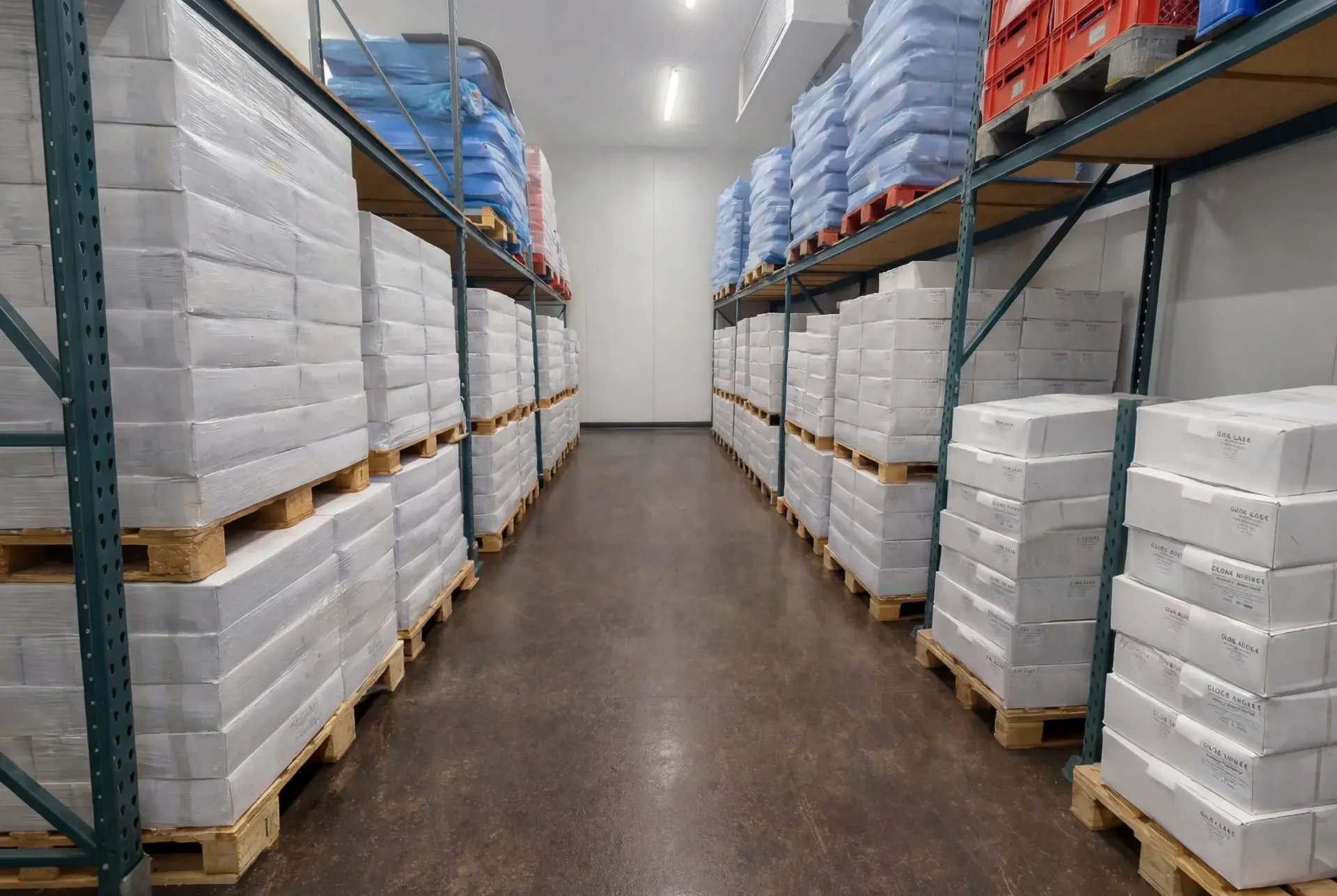
For your shop, that means we arrange the EU export declaration, the UK import declaration, the health certification on the meat and fish, the Border Control Post checks and the frozen transport. You give us a delivery address and a contact. The goods turn up. You see one price per carton or per pallet, delivered, so you can run your shelf maths before you commit a penny.
Here is how DAP stacks up against the two routes most UK shops use now.
| Buying route | Who clears customs | Who holds border risk | Typical minimum | Price you see |
|---|---|---|---|---|
| UK cash and carry pickup | The C&C (already imported) | The C&C | Single cartons | Shelf price + their margin layer |
| You import direct (ex works / FCA) | You / your agent | You | Often a full pallet or more | Goods price, then add freight, clearing, VAT, duty yourself |
| EU supplier on DAP (Ratouli) | The supplier (us) | The supplier (us) | Pallet level, smaller than a container | One delivered price per carton/pallet |
DAP suits the shop that cannot swallow a 40ft reefer, around 25,000 kg, but still wants the maker's price and a clean restock it can repeat.
EU number NL208262EG and HACCP as your trust check
Buying products of animal origin, the most useful thing you can check is whether the maker is an approved establishment. Our EU approval number is NL208262EG. That number says a competent authority, in the Netherlands the NVWA, has approved and inspects the plant that makes your goods. Any meat or fish that moves cross-border carries documentation tied to an approval number like this one. Ask any supplier for theirs. A real processor gives it to you in one line.
HACCP, Hazard Analysis and Critical Control Points, is the food-safety system we work to. It maps where contamination or a cold-chain break could happen and sets the controls that stop it. For frozen offal and salt fish travelling from the Netherlands into a UK freezer, that cold chain and the traceability behind it are everything.
Neither one is a marketing badge. NL208262EG and HACCP are the two facts a serious buyer screens on before price even comes up. They are also the reason an EU-approved maker can ship into the UK at all. The paperwork the border wants only works when it traces back to an approved establishment.
On the products: our chicken range is made with 100% halal ingredients, 100% chicken, no pork. We say it plainly and leave it there.
Sample shipments: what to expect and timing
No sensible shop puts a restock budget behind a supplier it has never handled. So we ship samples first. A sample carton lets you check the cut, the salt level on the fish, the singe on the cow skin and cow feet, the pack sizes, and how the cold chain held on the way in.
Timing. Across EU-to-UK frozen sourcing, buyers reasonably expect a sample within roughly 5 to 10 days of agreeing the spec, and that is what we do. What moves the date is which products you want, what is in production, and the transport slot. We give you the date before we ship, not after.
When the sample lands, check it: arrived hard-frozen with no soft spots, pack sizes match what you ordered, the fish salt and the offal cut suit your customers, labelling and approval reference clean. If it passes, your first real order is the same goods at pallet or multi-carton scale on DAP.
Product range: frozen offal, salted fish, stockfish
We stick to the protein and salted-fish lines that move fastest in African and Caribbean shops. We do not carry egusi, gari, fufu or palm oil. Those pull customers through the door, but they are not what we make. Where you want the deep guide on a product, we link into the full cluster.
Frozen beef offal. Shaki (beef tripe, sold by some shops as towel tripe or saki), abodi (beef reed, also cow reed or large intestine), ponmo or kpomo (cow skin, wele in Ghanaian shops, canda in Cameroon, kplo in Ivorian and Congolese French), bokoto (cow foot, for nkwobi and pepper soup) and cow ears. The singed cuts, cow skin and cow feet, ship cleaned and frozen.
Salted and dried fish. Salted saithe and pollock, the trade fish behind several diaspora names. Bakkeljauw for Surinamese and Antillean cooks, makayabu for Congolese and Central-African cooks, and the salt fish your Caribbean customers buy by the slab. Our sister brand Ratouli Seafood carries the salt-fish range with grades and formats, so serious fish buyers route there.
Stockfish. The Nigerian and Ghanaian staple for egusi and ogbono soup. Stockfish wholesale into the UK is one of the most-searched B2B lines we see, and we ship it on the same DAP terms as everything else.
Pack sizes run from 1kg consumer packs up through 5kg and 10kg cartons to full pallets, so you can match the order to your turnover instead of to a container.
Opening a wholesale account from the UK
The path is short. Send us your shop name, address, the products you want and a rough monthly volume. We confirm what we make, current pack sizes and the delivered DAP price to your postcode. We ship a sample. You check it. You place a first order at pallet or multi-carton scale, we clear it both sides and deliver it frozen to your door, and from there you restock on whatever rhythm fits your freezer and your turnover.
You do not need to be a big operation. A single shop buying a pallet at a time is exactly who DAP is built for. If you also run, or supply, Surinamese or Caribbean lines, we make those too, so one account and one delivery can cover more of your freezer than a single-category wholesaler.
To start, use the contact form on this site or message us directly with your product list and postcode, and ask for the sample. That first carton tells you more than any brochure.
Updated June 2026.
Sourcing for your store or wholesale?
Request a quote or browse the full catalogue.