
Ponmo, Kpomo, Wele, Canda, Kplo: One Cow Skin, Every Name, and Where to Buy It in Europe
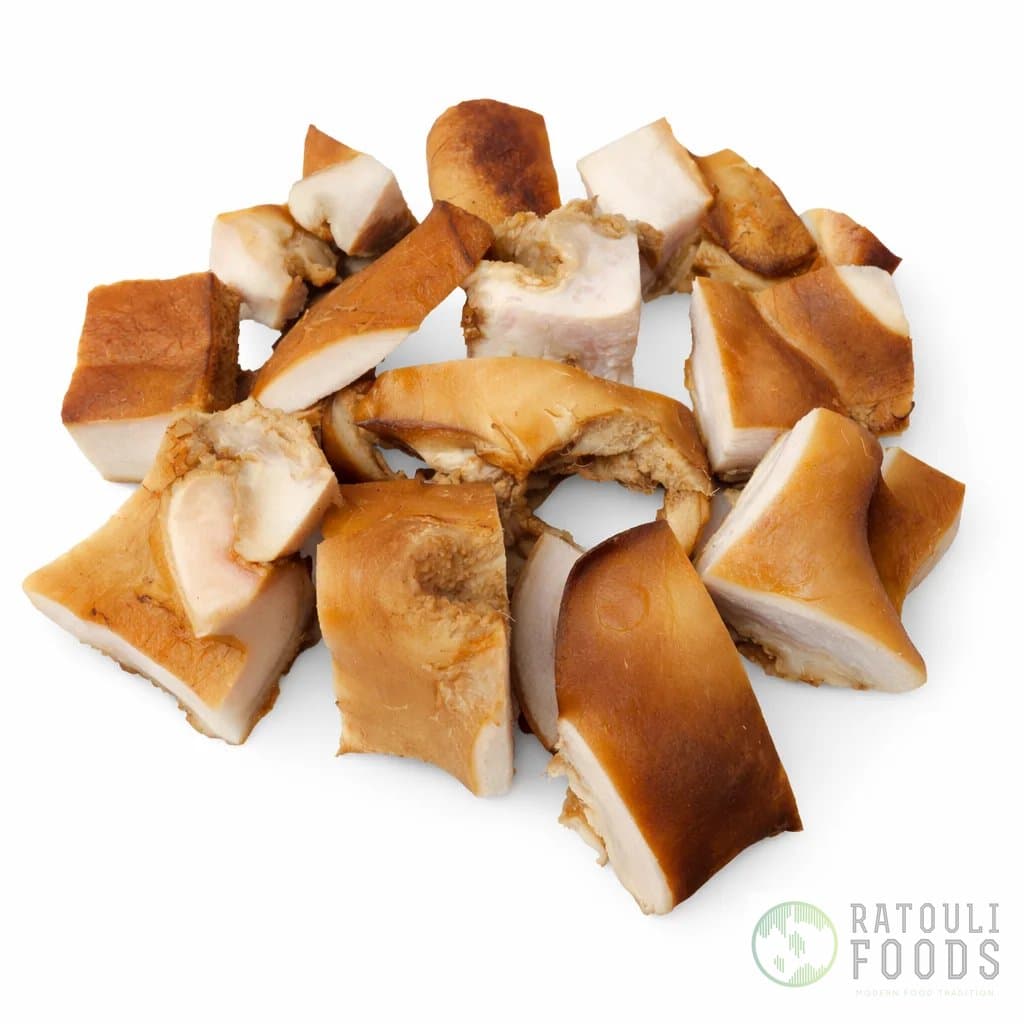
Ponmo, kpomo, pomo, wele, canda and kplo are all one product: cow skin, cleaned and cooked soft for soups and stews. The names change with the community and the language. The skin does not. In Europe you buy it two ways. Home cooks grab it fresh-thawed at an African store or order a small pack online. Shops, restaurants and wholesalers buy it frozen by the carton, delivered DAP by an EU-approved supplier (NL208262EG).
The cow-skin name map: one product, many names
Why does one product carry six names? Because West-African, Central-African and diaspora cooks all across Europe cook with cow skin, and every language kept its own word for it. Shops know this. That is why you see labels like "Cow Skin (Ponmo/Kanda)" or "Cow skin kpomo (Ponmo)" with two or three names stacked on one bag. If you have been hunting one word and turning up empty, search the product instead.
Here are the names buyers actually use, with the language or community behind each one. We lead with the English term and the names that show up reliably in shops and recipes.
| Name | Language / community | Where you hear it |
|---|---|---|
| Cow skin (also cow hide, beef skin) | English / trade | UK shops, EU labels, B2B |
| Ponmo | Yoruba | Nigeria, UK and EU Nigerian stores |
| Kpomo / pomo | General Nigerian | Nigeria-wide, very common on shop labels |
| Wele | Ghanaian (Akan / Twi) | Ghanaian homes and shops |
| Canda | Cameroon / Sierra Leone | Cameroonian and Sierra Leonean cooks |
| Kplo | Ivorian / Congolese French | FR and BE African stores |
| Kanda | Cameroon Pidgin English | Cameroonian Pidgin speakers |
Two honest notes. Kanda is most reliable as a Cameroon Pidgin word. You will see it credited to other languages too, and the Igbo word for cow skin is not settled, since sources give different terms, so we will not pin one down here. The Hausa term comes up differently across sources as well. The safe move, online or at the counter, is to ask for cow skin first, then say the name your family uses. For the full origin story of each name and how they travelled with the diaspora, see our complete guide to ponmo names across cultures.
Sourcing for your store or wholesale?
Request a quote or browse the full catalogue.
Brown vs white cow skin, and what each is for
Cow skin comes in two looks. The difference is the cleaning method, not the animal.
- Brown (singed) cow skin. The hide is burned over heat, then scraped and cleaned. The singeing darkens it and leaves a faint smoky note. This is the everyday choice for Nigerian ponmo and most West-African pots: assorted-meat stews, pepper soups, beans, ofada-style sauces. It keeps its shape and its chew through long cooking.
- White (scalded) cow skin. The hide is scalded and cleaned without burning, so it stays pale. Some cooks want it for a milder taste and a lighter colour in the dish. Stores serving a mixed community get asked for it by name.
Same cut, both of them. When a recipe does not say, brown is what most people mean by ponmo or kpomo. Stores usually carry the two, and on the wholesale side you order each by the carton. The deep how-to on cleaning and texture sits in our cow-skin cluster, so here we stick to the buying call: brown for the classic smoky pot, white for a milder, paler finish.
Where home cooks buy cow skin: African stores, tokos and online
Cooking for the family this week? You have two practical routes.
In person, at an African or Caribbean store. Depending where you live, look for an African grocery, an Afro-Shop, an epicerie africaine, a tienda africana, a negozio africano, or a Surinaamse or tropische toko. The biggest clusters in Europe are Amsterdam Zuidoost and Rotterdam in the Netherlands, Matonge in Brussels and the African shops in Antwerp, Chateau Rouge in Paris, Peckham (Rye Lane) and Tottenham in London, the African shops in Frankfurt, Hamburg and Berlin, Lavapies in Madrid, and the African groceries of northern Italy around Verona, Milan and Mantua. Ask for cow skin, then say ponmo, kpomo, wele, canda or kplo. Most shops keep it frozen, or thawed in the chiller.
Online, in small packs. Plenty of diaspora webshops ship cow skin in 1kg consumer packs, frozen or vacuum-packed, with 2-day cold or insulated delivery. Search the product plus your country, and try a second name if the first search comes up thin. For a home cook, 1kg is a few good pots.
One thing worth knowing. Ratouli Foods is the maker and EU-approved supplier behind the shops, not a consumer webshop. We process and pack the cow skin that stores and wholesalers sell on. Buying for one household? Your fastest route is the store or webshop near you. Run that shop? Read on.
Where stores and wholesalers buy cow skin: frozen cartons, DAP delivery, EU number
If you stock a shop, run a restaurant or supply other stores, you buy cow skin by the carton, not the kilo, and you want it at your door without a border headache. That is what we do from Volendam.
Ratouli Foods is an EU-approved processor, approval number NL208262EG, working to HACCP food-safety standards. We supply wholesalers and specialty stores in the Netherlands, Belgium, Germany, France, Spain, Italy and the United Kingdom, including West-African and Surinamese stores. For a small shop the sticking point is order size. Container importers want a full 40ft reefer, roughly 25,000 kg, which no single store can move. We deliver at pallet and carton level, DAP, so the price you agree is the price landed at your door.
Here is the practical pack ladder for cow skin, from the consumer pack a store resells up to the pallet a wholesaler moves:
| Buyer | Typical format | Notes |
|---|---|---|
| Home cook | 1kg pack | Bought at a store or online, not from us directly |
| Small shop / restaurant | 5kg and 10kg cartons | Brown or white, ordered separately |
| Store chain / caterer | Mixed pallet of cartons | Combine cow skin with Shaki, Abodi, cow feet |
| Wholesaler / distributor | Full pallets | DAP across NL, BE, DE, FR, ES, IT and the UK |
DAP delivery means we handle the transport and, for the UK after Brexit, the customs paperwork at the border. Cow skin arrives with no clearance work on your side. The EU number on the documentation is your traceability check: it ties every carton back to an approved establishment. Cow skin sits on the same order as the rest of the offal range, so most store owners build one delivery across products instead of chasing each cut on its own. See our African grocery store supplier stock list for the full assortment.
How cow skin ships: singed or scalded, frozen, cold chain
Cow skin ships processed and ready to cook, not as raw hide. The work is done before it reaches you. The skin is singed for brown or scalded for white, then scraped, cleaned, cut and frozen.
- Processed first. You get it cleaned and portioned. A home cook rinses and simmers. A shop thaws and sells. No burning or scraping at your end.
- Frozen, held in cold chain. Cartons travel and store at -18C. Kept frozen, cow skin holds well, and that is what makes carton ordering and DAP delivery work for a shop selling it over weeks.
- Brown and white kept apart. They are two different products to your customer, so they are packed and ordered as separate lines and your freezer stays clear.
For a shop the rhythm is simple. Order brown and white by the carton on the same delivery as your Shaki, Abodi and cow feet, hold it at -18C, and move it to the chiller as it sells. To open an account or ask about a first order, our wholesale sourcing guide covers minimum order, pack sizes and lead times, and our team can quote cow skin DAP to your country.
Sourcing for your store or wholesale?
Request a quote or browse the full catalogue.