
Beef Reed (Abodi) and Bokoto (Cow Foot): the Names, the Dishes, and Where Shops and Home Cooks Buy Them in Bulk Across the EU and UK
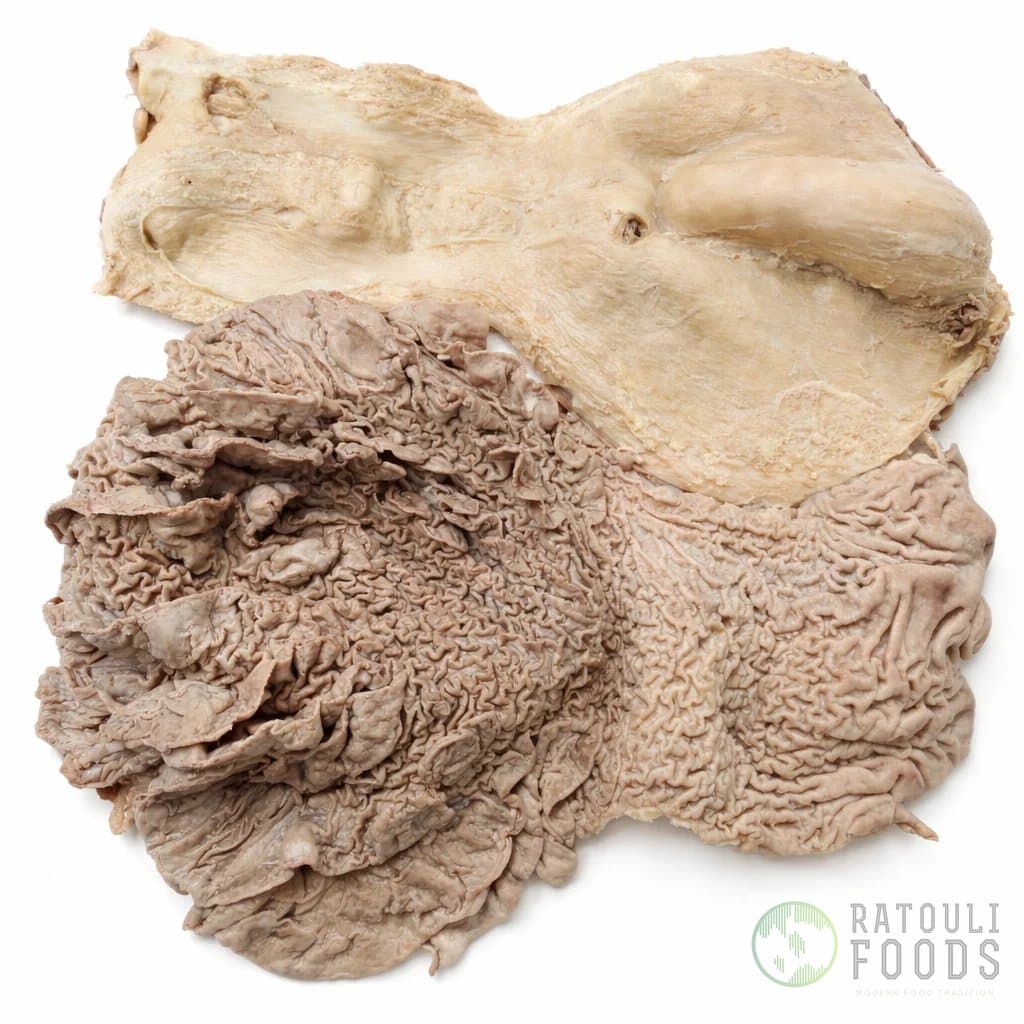
Abodi is beef reed, the long cleaned beef intestine that goes into abodi roundabout and nkwobi. Bokoto is cow foot, the collagen-rich cut behind nkwobi and pepper soup. There are two ways to buy them. A home cook wants small frozen packs from 500g, picked up at an African store or toko. A shop or kitchen wants full frozen cartons (12 x 1kg, 24 x 500g, 20kg whole cow feet), shipped DAP from one EU-approved maker, Ratouli Foods in Volendam, establishment number NL208262EG.
What abodi and bokoto are, and the two ways to buy
Two products, a stack of names, and one question to settle first: are you cooking for the family this weekend, or stocking a shop freezer?
Abodi is the long beef intestine, cleaned and cut into rings. English-language African stores shelve it as beef reed, cow reed or large intestine. It is the chew in abodi roundabout, and it turns up in nkwobi and in assorted-meat pepper soup.
Bokoto is cow foot. The same cut sells as cow leg or cow foot in most stores. It carries the gelatin in nkwobi, in cow foot pepper soup, and in any slow stew that needs body. Simmer it long enough and the collagen melts out and thickens the pot.
The split between the two kinds of buyer is clean:
- Home cook: a 500g or 1kg frozen pack from an African store, toko or online grocer near you. Enough for a pot or two.
- Shop, restaurant or caterer: cartons by the case (12 x 1kg, 24 x 500g, or 20kg whole cow feet), delivered frozen to the door. That is the wholesale side, and it runs through Ratouli Foods, an EU-approved processor in Volendam (NL208262EG) shipping DAP across the EU and the UK.
The rest of this guide maps the names for each product, lists the dishes that pull the demand, lays out the pack ladder for both, and explains why cow feet is singed before it freezes. We cut and pack these ourselves, so the pack sizes below are what actually leaves the building, not a guess off a catalogue.
Sourcing for your store or wholesale?
Request a quote or browse the full catalogue.
Abodi: beef reed, cow reed, large intestine, and roundabout
Abodi is one of those cuts that picks up a new name in every shop, which is half the reason it is hard to find online. People search the word they grew up with. Here they all are in one place.
| Name | Language or community | What it refers to |
|---|---|---|
| Abodi | Nigerian (common diaspora term) | Cleaned beef intestine, cut into rings |
| Beef reed / cow reed | English store term (UK, EU African stores) | The same intestine cut |
| Large intestine / beef tripe (reed) | English butcher term | The large-intestine section, not the stomach |
| Roundabout | Nigerian dish and cut name | The assorted-offal mix abodi cooks into |
One thing to keep straight: abodi (reed, the intestine) is not Shaki, which is beef tripe from the stomach. Stores often shelve them side by side as assorted offal, but they cook differently. Abodi is chewier and holds its shape. Shaki is softer and more open. When a recipe says reed, it means abodi.
The dishes pulling abodi off the shelf are abodi roundabout, where the cleaned intestine sits at the centre of an assorted-meat plate, nkwobi, the Igbo spiced cow-foot dish that often carries abodi next to the foot, and assorted-meat pepper soup, where abodi brings the chew. People buy it for the texture, and once they want it they want it. A store that always has it keeps those customers.
For the full story on the cut, the cleaning and the cooking, see our abodi complete guide. This page is the buy-and-stock layer. That one goes deep.
Bokoto: cow leg, cow foot, and the dishes (nkwobi, pepper soup)
Bokoto is cow foot. Like abodi, it travels under a handful of names depending on who you ask and which shop you walk into.
| Name | Language or community | What it refers to |
|---|---|---|
| Bokoto | Nigerian (diaspora term) | Cow foot, the lower-leg cut with skin, bone and connective tissue |
| Cow foot | English store and Caribbean term | The same cut |
| Cow leg | English store term (UK, EU African stores) | Often the foot plus a section of lower leg |
| Koeienpoten | Dutch (toko term) | Cow feet, as sold in Surinamese and Antillean tokos |
What makes bokoto worth cooking is collagen. The foot is mostly skin, tendon and joint, and a long simmer turns all of that into gelatin. That gelatin is what gives nkwobi its sticky, lip-coating sauce and cow foot pepper soup its body. It also explains why bokoto is a slow-cook cut and never a quick fry. People buy it for a Sunday pot, a celebration, a soup that has to come out rich.
The dishes pulling bokoto are nkwobi, the Igbo cow-foot delicacy spiced with utazi and ehu and bound with a palm-oil paste, cow foot pepper soup, that warming peppery broth, and across the Surinamese and Caribbean table the same cut going into stews where koeienpoten do the identical gelatin job. In a West-African store, cow foot and nkwobi sit close together. A customer asking for bokoto is usually about to make nkwobi.
For the cut detail, the weights and the cooking notes, see our cow feet complete guide. Below is what matters for buying it, at home or for a shop.
Home packs vs store cartons (the pack ladder)
This is the most useful table on the page. Same product at both ends, different pack sizes. A home cook buys at the top of the ladder. A shop or caterer buys at the bottom.
| Buyer | Pack | Abodi (beef reed) | Bokoto (cow feet / cow legs) |
|---|---|---|---|
| Home cook | Single frozen pack from a store | 500g or 1kg consumer pack | 500g or 1kg consumer pack |
| Small shop / toko | By the case, mixed in with other offal | 24 x 500 gram carton | 20 x 500 gram carton |
| Shop / restaurant | Standard frozen carton | 12 x 1 kg carton | 10 x 1 kg or 12 x 1 kg carton |
| Caterer / high turnover | Whole / bulk carton | 12 x 1 kg, by the pallet | 20 kg carton, whole cow feet |
| Wholesaler / distributor | Pallet | Mixed offal pallet, DAP | Mixed offal pallet, DAP |
Those are the real cartons we run: abodi in 12 x 1kg and 24 x 500g, cow feet and cow legs in 12 x 1kg, 10 x 1kg and 20 x 500g, plus a 20kg whole-cow-feet carton for kitchens that move volume. The 1kg packs inside a carton are what a shop puts straight in the cabinet, so one box covers the freezer display and the back stock both.
You do not need to commit to a pallet to open an account. Start at carton level, watch how the cuts move, scale to pallets once you know your turnover. That carton-not-container starting point is exactly the gap a small store cannot fill with a container importer, who wants a full 40ft reefer or nothing.
Why cow feet is singed: burned vs scalded
This one trips up a lot of buyers, so I will be plain about it. The two cuts on this page are prepared two different ways before they freeze, and the difference is deliberate.
Cow feet (bokoto) is singed, listed as burned. The foot comes with skin and hair on it. Before it can be sold and cooked, the surface is dehaired and the skin is singed over flame. That is what burned means on the carton: the hide is flamed, the hair is gone, and the skin takes on the smoky, slightly charred character diaspora cooks expect in cow foot. Same idea as singed cow skin, ponmo. The skin stays on the foot, because that skin is part of the collagen that thickens the pot. So our cow feet ships as burned, and whole cow feet as dehaired and burned.
Abodi (beef reed) is scalded. Intestine has no hide to singe. It gets cleaned and scalded, a hot-water treatment that firms the tissue and clears residue, then cut into rings. So abodi ships scalded, not burned. If you ever see abodi sold as burned, that is a mislabel. Reed is a scalded cut.
Here is why it matters for a shop. Customers know the difference by sight and feel. Singed cow feet should look and smell flamed, not boiled. Scalded abodi should be clean and firm. Stocking the right preparation is half of keeping these customers, and it is the kind of detail a container importer two countries away usually gets wrong.
Bulk ordering and DAP delivery for stores and caterers
Now the part for shop owners, restaurants and wholesalers. If you stock African or Surinamese cuts, you can buy abodi and bokoto direct from the maker instead of through a chain of middlemen.
Who we are. Ratouli Foods is a meat processor in Volendam, the Netherlands, fourteen years in the trade, working under EU approval number NL208262EG and a HACCP food-safety plan. That EU number is the food-safety registration of the establishment. It is what lets a maker ship approved product across the EU and into the UK, and it is the first credential a serious buyer checks.
How DAP works. DAP means Delivered At Place. We arrange the transport and the export paperwork, and the goods land frozen at your door. For an EU shop there is no border step left for you to manage. For a UK shop after Brexit, the cuts still leave an EU-approved establishment and arrive DAP, so the customs side rides with the shipment instead of landing on your counter.
Where we deliver: the Netherlands, Belgium, Germany, France, Spain, Italy, Portugal and the United Kingdom.
Cold chain. Abodi and cow feet ship frozen at -18C and stay frozen through delivery. Hold them at -18C in your freezer and they keep for months. Thaw under refrigeration before sale or cooking.
Opening an account. Tell us your country, the cuts you want (abodi, cow feet, and the rest of the offal range: Shaki, ponmo, cow ears), and whether you are starting at carton or pallet level. We come back with pack sizes, a quote and a lead time. Plenty of shops open with a small mixed offal order to see how the cuts move, then scale up.
Stocking a wider range? See the African grocery store supplier stock list for the full set of frozen offal and salted fish from one supplier.
Sourcing for your store or wholesale?
Request a quote or browse the full catalogue.