
Cow ears across the diaspora: names, texture and the dishes that use them
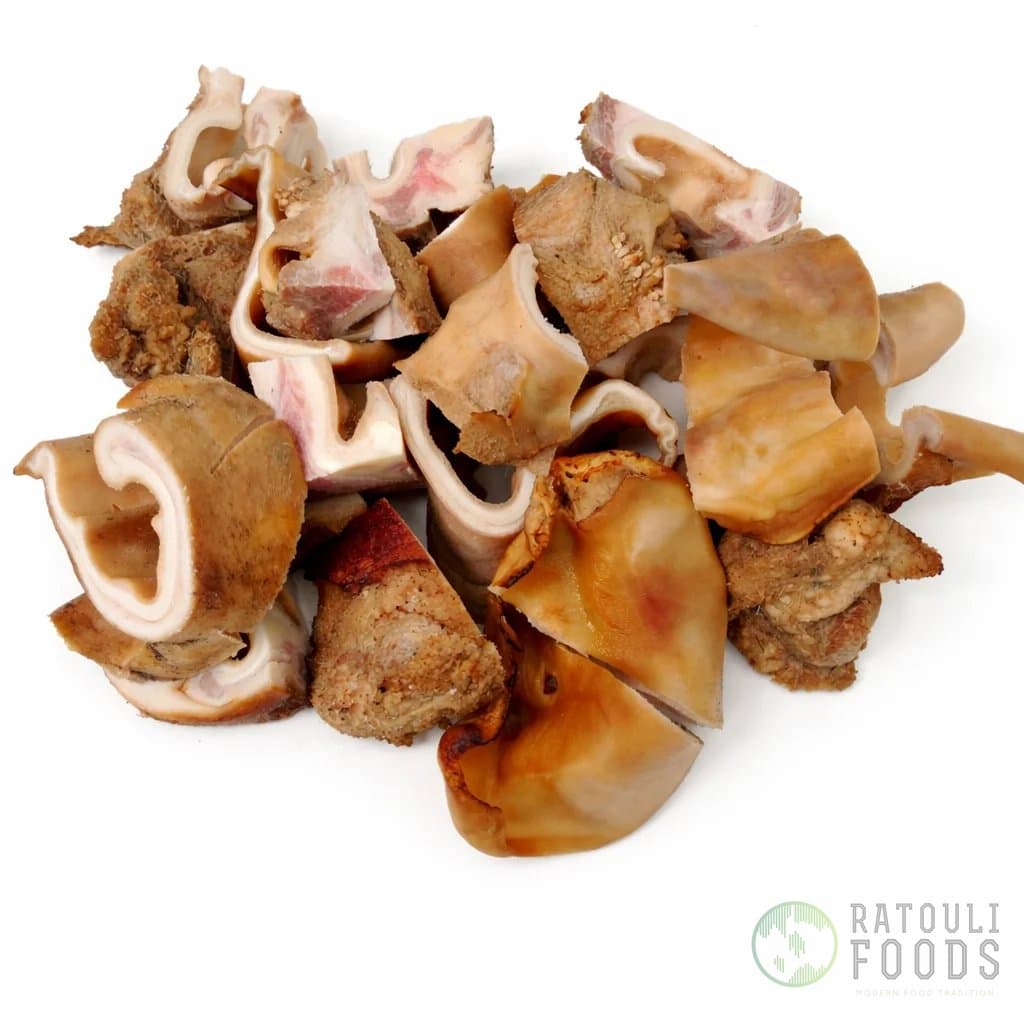
Cow ears, also sold as beef ears, are the cleaned, de-haired and singed ears of a cow. The texture is part crunchy cartilage, part soft gelatinous skin, and it is full of collagen. Cook it long and slow and it turns tender while the cartilage keeps its bite. It goes into nkwobi, pepper soup and assorted meat.
What a cow ear actually is
A cow ear is the ear. It comes off the head, gets de-haired, then singed over flame to clean the surface, then washed and cut. That singe is why a properly prepared ear has a slightly smoky edge and a clean look instead of anything raw or hairy.
People mix this cut up with other offal all the time, so let me draw the line. A cow ear is not tripe. Tripe is the stomach, and traders and cooks call it Shaki. It is not skin. Cow skin is Ponmo, sometimes spelled Kpomo. It is not beef reed, the inner stomach lining sold as Abodi. And it is not feet, which go by bokoto. The ear is its own thing, with its own texture and its own job in the pot.
Cut one open and you see why people want it. Firm cartilage runs through the middle, with a layer of soft, gelatinous skin around it. Lean meat, very little fat, a lot of collagen and gelatine. That mix is the whole point.
Sourcing for your store or wholesale?
Request a quote or browse the full catalogue.
Cow ears names across the diaspora
Cow ears travel under a lot of names. I sell to buyers across seven countries and the cut is the same in every fridge, but the label on the box changes by language. If you are sourcing it, searching for it, or putting it on a menu, here is the map. These are the cow ears names you will actually run into.
| Language | Name |
|---|---|
| English | cow ears, beef ears, cow ear |
| Dutch | koeienoren |
| French | oreilles de boeuf |
| German | Rinderohren |
| Spanish | orejas de res |
| Italian | orecchie di manzo |
| Portuguese | orelhas de boi |
In UK African shops the cut is usually labelled Cow Ears or Beef Ears, and you often see it sold as a pepper soup cut. Shops like John and Biola, Pride of Africa and Thilda African Food stock it and describe it the same way every time. Chewy, gelatinous, full of collagen. When a French buyer asks for oreilles de boeuf or a Spanish one for orejas de res, they want the same box I ship to Lagos-run shops in London.
Why the crunch is the selling point
The texture is what keeps people buying cow ears year after year. You get two things in one bite. The skin around the ear goes soft and gelatinous when you cook it, almost sticky on the lips from the collagen. The cartilage in the middle stays firm and gives a clean crunch. Soft and crunchy in the same mouthful. Nothing else in the offal range does exactly that.
Here is the part that matters in the kitchen. Cook a cow ear long and slow and it goes tender, but the cartilage holds its bite the whole way through. You cannot really overcook it into mush the way you can with softer cuts. So it forgives you in a busy pot, and it suits dishes that simmer for an hour or more.
It is lean too. Collagen and gelatine plus cartilage, very little fat. The bite you get is structure, not grease. For cooks who want texture in a pot without making it heavy, that is the draw.
The dishes that use cow ears
Cow ears earn their place in a handful of dishes where bite and collagen do the work. These are the beef ears dishes I see moving most.
- Nkwobi. The Igbo spicy offal dish. Cow ears go in alongside other head and offal cuts, bound in that thick palm oil and potash sauce. The crunch of the ear against the soft sauce is half the reason people order it.
- Pepper soup. This is the big one. Cow ears in pepper soup is a classic, and the cut gets sold as a pepper soup cut for a reason. It gives the broth body from the collagen and gives you something to chew between spoonfuls of that hot, spiced liquid.
- Assorted meat. The Yoruba orisirisi. A mixed pot of offal and meat where every cut brings a different texture. Cow ears bring the crunch. Sat next to Shaki, Ponmo and Abodi, the ear is the one with the firmest bite.
- Beef stew and head-meat dishes. Slow-cooked stews where the ear melts down at the edges and holds firm in the middle. The gelatine thickens the gravy as it goes.
If you stock the offal range, the ear sits naturally beside the other assorted-meat cuts. A shopper buying for nkwobi or assorted meat rarely buys one cut. They buy the set. Keep cow ears next to Shaki, Ponmo, Abodi and cow feet on the shelf and in the freezer. For the related guides, see our pieces on Shaki, Ponmo, Abodi and cow feet.
Buying cow ears from Ratouli Foods
We stock cow ears frozen under the Afri-mama range. They come in cleaned and cut, already de-haired and singed, held at -18 C. The work is done before the box reaches you.
On compliance, the cut comes out of an EU-approved plant, number NL208262EG, under HACCP, with a public NVWA inspection record you can look up. We deliver DAP across the Netherlands, Belgium, Germany, France, Spain, Italy and the UK, so the duty and delivery side is handled and the price you see is the price at your door.
Pack formats follow the rest of the offal range, cartons and 500 gram packs, so you can take a full case for a shop freezer or smaller packs for a tighter rotation. Demand for cow ears tracks the rest of the assorted-meat offal. It runs steady through the year and climbs at party time, around the New Yam Festival, at Eid and through December. Plan your December order early. That is the month everyone wants the same boxes at once.
Sourcing for your store or wholesale?
Request a quote or browse the full catalogue.
Related guides