
Cow ears are cleaned, singed beef ears
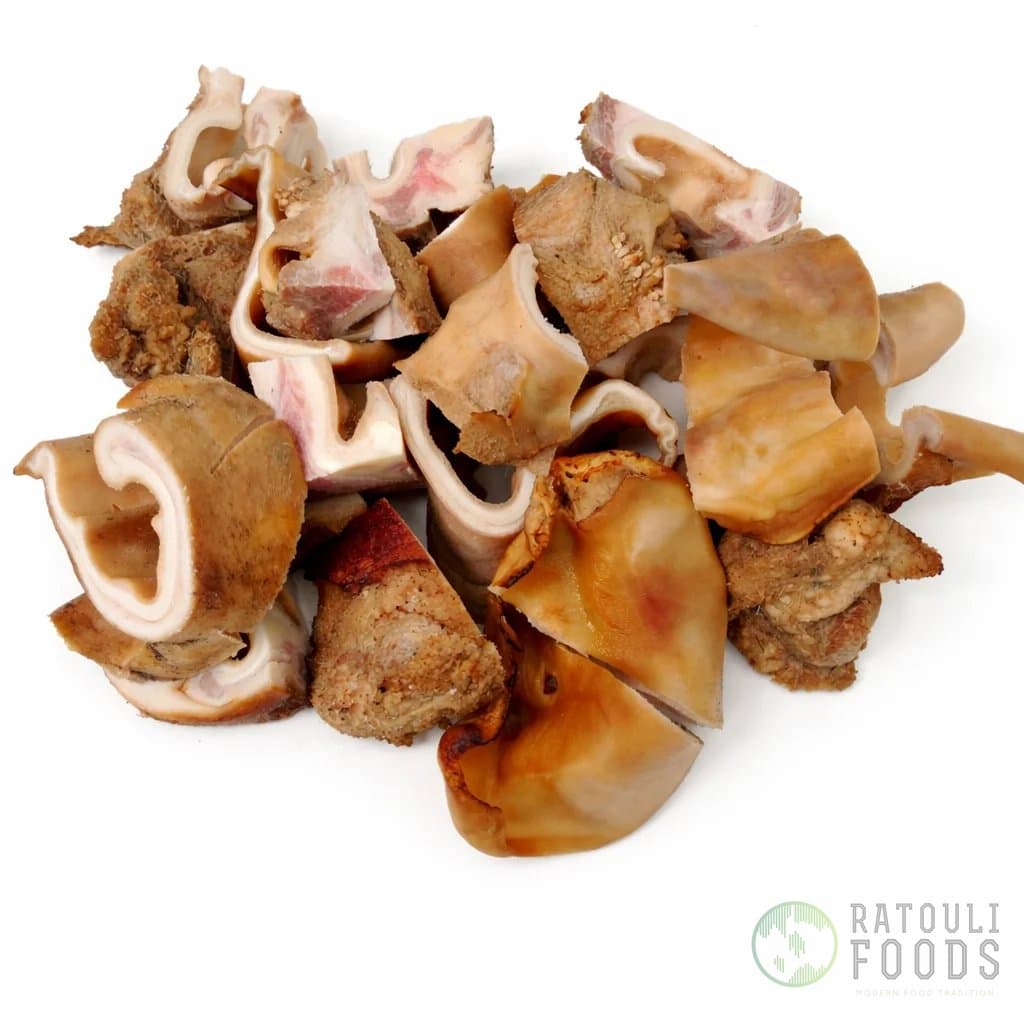
Cow ears, also called beef ears, are the cleaned, de-haired and singed ears of a cow. Part of the cut is crunchy cartilage, part is soft gelatinous skin loaded with collagen. Cooks put it in nkwobi, pepper soup, assorted meat and stew, where it adds chew and gives the pot some body.
What cow ears are
Cow ears are exactly what the name says. The ear of the cow, cleaned, de-haired and usually singed over a flame to take off the last hairs and give it a roasted edge. Then it gets cut down to size. You end up with a cut that works on two textures at once. A layer of soft, gelatinous skin around a core of firm cartilage. The cartilage gives the crunch. The skin gives the collagen and the gelatine.
So when people ask what cow ear meat actually is, the honest answer is there is not much muscle in it. It is skin, gelatine and cartilage. Lean, collagen-heavy, built for long cooking. In UK African shops it sits on the shelf as Cow Ears or Beef Ears, usually marked as a pepper soup cut and described as chewy, gelatinous, full of collagen. John and Biola, Pride of Africa, Thilda African Food, they all carry it. We have sold it for years to the same kind of buyer here on the mainland.
Sourcing for your store or wholesale?
Request a quote or browse the full catalogue.
Cow ears by another name
Same cut everywhere. Only the name changes with the language. If you are buying for a shop or a restaurant kitchen anywhere in Europe, this is what shows up on a spec sheet or what a supplier calls it.
| Language | Name |
|---|---|
| English | Cow ears, beef ears, cow ear |
| Dutch | Koeienoren |
| French | Oreilles de boeuf |
| German | Rinderohren |
| Spanish | Orejas de res |
| Italian | Orecchie di manzo |
| Portuguese | Orelhas de boi |
One product. When you order from us, use whichever name fits your market. The carton is the same either way.
The texture, and why cooks prize it
Texture is the whole reason cow ears earn a place in the pot. You get two things from one cut. The cartilage gives a clean crunch that holds up even after hours on the heat. The skin around it goes soft and sticky as the collagen breaks down into gelatine, the same way oxtail or trotters do. That gelatine thickens a sauce and gives it body that coats the lip, no flour, no thickener.
Cook it long and slow. The ear turns tender but keeps the crunchy edge from the cartilage. That contrast is the point. A pot of assorted meat that is all soft gets boring fast. Drop in some ear and every few bites you hit the crunch. Cooks who know offal reach for it on purpose. It is not a filler.
The dishes it goes in
Cow ears show up wherever offal and assorted meat carry the plate. A few of the regulars:
- Nkwobi. The Igbo classic, cow foot and assorted offal in a thick spiced palm oil sauce. The ear adds crunch against the soft foot.
- Pepper soup. This is the cut a lot of shops label it for. The gelatine gives the broth body and the cartilage gives you something to chew.
- Assorted meat (Yoruba orisirisi). The mixed-offal plate. Ear sits in there with shaki, ponmo and the rest, every piece a different texture.
- Beef stew and head-meat dishes. Where you want collagen to thicken the sauce and a bit of bite to break up the softness.
If you stock the rest of the offal range, ear belongs next to it. The buyers reaching for shaki and ponmo are the same ones reaching for ear.
How it differs from shaki, ponmo, abodi and cow feet
These cuts get mixed up all the time. They share a pot, so people assume they are interchangeable. They are not. Different parts of the animal, different behaviour. Quick rundown so nobody orders the wrong thing.
| Cut | What it actually is | Texture |
|---|---|---|
| Cow ears (beef ears) | The ear | Crunchy cartilage and soft gelatinous skin |
| Shaki | Tripe (stomach lining) | Soft, spongy, chewy |
| Ponmo (Kpomo) | Cow skin | Soft, gelatinous, no cartilage |
| Abodi | Beef reed (intestine cut) | Chewy, ridged |
| Cow feet (bokoto) | The feet | Gelatinous with bone |
Short version: ear is the only one of these with cartilage crunch. Shaki is tripe, ponmo is skin, abodi is reed, bokoto is feet. Swap ponmo in where a recipe calls for ear and the crunch is gone. Worth knowing before you cook for a party. We have separate guides on cow feet, shaki, abodi and ponmo if you want the detail on each.
Sourcing and wholesale
We stock cow ears under our Afri-mama range. Frozen, cleaned, cut, ready to go straight into the pot. Held at -18 C, EU approval number NL208262EG, HACCP in place, and a public NVWA inspection record you can check yourself. We ship DAP across the Netherlands, Belgium, Germany, France, Spain, Italy and the UK, so the price we quote is the price at your door.
It comes in the same pack formats as the rest of the offal range, cartons and 500 gram packs, so it slots in next to your shaki, ponmo and cow feet order with no extra hassle. Demand runs steady through the year and spikes around parties, the New Yam Festival, Eid and December. Order ahead for those weeks. Run a shop or a kitchen and want a quote or a sample? Get in touch and we will sort it.
Sourcing for your store or wholesale?
Request a quote or browse the full catalogue.