
Stocking ponmo in your African food store: brown vs white, packs and labelling
Carry both grades. Brown burnt ponmo for the flavour and the bite, white ponmo for the buyer who wants the cleaner look. Hold head mask and leg skin too. Run 12 x 1 kg for restaurants and 24 x 500 gram for home cooks. Keep it at -18 C and reorder by the pallet before the festival peaks.
Which ponmo SKUs to carry
Ponmo is edible cow skin. Cattle hide with the hair off, cooked soft, the collagen-rich outer layer of the cow. It is not shaki, which is the stomach lining. It is not abodi, the abomasum. Hand a customer the wrong one and you lose them, simple as that. Keep the three apart on the shelf and keep them apart in your head.
For a working store you want four lines, not one. Two grades and two cuts.
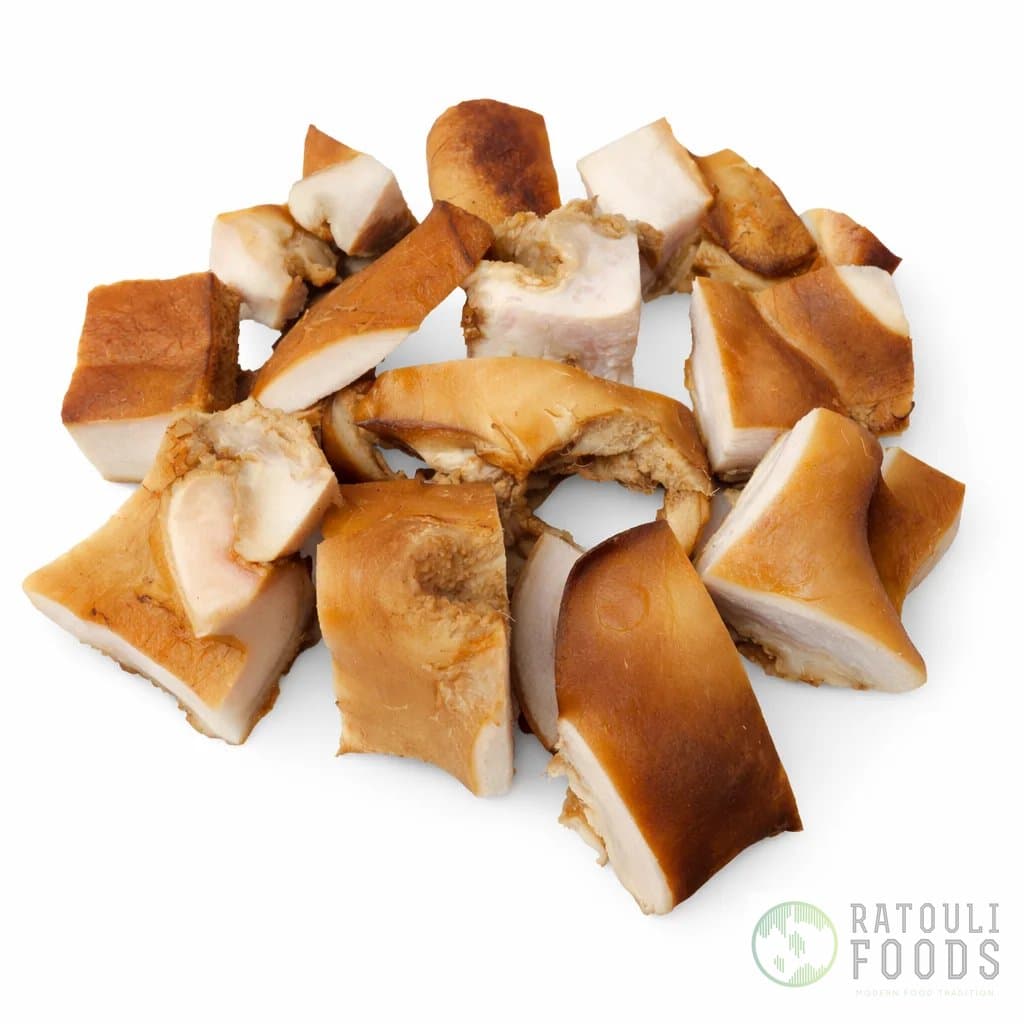
- Brown ponmo (burnt). The hair is singed off over flame. Smoky, darker, firmer bite. This is the default for most Yoruba and Igbo cooking and the one buyers ask for by name.
- White ponmo. Scalded or boiled and shaved, no flame. Paler and softer. Plenty of customers read white as cleaner, so it moves on its own. You do not want to be out of it.
- Cow skin head mask. The hide from the head. In the UK African retail trade they call it beef mask. Thicker pieces, holds up in long-cooked draw soups.
- Cow skin from legs. Skin off the legs, leaner cut, the one for peppered ponmo and small chops.
If a higher tier sells in your area, ask for Ponmo Ijebu from Ogun State. Thicker, prized, fetches more. Start with the four core lines, watch what walks out the door, then widen. For the offal lines your customers buy on the same trip, point them to our shaki buying guide and abodi buying guide.
Sourcing for your store or wholesale?
Request a quote or browse the full catalogue.
Brown vs white, head mask vs leg skin: what each one is for
Nobody picks at random. They have a dish in mind and they want the texture that suits it. Stock to the cooking and every line sells better.
| SKU | Look and bite | What buyers cook with it |
|---|---|---|
| Brown ponmo (burnt) | Darker, smoky, firm chew | Egusi soup, ofada and ayamase, efo riro, ogbono, abula, pepper soup |
| White ponmo | Pale, soft, clean look | Lighter soups, ewa agoyin beans, anyone who reads white as fresher |
| Head mask | Thicker pieces, holds shape | Long-cooked okra and draw soups, parties and owambe pots |
| Leg skin | Leaner, even thickness | Peppered ponmo, small chops, street and party trays |
It all cooks down to gelatin and gives the soup body, which is half the reason cooks reach for it. Your Ghanaian customers call it wele and build it into waakye and a lot of daily food. Igbo buyers may ask for kanda. Hausa-speaking customers might say ganda. Same product, different name on the tongue. Teach your counter staff all of them so nobody walks out empty-handed.
On nutrition, be straight if a customer asks. Ponmo is lean and collagen-rich, low in fat. Mostly collagen, so on its own it is not a complete protein, and people eat it alongside meat or fish. It earned the name the common man's protein for a reason, and your customers already know its worth. Do not talk down to them about it.
Pack sizes: who buys what
The pack size decides the buyer. Get it wrong and you either scare off the home cook with a case that is too big, or you make the restaurant owner buy ten small packs to fill one pot. We run two formats for exactly that reason.
- 12 x 1 kg. Twelve one-kilo packs per case. Your restaurant, takeaway and event-caterer format. They cook in volume and want fewer, bigger units to open. This is the case to push before a big owambe order.
- 24 x 500 gram. Twenty-four half-kilo packs per case. The home-cook format. A 500 gram pack is one or two family pots, the right size for a shopper who is not feeding a hall. It also lets you set an entry price that moves fast off the shelf.
A simple rule that works. Shelve the 500 gram packs at eye level where home shoppers browse. Keep the 1 kg packs ready behind the counter or in the chest for the trade buyers who phone ahead. Carry both. Stock only one format and you hand the other half of the market to the shop down the road.
Cold chain and reordering by pallet
Ponmo is sold cleaned and cut, then frozen. Ours is frozen at -18 C under the Afri-mama brand, packed in Volendam. Keep it frozen hard the whole way, from our van to your chest freezer to the customer's bag. Frozen cow skin that thaws and refreezes loses its bite and weeps water, and your regulars notice the first time.
- Hold it at -18 C. Do not let it sit soft on a loading bay.
- Rotate first in, first out. Old stock to the front.
- Keep brown, white, head mask and leg skin in separate, labelled bins so staff never grab the wrong one in a hurry.
On supply, the paperwork matters when you resell. We carry EU approval NL208262EG, run HACCP, and there is a public NVWA inspection record you can point to if a customer or an inspector asks. Delivery is DAP across NL, BE, DE, FR, ES, IT and the UK, so the freight and clearance are handled and the price you agree is the price at your door.
Reorder by the pallet, not by the case, and order ahead of the peaks. Demand climbs hard around the New Yam Festival in August, Eid, December, and any big party season. Those are the weeks you do not want to be short. Ponmo holds frozen for a long run, so a full pallet before a festival costs you nothing in waste and saves you a panic reorder at the worst time. If you are working out volumes for a first ponmo wholesale order, tell us your weekly turn and we will size the pallet with you.
Labelling that sells: put every name on the shelf
This is the part most stores get wrong, and it is free money. Your customers search for this product under a dozen names depending on where they are from. If your shelf label shows one of them, the other shoppers walk straight past the thing they came in for.
Put all the common names on one clear label. Something like this.
- Ponmo (also pomo, kpomo, kponmo) for Yoruba buyers
- Kanda for Igbo buyers
- Wele for Ghanaian buyers
- Beef mask or cow skin in plain English
That one label catches the Yoruba shopper looking for ponmo, the Igbo shopper looking for kanda, the Ghanaian looking for wele, and the English-first customer reading cow skin. Same case of stock, four times the chance of a sale. Add the grade and pack on a small sub-label: brown or white, head mask or leg skin, 1 kg or 500 gram. A buyer who can see exactly what they are picking up does not need to ask. A customer who does not have to ask buys faster.
The same logic runs through your online listings and your supplier searches. People type beef mask, cow skin, kpomo and ponmo in roughly equal numbers. And if you source it yourself, the EU literal terms like Dutch koeienhuid mostly bring back leather, so always pair them with the African name. Stocking ponmo for your shelf or sourcing it as a kpomo supplier to other shops, name it the way your customers name it.
Sourcing for your store or wholesale?
Request a quote or browse the full catalogue.
Related guides