
The 4 types of tripe: honeycomb, blanket, book, reed
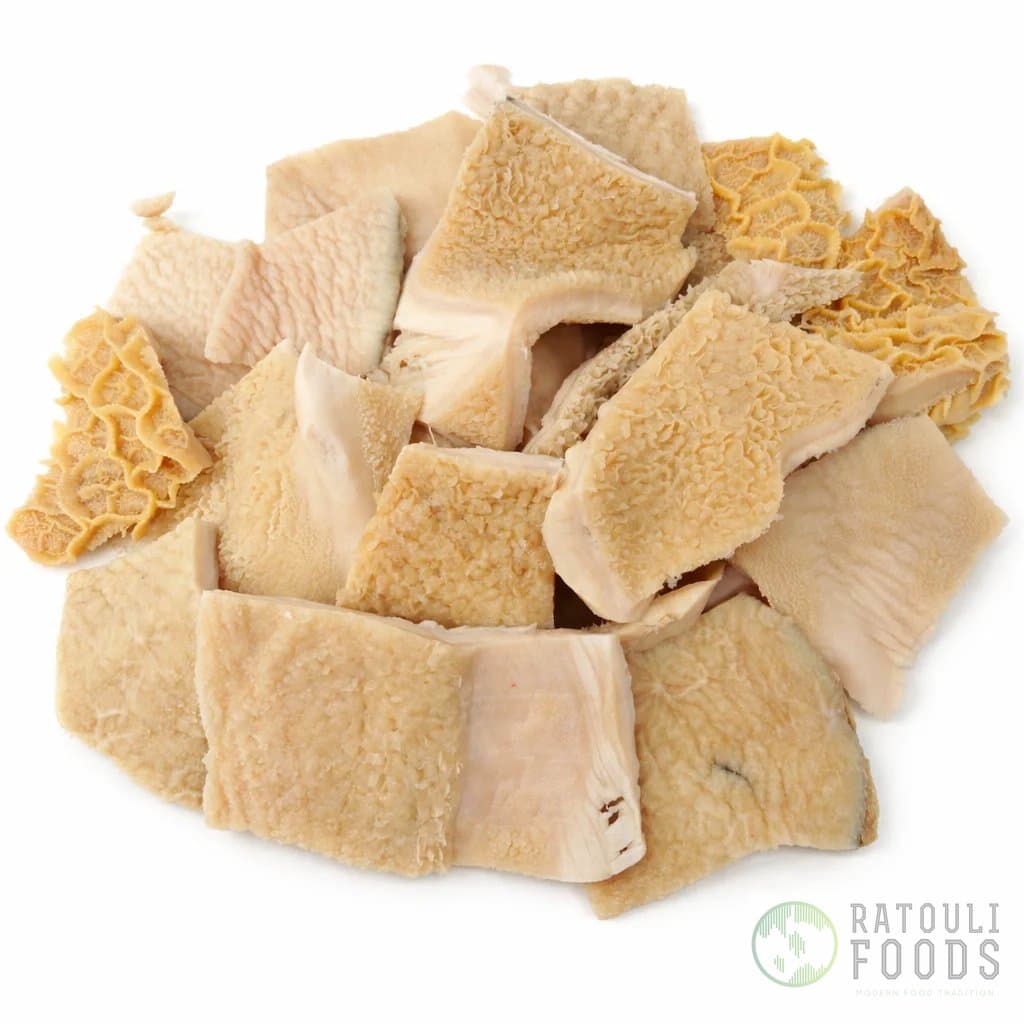
A cow has four stomach chambers, and each one is a different tripe. Honeycomb (reticulum) is the prized one most people mean by Shaki. Blanket (rumen) is the flat, smooth sheet. Book or bible tripe (omasum) has thin leaves. Reed (abomasum) is the gland stomach, sold separately as Abodi.
The four stomachs, the four tripes
When a customer asks me for tripe, my first question is which one. Most do not know there are four. At the butcher counter it all gets called the same thing, but a cow is a ruminant. The stomach has four chambers, and each one gives a tripe with its own look, its own texture, and its own job in the pot.
Here is the plain version. The reticulum is the second chamber and the source of honeycomb tripe, named for the raised six-sided pattern on its surface. This is the cut most West-African cooks mean when they say Shaki (Yoruba ṣakí, Hausa saki). The rumen, the largest chamber, gives blanket tripe, also called flat or smooth tripe. The omasum gives book tripe, stacked in thin leaves like pages, which is where the names bible tripe, leaf and manifold come from. The abomasum, the fourth chamber and the only true gland stomach, gives reed tripe. We sell that one separately as Abodi, and I keep it distinct on purpose. Abodi is reed, ponmo is cow skin, roundabout is small intestine. Different products. Do not let anyone merge them.
One word on colour. Green or brown tripe is unbleached, still carrying the natural tint from the animal's diet. White tripe has been cleaned and dressed. Our Shaki ships scalded, cleaned, cut and frozen, so it arrives white and ready to par-boil.
Sourcing for your store or wholesale?
Request a quote or browse the full catalogue.
How each type cooks, and how it feels in the mouth
Texture is the whole reason this matters. Pick the wrong tripe for a dish and it comes out rubbery or it falls apart. Pick the right one and it holds, it carries flavour, and it gives that bite people are paying for.
Honeycomb is the favourite, and for good reason. The folds trap broth and chew tender once it is cooked through, soft and spongy but still with structure. It is the most forgiving and the most prized. Within Shaki, Yoruba cooks split it further: shakoto is the thick full sac, shaki onigbin is the smoother, prized side.
Blanket tripe is flatter and firmer. It is the workhorse. Cheaper, a little chewier, and it needs a longer simmer to soften. It earns its place in a big communal pot where you want volume. Book tripe is another thing again. Those thin leaves cook faster and feel delicate, almost slippery, so they suit soups where you do not want a heavy chew. Reed, the Abodi cut, is softer and more gelatinous. It breaks down quickly, which is why it ends up in richer, saucier dishes.
One rule never changes: cook your tripe first. Whichever type you use, it is the toughest thing going into the pot. Scrub it with rock salt and vinegar or lime, scrape the honeycomb folds clean, par-boil it 10 to 15 minutes, then take it into the main simmer. Skip that and the rest of the dish is ready while the tripe is still fighting you.
Comparison table: honeycomb vs omasum tripe and the rest
This is the table I wish someone had shown me years ago. It lines up the four tripes against the chamber they come from, how they feel, how they cook, and where they belong on the plate. If you have ever wondered about honeycomb vs omasum tripe specifically, the difference is right here. Honeycomb holds its bite and traps broth. Omasum is thin-leaved and delicate.
| Tripe type | Stomach chamber | Texture | Cooking | Best African dishes |
|---|---|---|---|---|
| Honeycomb (Shaki, towel) | Reticulum | Spongy, tender, holds bite, traps broth | Par-boil then simmer; most forgiving | Pepper soup, egusi, efo riro, assorted meat (orisirisi) |
| Blanket (flat, smooth) | Rumen | Flat, firm, chewier | Needs the longest simmer to soften | Okra soup, large communal stews |
| Book (bible, leaf, manifold) | Omasum | Thin leaves, delicate, slippery | Cooks faster, lighter chew | Light soups, ogbono draw soup |
| Reed (Abodi) | Abomasum | Soft, gelatinous, breaks down | Quick to soften, enriches sauce | Igbo nkwobi, ofada/ayamase stew |
Names shift by language and region, so do not get thrown by them. The same honeycomb cut is pens or runderpens in Dutch, fladder in Surinamese kitchens, tripes de boeuf in France, Kutteln or Pansen in Germany, callos or mondongo in Spain, trippa in Italy. Mogodu in South Africa and menudo in Mexico are the same cut again.
What tripe for pepper soup, and other dish matches
The question I get most is what tripe for pepper soup. Use honeycomb. Shaki is the standard, because the spongy folds soak up the spice and stay tender in a thin, peppery broth without going to mush. That same honeycomb is what you want for egusi, for efo riro, and for a proper assorted meat plate where it sits next to ponmo and Abodi.
For the heavier draw soups you have room to mix. Book tripe suits ogbono because the leaves stay light against a thick base. Blanket tripe earns its place in okra soup and any big pot where you are feeding a crowd and want the volume. Reed, our Abodi, goes into Igbo nkwobi and richer ofada or ayamase stews where you want it to soften into the sauce. Ghanaian goat light soup is its own thing, but the same principle holds. Cook the tougher cuts first, then build the soup around them.
There is also a reason to keep tripe on the menu beyond flavour. Cooked beef tripe runs about 85 to 95 kcal per 100 grams, with 18 to 20 grams of complete protein, roughly a third of it collagen. It clears 100% of daily B12, brings selenium and zinc, and carries less fat than most beef cuts. For a protein this cheap, that is a strong card to play with customers.
What to stock if you run a shop
If you are buying to resell, keep it simple. Stock honeycomb Shaki first. It is the cut that moves across the widest range of dishes and the one most of your Nigerian and Ghanaian customers ask for by name. It covers pepper soup, the egusi and efo riro crowd, and the assorted meat trade. One cut, most of your demand.
Stock Abodi as a separate line, not as a substitute. Customers who want reed for nkwobi or a rich stew know exactly what they are after, and they will notice if you pass off the wrong cut. Keep ponmo and roundabout as their own products too. Clear labelling protects your reputation and saves arguments at the counter.
On supply, plan around the peaks. Demand climbs for the New Yam Festival in August, around Eid, and through December, so order ahead of those weeks rather than into them. We ship Shaki in two case formats, 12 x 1 kg and 24 x 500 gram, scalded, cleaned, cut and frozen at -18°C, delivered DAP across the Netherlands, Belgium, Germany, France, Spain, Italy and the UK. Ratouli Foods has run West-African and Surinamese wholesale out of Volendam for 14 years, with EU approval NL208262EG, HACCP, and a public NVWA inspection record. If you want consistent tripe that arrives ready to clean and cook, that is what we built.
Sourcing for your store or wholesale?
Request a quote or browse the full catalogue.
Related guides