

Smoked, fresh or frozen shaki: which to buy and how to use it
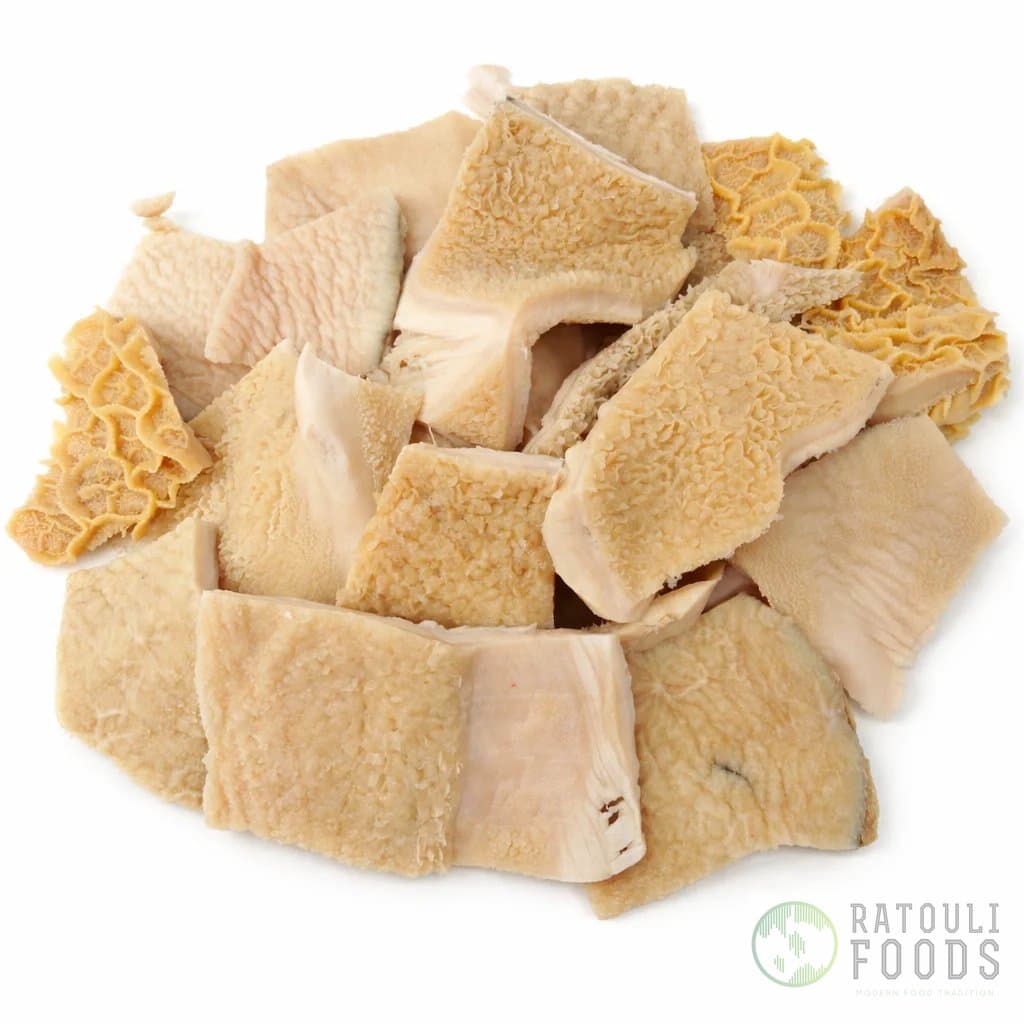
Buy smoked or dried shaki when you want deep, dark soup flavour. Buy fresh when you can clean and cook it the same week. Buy frozen for everything else. Frozen at -18°C gives you the most cooks per kilo and the least waste, which is why most shops stock it.
Smoked and dried shaki: when the flavour matters more than the bite
Smoked shaki and dried tripe are not a different cut. Same beef tripe, the muscular lining of the cow stomach, cleaned and then dried or smoked over wood. The smoking pulls the water out, firms the texture and adds a dark, savoury note that carries straight into the pot.
This is the format you want for soups that need depth. Ogbono draw soup, a heavy egusi, an oha or bitterleaf pot. The smoked tripe sits in the broth through a long simmer and gives back a flavour fresh shaki on its own will not. Plenty of cooks buy a little smoked shaki to season the pot and use fresh or frozen for the bulk of the meat.
Two things to know before you cook it. Dried tripe needs rehydrating, which I cover below. And smoking does not skip the cleaning step. Good smoked shaki was scalded and cleaned before it ever went on the fire. Cheap smoked shaki sometimes was not, and you will smell it. Buy from a source that can tell you how it was handled.
Sourcing for your store or wholesale?
Request a quote or browse the full catalogue.
Fresh shaki: best texture, shortest clock
Fresh shaki gives the cleanest bite. Cleaned and cooked the same week, the honeycomb folds hold their shape and the texture comes out springy instead of rubbery. For assorted meat (orisirisi), for nkwobi, for a clear pepper soup where the shaki is the star, fresh is hard to beat.
The catch is the clock. Tripe is offal, and offal turns fast. Green or brown tripe is unbleached and still carries the stomach contents, so it needs a full scrub before it goes anywhere near a pot. White tripe is already cleaned and dressed, which saves you the work, but it still wants cooking within a couple of days of buying.
For a household near a good butcher or African shop, fresh works fine. For a shop holding stock for weeks, fresh shaki is a hard sell. Whatever does not move quickly turns to waste, and the waste eats your margin. That is the gap frozen shaki fills.
Frozen shaki vs fresh: what you actually trade off
Here is the honest version. With frozen you give up a small amount of texture and you get back shelf life, consistency and almost no waste. For most buyers that trade is worth it. And once shaki is cooked down in a soup, the difference between fresh and good frozen is minimal.
What matters more than fresh versus frozen is how it was frozen. Our shaki is scalded, cleaned and cut before freezing, so the work is already done when it reaches the kitchen. It comes frozen at -18°C and is delivered DAP across NL, BE, DE, FR, ES, IT and the UK. Cleaned and cut means a cook goes from freezer to pot without the scrubbing stage.
| Format | Best for | Prep needed | Shelf life |
|---|---|---|---|
| Smoked / dried | Soup depth, seasoning the pot | Rehydrate, then simmer | Long, stored dry |
| Fresh | Best texture, star-of-the-dish | Full clean, par-boil, simmer | Days |
| Frozen (IQF or block) | Bulk cooking, stock that has to hold | Thaw, par-boil if needed, simmer | Months at -18°C |
Rehydration and pre-cooking: get this right or stay tough
Shaki is the toughest cut on the table, so it always cooks first, before any other meat goes in. Skip that and the rest of your pot is ready while the tripe is still chewy.
For dried or smoked shaki, rehydrate before anything else. Soak it in hot water for 20 to 30 minutes until it softens and opens up, then rinse off the grit and ash from the smoking. After that it goes into the simmer with the rest.
For fresh shaki you are cleaning yourself, the routine is simple:
- Scrub the pieces with rock salt and vinegar, or salt and lime, working into the honeycomb folds.
- Scrape the folds and rinse until the water runs clean.
- Par-boil 10 to 15 minutes, then pour off that first water.
- Simmer in fresh, seasoned water until tender before it goes into the main pot.
For frozen shaki, thaw it first, then go straight to the par-boil and simmer. Our packs are already cleaned and cut, so you skip the scrubbing and start at the cooking stage. Tender shaki rewards patience here. Rush the simmer and no amount of pepper fixes the texture.
For shops: stock the format that moves and holds
If you run a shop or a kitchen, the question is not which format is best in the abstract. It is which format sells through without waste. For most West-African and Surinamese shops in Europe, that format is frozen shaki, because it holds for months and you are not throwing away whatever did not sell by the weekend.
Two things to weigh when you stock frozen. First, IQF versus block. IQF (individually quick frozen) pieces let a buyer take out exactly what they need and put the rest back, which suits households and smaller kitchens. Block freezing packs more into less space and suits a kitchen that thaws a whole case at once. Carry the format your customers actually cook with.
Second, pack size and provenance. We supply shaki scalded, cleaned and cut, frozen, in two cases: 12 x 1 kg and 24 x 500 gram. The 500 gram packs move well on retail shelves, the 1 kg packs go to kitchens cooking in volume. Everything ships under EU approval NL208262EG, runs on HACCP, and the NVWA inspection record is public. Demand climbs around the New Yam Festival in August, Eid and December, so plan freezer space before the peak, not during it. We have run this trade out of Volendam for 14 years, and the format question is usually the difference between a clean sell-through and a freezer full of stock that aged out.
Sourcing for your store or wholesale?
Request a quote or browse the full catalogue.
Related guides