
Is shaki healthy? Beef tripe nutrition, protein and collagen
Yes, shaki is a healthy cut for most people. Cooked beef tripe runs about 85 to 95 kcal per 100g, with 18 to 20g of complete protein, roughly 35% of that collagen, over a full day of B12, plus selenium and zinc. Fat sits lower than most beef cuts.
What shaki actually is, and why the cut matters
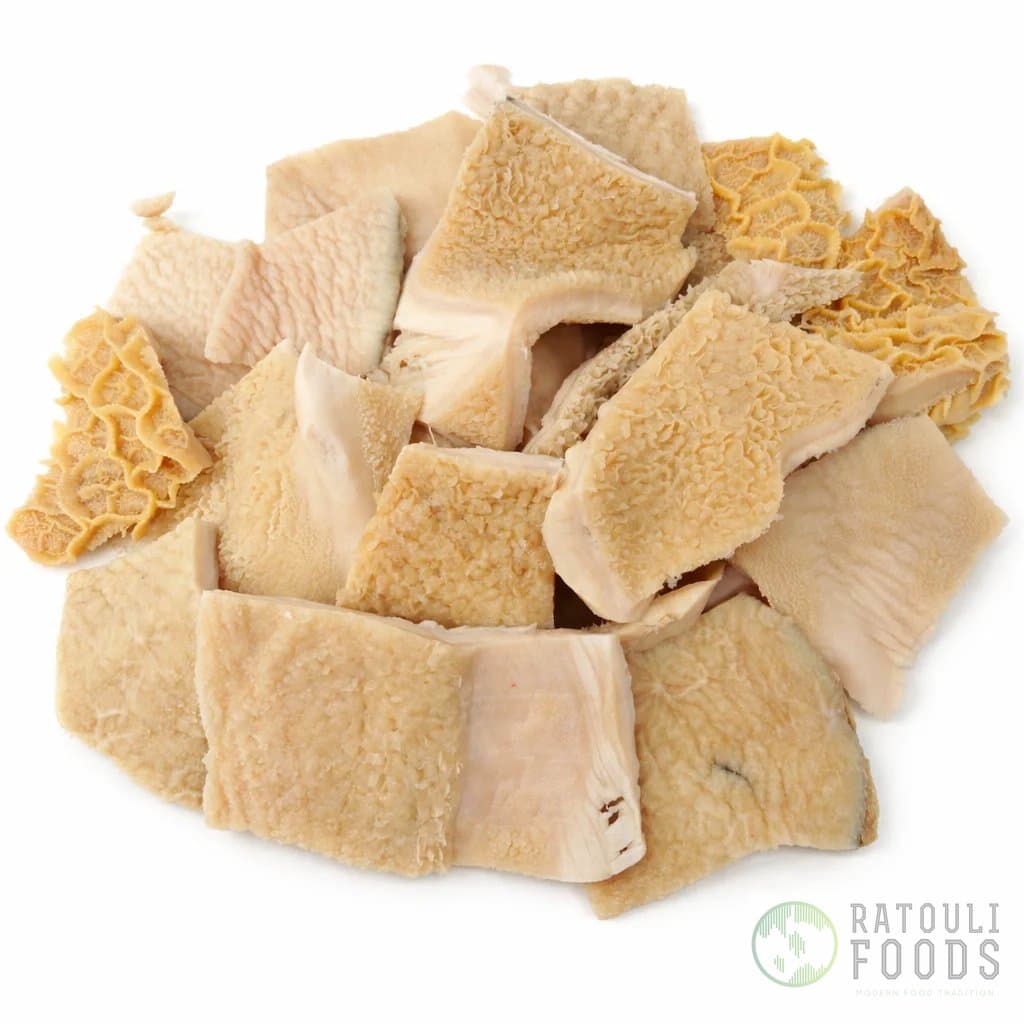
Shaki is beef tripe. It is the muscular lining of the cow's stomach. In Yoruba it is shaki or ṣakí, in Hausa saki. In English markets you will hear honeycomb, towel or cow tripe. Dutch buyers call it pens or runderpens, the Surinamese call it fladder. Same cut, different names.
When most people say shaki they mean the reticulum, the honeycomb section. That is the prized one. It has the ridged pattern that grabs sauce and holds it. There are three other tripe types: the rumen (blanket), the omasum (book or bible) and the abomasum, which we sell separately as Abodi. Keep them straight, because most nutrition talk about "tripe" lumps all four together when the cuts cook and eat differently.
One thing trips people up. Shaki is not ponmo (cow skin) and not roundabout (small intestine). When you read tripe nutrition figures, they are about the stomach lining, not skin and not intestine. Those are different products with different numbers.
Sourcing for your store or wholesale?
Request a quote or browse the full catalogue.
Beef tripe protein, calories and fat
This is the part buyers ask about most. Cooked beef tripe, per 100g, gives you complete protein with all the essential amino acids, and it does it for almost no calories. That is shaki nutrition in one line.
| Per 100g, cooked beef tripe | Amount |
|---|---|
| Calories | ~85 to 95 kcal |
| Protein | ~18 to 20g (complete) |
| Of which collagen | ~35% |
| Fat | Lower than most beef cuts |
| Cholesterol | ~178mg per 5oz serving |
The protein figure is solid. Around 18 to 20g per 100g puts shaki in the same range as a lot of lean meat, but the calories stay under 100. The low fat is the headline if you watch it, because tripe carries less than most steaks or minced beef. The one number to keep an eye on is cholesterol, roughly 178mg in a 5oz serving. That matters if a doctor has you tracking it.
Tripe collagen benefits, and what that 35% means
About 35% of the protein in shaki is collagen. That is high for a meat cut, and it explains how tripe behaves in the pot. Collagen is the connective tissue that makes the cut tough when raw and gives it that soft, slightly springy bite once it has cooked long enough.
Here is the honest version of tripe collagen benefits. Collagen is a structural protein. Eating it gives your body amino acids like glycine and proline. It is not a magic skin or joint cure, whatever the supplement aisle tells you. What it does do is add variety to your protein, and the long slow cooking shaki needs breaks the collagen down into gelatin. That gelatin is what thickens an ogbono or okra draw soup and gives nkwobi its body.
So the collagen does two jobs. It feeds you protein, and it does the work in the dish. No hype needed.
Vitamins and minerals: B12, selenium, zinc
The micronutrients are where shaki earns its place. A 100g serving of cooked beef tripe covers more than 100% of your daily B12. That is a real number and a real reason to eat it, especially if you do not get much B12 from anywhere else.
- Vitamin B12: over 100% of the daily value per 100g. B12 supports red blood cells and nerve function, and it is hard to get from plant foods.
- Selenium: roughly 17 to 33% of the daily value, depending on the cut and the animal. Selenium supports thyroid function and works as an antioxidant.
- Zinc: a useful amount, which helps immune function and protein metabolism.
Add it up and you have the case for whether tripe is healthy. Lean, high in complete protein, strong on B12, decent on selenium and zinc. The caveats are the cholesterol number above and the salt and oil you add when you cook it. Shaki itself is clean. What you do to it in the pot is the variable.
Why supplier traceability changes the answer
Nutrition figures only mean something if the product behind them is handled right. Tripe is offal, and offal punishes you when the cold chain slips. A clean number on a label is worthless if the cut thawed and refroze twice before it reached your kitchen.
This is the trade side of the question. At Ratouli Foods we work under EU approval NL208262EG with HACCP controls and a public NVWA inspection record. The shaki is scalded, cleaned and cut, then frozen and held at -18°C. We deliver DAP across NL, BE, DE, FR, ES, IT and the UK, so the chain stays cold from our store to your door.
Pack sizes are 12 x 1 kg and 24 x 500 gram cases, which works for a restaurant prepping for a New Yam Festival rush and for a shop selling by the kilo. The point is simple. The nutrition is in the cut. The safety is in the handling. You want both, and a traceable supplier is how you get the second one.
Sourcing for your store or wholesale?
Request a quote or browse the full catalogue.
Related guides