
Shaki Across the Diaspora: Nigerian Pepper Soup, Ghanaian Light Soup, Surinamese Fladder, Caribbean Mondongo
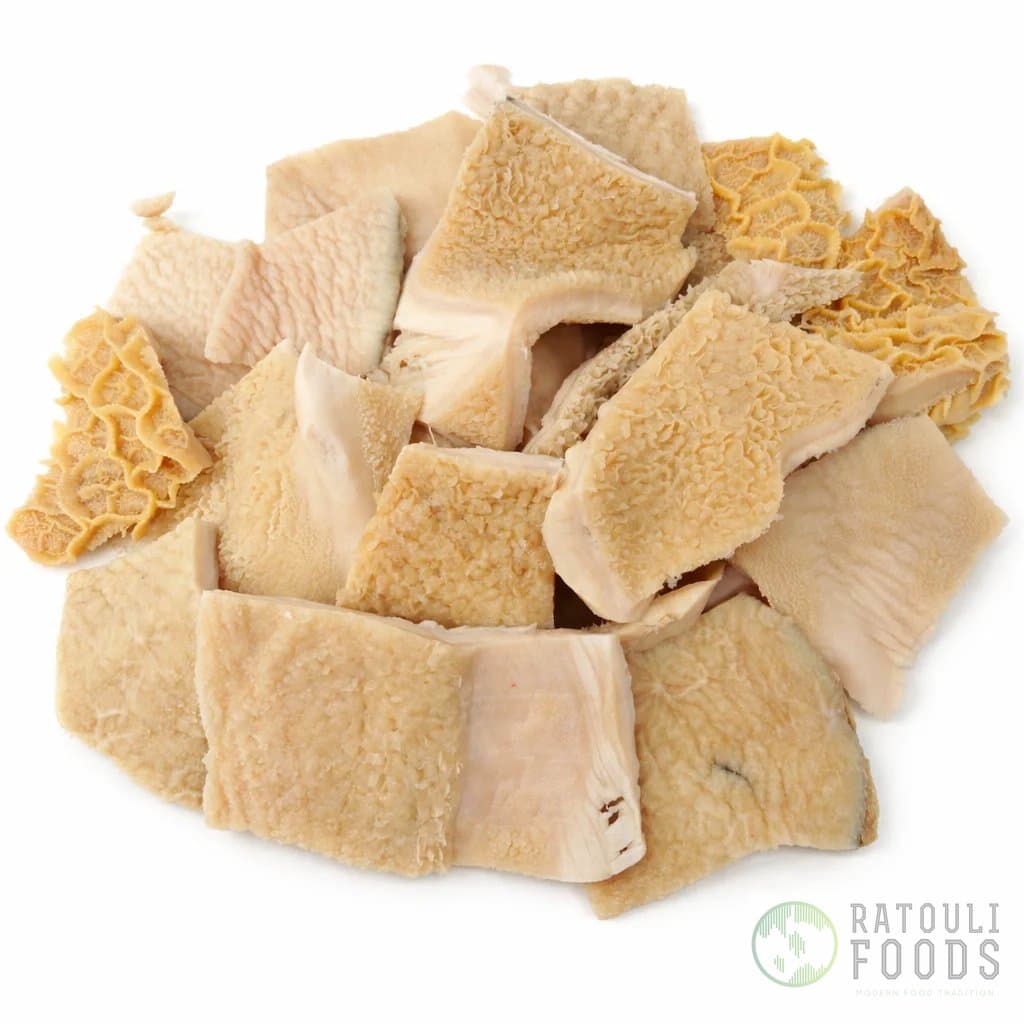
Shaki is beef tripe, the muscular cow-stomach lining, and it turns up across the West-African and Caribbean diaspora under different names. Yoruba cooks call it shaki and drop it in pepper soup and assorted-meat stews. Ghanaians use it in goat light soup. Surinamese cooks know it as fladder. In Spanish-speaking islands it becomes mondongo. Same cut, many tables.
One cut, four kitchens, many names
I have sold shaki for 14 years out of Volendam, mostly to two communities at the same time: West-African and Surinamese. That dual base is why this cut interests me. It is the same piece of beef, the honeycomb stomach lining, but every kitchen that buys it from me has its own name for it and its own dish.
A Yoruba customer in Amsterdam asks for shaki. A Ghanaian buyer might use the general term yemuadie. A Surinamese household orders fladder. A Dominican or Puerto Rican cook in the same city wants it for mondongo. The Dutch label on the freezer reads runderpens. None of them are wrong. They are all reaching for the same muscular, slightly chewy tripe that holds onto flavour better than almost any quick-cooking cut.
| Community | Name for the cut | Typical dish |
|---|---|---|
| Nigerian (Yoruba) | Shaki / ṣakí | Pepper soup, assorted meat stew |
| Ghanaian | Yemuadie | Goat light soup |
| Surinamese | Fladder | Stewed tripe with rice or roti |
| Caribbean (Spanish) | Mondongo | Mondongo soup or stew |
| Netherlands | Runderpens | Pens, often with mustard |
Two things to keep straight, because people mix them up at the counter. Shaki is the stomach lining only. It is not abodi, the reed, which is the fourth stomach chamber. It is not ponmo, which is cow skin. Different products, different uses. When I talk about shaki dishes here, I mean tripe.
Sourcing for your store or wholesale?
Request a quote or browse the full catalogue.
Nigerian pepper soup and assorted meat
In Nigerian cooking shaki rarely travels alone. It goes into the pot with goat, cow leg, abodi and ponmo to make what Yoruba cooks call orisirisi, assorted meat. That mix is the base for a lot of the big dishes: egusi, efo riro, okra soup, ogbono draw soup, ofada with ayamase stew. The shaki gives chew and soaks up the pepper and locust bean.
Pepper soup is where shaki stands on its own. It is a light, fiery broth built on uziza, scent leaf, ginger and a proper pepper soup spice mix. The tripe carries that broth into every bite. Shaki is the toughest cut in the assorted-meat group, so the rule is simple. Cook it first. Get it tender before the softer meats and the vegetables go in, or you end up with collapsed goat and rubbery tripe.
Demand tells me when these pots are getting big. Orders spike around the New Yam Festival in August, again at Eid, and right through December. That is families cooking for crowds, and shaki is a working-budget protein that feeds a lot of people.
- Par-boil the cleaned shaki 10 to 15 minutes, skim, then simmer until tender.
- Add goat and other meats once the shaki is already softening.
- Build the broth with pepper soup spice, uziza and scent leaf last so it stays bright.
Ghanaian light soup and the wider West-African table
Cross the border into Ghana and the cut keeps its job but changes company. Goat light soup is the classic. It is a clear, tomato-and-pepper broth, lighter than a Nigerian stew, and tripe is a common addition alongside the goat. The Ghanaian approach leans on the natural gelatin in the tripe to give the soup body without thickening it artificially.
The same logic runs through Igbo nkwobi, where tender cow foot and tripe are dressed in a spiced palm oil sauce and eaten as a sit-down small chops dish with a cold drink. Lagos pepper soup, Accra light soup, Enugu nkwobi: the cook is doing the same thing with shaki every time. Long, low heat first, flavour second.
This is also why shaki sells across borders. Ghanaian and Nigerian communities are large in Germany, France, Italy, Spain and Belgium, not only the UK, and they all want the cut prepped the same way. When I ship a case of shaki to a shop in Frankfurt or Paris, the dish on the other end might be different, but the kitchen step that matters, cooking the tripe down properly, is identical.
Surinamese fladder and Caribbean mondongo
Now the other half of my customer base. In Suriname tripe is fladder, and it is comfort food. It gets stewed slowly with onion, garlic, tomato, Madame Jeanette pepper and the warm spices that define Surinamese cooking, then served with rice or roti. Same honeycomb cut a Yoruba cook would call shaki, completely different seasoning, just as loved.
Spanish-speaking Caribbean kitchens take the cut in their own direction with mondongo. Mondongo is a thick tripe soup or stew, usually built with sofrito, root vegetables, sometimes pig trotters or chickpeas, and it is a Sunday dish in the Dominican Republic, Puerto Rico and across Latin America. The Spanish trade names tell the story: callos, mondongo, tripa de res. All honeycomb tripe.
This is the reason tripe recipes african caribbean searches land on the same product page. From my side of the freezer, the Surinamese fladder customer and the Dominican mondongo customer are buying the exact same scalded, cut, frozen tripe. The dish diverges in the pot, not in the case.
| Dish | Origin | Character |
|---|---|---|
| Fladder | Suriname | Slow-stewed, Madame Jeanette heat, with rice or roti |
| Mondongo | Caribbean / Latin | Thick soup with sofrito and root veg |
| Pens | Netherlands | Stewed, often with mustard |
Cleaning, nutrition, and how we supply it
Tripe scares some home cooks because of the cleaning. It does not need to. If you buy green or brown tripe, the unbleached kind, scrub it with rock salt and vinegar or lime, scrape inside the honeycomb folds, then par-boil 10 to 15 minutes before you start the real cook. White tripe is already cleaned and dressed, so you skip most of that. Either way, shaki is forgiving once it is tender.
It also earns its place nutritionally. Cooked beef tripe runs roughly 85 to 95 kcal per 100 grams with 18 to 20 grams of complete protein, about a third of it collagen. One serving covers your daily B12 several times over and brings real selenium and zinc, with less fat than most beef cuts. It is a lean, cheap, high-protein cut the diaspora has cooked for generations because it works.
What we do at Ratouli Foods is take the worst part of the job off the table for the shops and restaurants we supply. Our shaki is scalded, cleaned and cut, then frozen, in 12 x 1 kg and 24 x 500 gram cases. We deliver DAP, frozen at -18°C, across the Netherlands, Belgium, Germany, France, Spain, Italy and the UK. EU approval NL208262EG, full HACCP, public NVWA inspection record. The cook still owns the pot. We just make sure the tripe shows up clean and ready, whether it is heading into pepper soup, light soup, fladder or mondongo.
Sourcing for your store or wholesale?
Request a quote or browse the full catalogue.
Related guides