
The margins on ponmo: why cow skin is a high-turnover earner
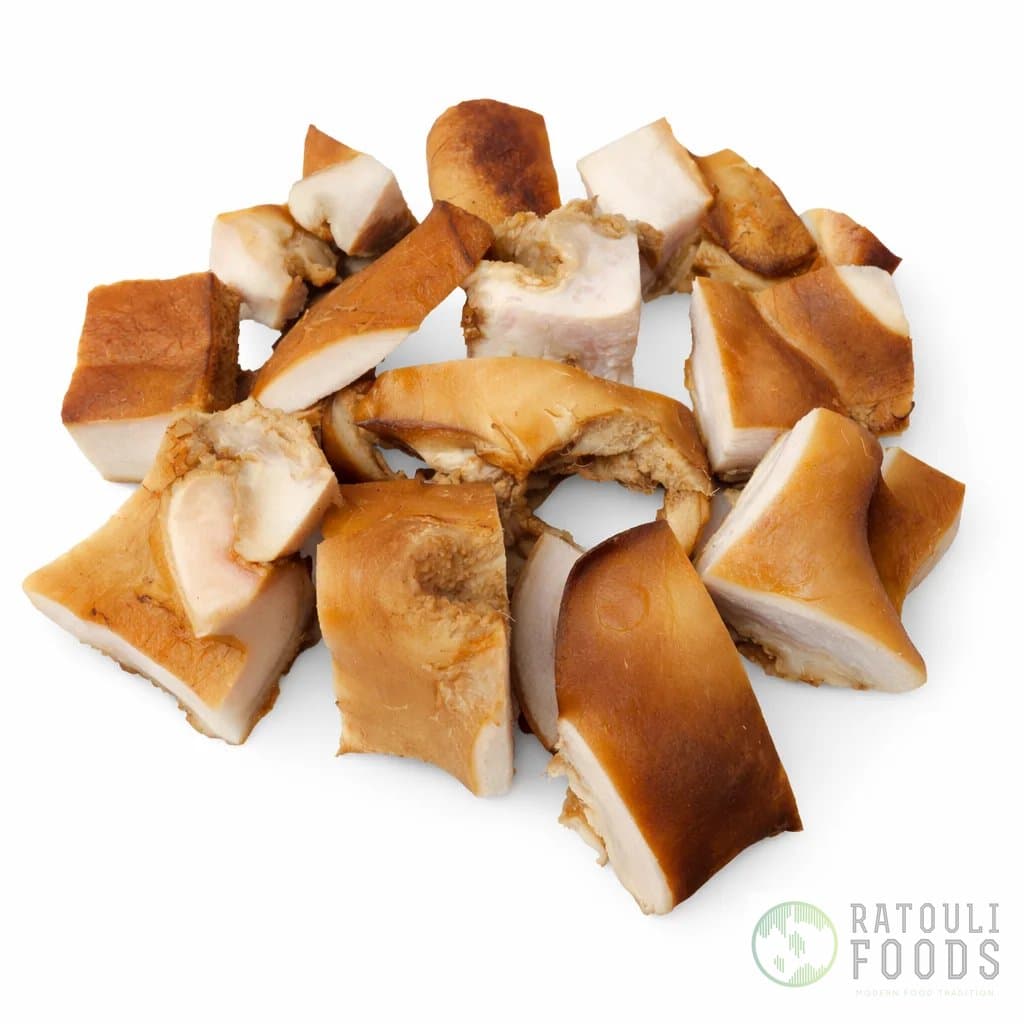
Ponmo earns through turnover, not a fat per-kilo cut. It lands cheap at wholesale, sells cheap on the shelf, and reorders fast because home cooks buy it every week. Cleaned-and-cut frozen stock takes the prep and the waste out of your store, so more of your margin makes it to the till.
What you are actually pricing
Ponmo is edible cow skin. The collagen-rich outer hide of the cow, eaten once the hair is off. It is not tripe. That is shaki, the stomach lining. It is not beef reed either, which is abodi, the abomasum. So when you quote a ponmo wholesale price, be exact about the cut and grade. The buyer downstream knows the difference and asks.
Two processing grades sit at slightly different prices. Brown or burnt ponmo has the hair singed off over flame. That gives it a smoky flavour, a darker colour and a firmer bite. White ponmo is scalded and shaved with no flame, so it comes out paler, softer, and a lot of buyers read it as cleaner. Then there is the premium regional grade, Ponmo Ijebu from Ogun State, thicker and prized. Same part of the same animal, three lines, three price ladders.
One name to watch for catalogues and search. It goes by ponmo, kpomo and pomo (Yoruba), kanda (Igbo), ganda (Hausa), wele in Ghana, and in UK African retail the euphemism beef mask. In plain English, cow skin or beef skin. List it under the European literal terms alone (Dutch koeienhuid, German Rinderhaut, Italian cotenna) and you mostly pull up leather, not food. Always pair the literal term with the African name on the label and the listing.
Sourcing for your store or wholesale?
Request a quote or browse the full catalogue.
Pack economics: what 12 x 1 kg and 24 x 500 gram actually do for your shelf
Our Afri-mama frozen line ships in two formats, and they serve very different buyers. Cow skin head mask and cow skin from legs, burned, in 12 x 1 kg and 24 x 500 gram, frozen at -18 C. White ponmo too. The carton you pick decides how the product behaves on a retail shelf and how often the case turns.
The 24 x 500 gram is the impulse format. A half-kilo bag is a small basket spend, so a shopper drops it in without thinking, and one carton gives you 24 facings instead of 12. More units per case means faster reorders, and faster reorders are where ponmo actually pays. The 12 x 1 kg is for the party cook and the owambe crowd, the customer buying for egusi, efo riro, or a tray of peppered ponmo for an event. Both formats arrive cleaned and cut, so there is no thawing-to-portion step in the store.
| Pack | Units per case | Best for | Effect on turnover |
|---|---|---|---|
| 24 x 500 gram | 24 | Weekly home cook, impulse basket | More facings, lower price point, faster case turn |
| 12 x 1 kg | 12 | Party / owambe cook, bulk buyer | Higher ticket, fewer units, steadier repeat |
For a mixed store the move is simple. Stock both. Lead the freezer with the 500 gram for volume and keep the 1 kg behind it for the August and December surge.
Why a low shelf price is the whole point
Newcomers sometimes price ponmo like a premium cut and then wonder why it sits there. It is called the common man's protein for a reason. It is cheap, it stretches a pot, and people buy it constantly. Keep the shelf price low and let frequency carry the rest. A frozen ponmo supplier price that lands well lets you hold an accessible till price and still keep a clean cow skin margin per bag.
The arithmetic is honest. Per kilo, the margin on ponmo is thinner than on a prime cut. But the case turns several times faster, so the number to measure is margin per shelf-foot per month, not margin on a single bag. A product that sells out in a week at a modest markup beats one that takes a month to clear at a fat one. Ponmo is firmly the first kind.
UK African retail gives you a rough read on the bands. Frozen cow skin tends to sit around two to four pounds per 500 gram bag at shelf, depending on grade, store and city, with Ijebu and clean white grades at the top of that range and burnt brown a touch below. Treat those as bands, not a quote. They move with the cattle price, the season, and your own location. What does not move is the shape of the math. Low price, high frequency, fast reorder.
Cleaned and cut: where the hidden margin actually lives
Raw cow skin is a labour problem. The burnt outer has to be scraped, washed and cut down before it ever reaches a soup. Buy it rough and that work lands on your shop floor, on your staff time. Scraping is slow, the offcuts go in the bin, and every gram you trim away is a gram you paid for and then threw out. On a thin-margin product, that is real money walking out the back door.
Our stock ships cleaned and cut. The hide is already scraped, washed and portioned, frozen at -18 C, ready to cook straight from the bag. For the retailer, the prep labour disappears. For the home cook, the messiest part of the job disappears, and that is exactly why they come back and reorder. The waste you would have eaten on raw skin stays off your P&L.
- No in-store prep. Staff stock the freezer and serve. No scraping bench, no thaw-and-portion line.
- No trim waste. You pay for sellable product, not hide you bin. On a low-margin line that yield difference is most of the profit.
- Consistent pieces. Cut to size means even cooking and a predictable bag weight, so the customer trusts what they are buying.
- Cold chain held. Frozen at -18 C from our floor in Volendam, so no shrink from spoilage between delivery and sale.
When you set a frozen ponmo supplier price against cheaper raw skin, price in the prep hours and the trim loss the raw option hands you. Cleaned-and-cut usually wins on the number that counts, which is cost per sellable kilo on the shelf.
Buying it right: grade, season and the paperwork
Match the grade to your customer. A Yoruba-heavy catchment will move brown burnt ponmo for ofada, ayamase and pepper soup. A store with Ghanaian shoppers needs wele for waakye and the daily staples. White ponmo suits the buyer who wants it paler and softer. Carry two grades instead of one and you widen the basket without taking up much more freezer.
Stock to the calendar. Demand peaks at the New Yam Festival in August, around Eid, through December, and any time the owambe cooking gets going. Those are the weeks a thin per-unit margin turns into real volume, so order ahead of them instead of chasing the shortage. Running out in the first week of December is the most expensive mistake you can make on this product.
On compliance, the boring part is the part that protects you. Our cow skin is produced under EU approval NL208262EG, with HACCP and a public NVWA inspection record, and we deliver DAP across NL, BE, DE, FR, ES, IT and the UK. It lands at your door with the cold chain and the documentation in order, which matters when you are reselling an animal product to retailers who get inspected themselves. One honest line on nutrition while we are here. Ponmo is lean and collagen-rich, but it is mostly collagen, so on its own it is not a complete protein. Your customers eat it alongside meat or fish. Sell it as the prized delicacy it is, not as a meat replacement.
Sourcing for your store or wholesale?
Request a quote or browse the full catalogue.
Related guides