

How to store and defrost shaki safely: shelf life for homes and shops
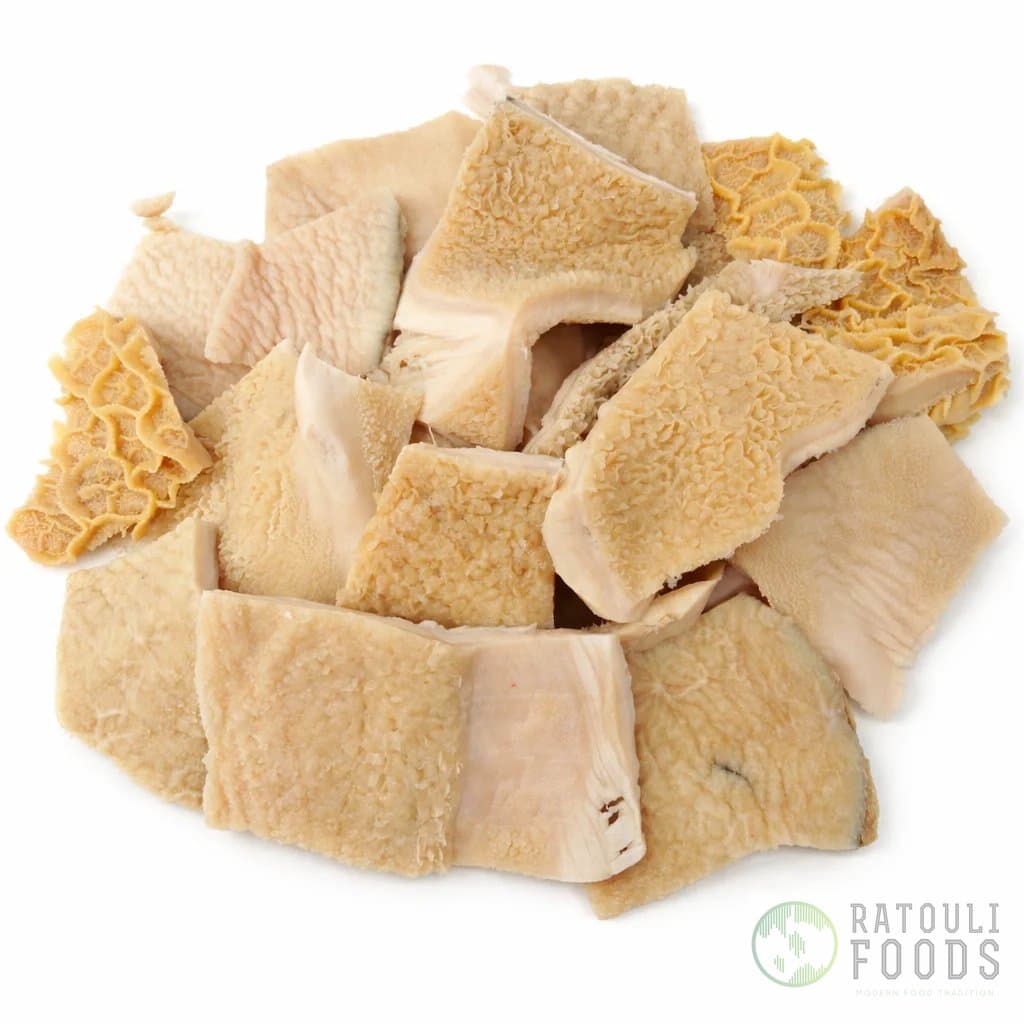
Keep shaki frozen at -18°C until you need it. Defrost it in the fridge overnight or under cold running water, never on the counter. Raw shaki keeps 1 to 2 days in the fridge, cooked shaki 3 to 4 days. Once thawed, cook it. Do not refreeze.
Frozen at -18°C is where shaki belongs
Shaki is beef tripe, the muscular lining of the cow stomach. It spoils faster than most cuts. All that surface area and all those honeycomb folds give bacteria a lot of room to work. That is why we freeze it. Every case leaves Volendam frozen at -18°C, scalded, cleaned and cut, and it stays at that temperature until it reaches your freezer.
Can you freeze tripe at home? Yes, and you should. -18°C is the standard for quality, not only for safety. Hold it there and the texture and flavour stay right for months. Best quality runs comfortably to 6 months at -18°C, and it stays safe well past that as long as the freezer stays cold and the pack stays sealed. What you lose over time is texture, not safety. Tripe that sits too long turns rubbery and dry.
Two rules that matter in practice. Keep your freezer at -18°C or colder, and do not let it drift warmer during defrost cycles or when the door hangs open. And keep shaki in its original sealed pack, or wrap it tight. Freezer burn on exposed tripe shows up as grey dry patches, and those patches toughen the cut.
We sell in 12 x 1 kg and 24 x 500 gram cases on purpose. Smaller portions thaw faster, and a shop or a kitchen can pull exactly what it needs without thawing a whole block.
Sourcing for your store or wholesale?
Request a quote or browse the full catalogue.
Fridge shelf life: raw versus cooked
How long does tripe last in the fridge? It depends on whether it is raw or cooked, and the gap between the two numbers is big enough to matter.
Raw shaki, once thawed, keeps 1 to 2 days in the fridge at 4°C or below. Tripe goes off faster than muscle meat. Do not stretch it. If you thawed more than you can cook in two days, cook all of it and refrigerate the cooked portion instead.
Cooked shaki keeps 3 to 4 days in a sealed container in the fridge. You par-boil and then simmer shaki to soften it anyway, so most people cook a batch and use it across several dishes through the week. That is the right way to handle it.
| State | Storage | Keeps for |
|---|---|---|
| Sealed frozen pack | Freezer at -18°C | Up to 6 months, best quality |
| Raw, thawed | Fridge at 4°C | 1 to 2 days |
| Cooked | Fridge at 4°C, sealed | 3 to 4 days |
If shaki smells sour or sharp, feels slimy, or has gone grey and tacky, throw it out. Stored right, tripe smells clean and faintly beefy. Nothing more.
How to defrost shaki the right way
Defrosting shaki without spoiling it comes down to one thing. Keep it cold while it thaws. Two methods are safe. One you should never use.
- In the fridge. This is the best method. Move the pack from the freezer to the fridge and let it thaw overnight, or 12 to 24 hours depending on the portion. It stays at a safe temperature the whole time, the texture holds, and once thawed you can keep it in the fridge for a day before cooking.
- In cold water. When you need it faster, leave the shaki sealed in its pack and submerge it in cold water. Change the water every 30 minutes so it stays cold. A 500 gram pack thaws in about an hour to ninety minutes this way. Cook it straight after.
Never defrost shaki on the counter at room temperature. The outside warms into the range where bacteria multiply long before the middle thaws. This is the most common mistake people make, and with a perishable cut like tripe it is the one that gets them sick. The counter is not faster in any way that helps you. It is just riskier.
Skip the microwave for shaki unless you are cooking it right away. It thaws unevenly and starts cooking the edges, which wrecks the texture you are after.
Do not refreeze, and cook shaki first
Once shaki has thawed, cook it. Do not refreeze raw tripe that has already been defrosted. Each freeze and thaw cycle breaks down the cell structure and releases moisture. You end up with mushy, watery tripe and a higher bacterial load. The flavour suffers and so does the safety.
One exception is worth knowing. Thaw shaki, cook it fully, then freeze the cooked dish, and you are fine. Cooking resets the clock. A pot of cooked shaki for egusi or pepper soup can go into the freezer and come back out later. Raw thawed shaki cannot.
This is where storage meets the kitchen. Shaki is the toughest cut on the animal, so you cook it first, before the other meats go in. Scrub it with rock salt and vinegar or lime, scrape the honeycomb folds clean, par-boil it for 10 to 15 minutes, then simmer until tender. Build your egusi, efo riro, ogbono or nkwobi around that base. Handle the cold chain right and the cut pays you back. Roughly 18 to 20 grams of complete protein per 100 grams cooked, over 100% of your daily B12, and lower fat than most beef cuts.
Why cold chain is the whole story for a shop
For a shop owner or a restaurant buyer, shelf life is not a cooking detail. It is margin. Tripe that arrives soft, partly thawed, or refrozen is product you cannot sell at full quality, and a customer who buys bad shaki once will not come back for it.
This is the part we take seriously on our end. Ratouli Foods has run West-African and Surinamese food wholesale out of Volendam for 14 years. EU approval NL208262EG, HACCP in place, and a public NVWA inspection record you can check. We deliver DAP, frozen at -18°C, across the Netherlands, Belgium, Germany, France, Spain, Italy and the UK. The cold chain holds from our freezer to your door, so the shaki lands in the state it left in.
What you do after delivery is the rest of the story. Get it into a -18°C freezer fast. Rotate stock so the oldest packs sell first. Thaw in portions, in the fridge or cold water, and never refreeze raw. Demand spikes around the New Yam Festival in August, around Eid, and through December, and that is exactly when sloppy storage costs you the most. Handle it right and a case of shaki holds its quality from the day it lands to the day it sells.
Sourcing for your store or wholesale?
Request a quote or browse the full catalogue.
Related guides