

How to clean shaki properly (no bleach) before cooking
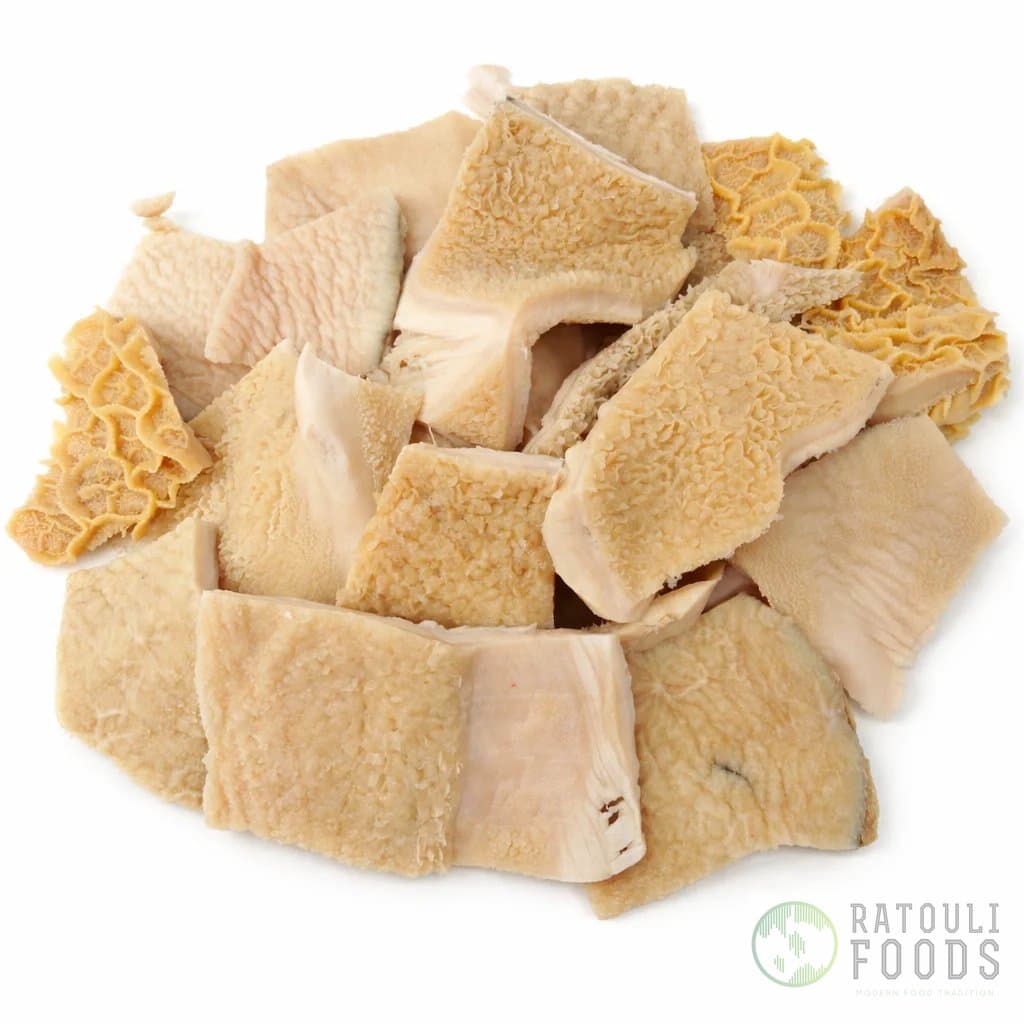
To clean shaki without bleach, scrub it hard with rock salt and lime or vinegar, scrape the grit out of the honeycomb folds, and rinse until the water runs clear. Then par-boil 10 to 15 minutes and throw that first water away. Bleach is never needed and it ruins the meat.
Why shaki needs cleaning in the first place
Shaki is the muscular lining of a cow's stomach. English butchers call it honeycomb or towel tripe. A stomach is a working organ, so even good shaki arrives carrying traces of what was inside it. That is where the smell comes from. It is normal. It is not a sign of bad meat.
At the market you will see two kinds. Green or brown tripe is unbleached and still carries the natural film and a strong smell. White tripe has already been cleaned and dressed. In 14 years of selling this cut I have learned that even white tripe is worth a quick scrub at home. With shaki, cleaning is not optional. It is the step that decides whether your pepper soup tastes clean or muddy.
Settle one thing now. You do not need bleach. People reach for it because it kills the smell fast, but it strips the meat, leaves a chemical taste, and is not safe to cook with. Cleaning tripe without bleach is just the older method. Salt, acid, and a sharp eye.
Sourcing for your store or wholesale?
Request a quote or browse the full catalogue.
Step one: the rock salt and lime scrub
Start cold. Rinse the shaki under running water and cut it into pieces, roughly the size you want in the pot. Smaller pieces clean easier because you can reach every fold.
Now the scrub. This is the part that does the real work:
- Put the pieces in a large bowl and bury them in coarse rock salt. A generous handful per kilo. Fine table salt works, but rock salt gives you grip.
- Add the juice of two or three limes, or a good splash of white vinegar. The acid cuts the slime and lifts the smell.
- Scrub each piece hard between your hands for a minute or two. Rub salt into both sides. You will feel the surface go from slick to clean.
- Rinse, look at the water, repeat. The first rinse comes out cloudy. Keep going until the water runs clear and the pieces no longer feel slippery.
Most home cooks stop too early. Two or three rounds of salt and lime is normal for unbleached shaki. This is the core of cleaning shaki, and there is no shortcut around it.
Step two: scrape the honeycomb folds
The honeycomb side is the textured face that gives this cut its name, the one that soaks up soup so well. It is also where grit and dark film hide, down inside the folds where salt alone cannot reach.
Take a small knife or the edge of a spoon and scrape the inner surface, working with the folds rather than against them. You are lifting off the loose dark layer and any debris sitting in the pockets. Do not gouge into the meat. You want the film, not the flesh under it.
If your shaki is the thick full-sac type, the Yoruba shakoto, the folds run deeper and need more attention. The smoother prized side, shaki onigbin, cleans up faster. Rinse again after scraping. When the honeycomb looks pale and even, with no dark patches caught in the folds, that piece is done.
Step three: par-boil 10 to 15 minutes
With the scrubbing finished, the par-boil sets the last of the smell loose and starts breaking down a tough cut. Shaki is the toughest meat in most West African dishes, which is why we cook it first, before the lighter meats and before any softer parts go in.
Put the cleaned pieces in a pot, cover with fresh water, and bring to a boil. Add a slice of onion, a few cloves, a bay leaf, or a little ginger if you have it. The aromatics in this water carry off the rest of the smell.
- Boil hard for 10 to 15 minutes.
- Skim off the grey foam that rises in the first few minutes.
- Drain completely and throw that first water away. That water is holding the smell, so it does not go into your soup.
- Rinse the pieces once more in clean water.
The shaki is now par-boiled, not yet tender. From here it goes into your egusi, efo riro, ogbono, pepper soup or nkwobi to simmer until soft. The long simmer in the actual dish is where it finishes cooking and takes on flavour.
How to remove the shaki smell for good
Do the scrub, the scrape, and the par-boil with aromatics, and the smell is gone. When it lingers, one of those three was rushed. Three points carry almost all the result: scrub until the rinse water is genuinely clear, scrape the folds and not just the flat surface, and always throw out the first par-boil water.
One trade note to close. Everything above is the home method, and it is worth knowing. For a shop, a restaurant, or a caterer, it is also an hour of labour per batch before anything reaches the stove. That is why we ship our shaki already scalded, cleaned, and cut, frozen at -18°C, in 12 x 1 kg and 24 x 500 gram cases. It arrives ready to par-boil and go straight into the pot, which takes most of this work off the line at volume. We deliver DAP from Volendam across the Netherlands, Belgium, Germany, France, Spain, Italy and the UK, under EU approval NL208262EG and HACCP, with a public NVWA inspection record. The home cook scrubs by hand. The kitchen doing fifty covers a night should not have to.
Sourcing for your store or wholesale?
Request a quote or browse the full catalogue.
Related guides