
Brown vs white ponmo: which to buy and stock
Buy brown ponmo when your customers want smoky flavour and a firm bite for draw soups and peppered ponmo. Buy white ponmo when they want a paler, softer, milder skin. Same cow skin, two finishes. A shop with mixed buyers should carry both, with brown as the bigger line.
Same skin, two ways of finishing it
Ponmo is cow skin. The collagen-rich hide off the outside of the cow, eaten after the hair comes off. It is not tripe, that is shaki. It is not the abomasum, that is abodi. The thing that changes between brown and white ponmo is not the part of the animal. It is how the hair gets removed and how the skin is finished before it reaches you.
Brown ponmo, also called burnt ponmo, is singed over open flame. The fire burns off the hair and scorches the outer layer, which then gets scraped and washed clean. White ponmo never sees the flame. The skin is scalded or boiled in hot water and the hair is shaved off, so nothing gets charred. Two methods, one product. The difference shows up in the colour, the smell and the bite.
If you want the full background on the skin itself, the names across cultures and how to cook it, read the complete ponmo guide.
Sourcing for your store or wholesale?
Request a quote or browse the full catalogue.
Brown or burnt ponmo: smoky, darker, firmer
Brown ponmo gets its character from fire. When you singe burnt cow skin over flame you do two things at once. You darken the surface, and you push a real smoky flavour into the skin. That smoke is the whole point for a lot of cooks. It carries through a long-simmered soup and gives the dish a depth that boiled skin just does not have.
The bite is firmer too. The heat tightens the outer layer, so brown ponmo holds its shape and chews with more resistance before it softens down. In a long-cooked egusi or an ogbono draw soup it keeps body instead of melting into nothing too early. Colour runs from tan to deep brown, sometimes with darker scorch marks. That is normal. It is not a fault.
- Flavour: smoky, from the flame
- Colour: tan to dark brown, scorch marks are fine
- Texture: firmer, chewier, holds shape in long cooking
- Best for: egusi, ogbono, okra draw soups, ofada and ayamase, efo riro, peppered ponmo small chops
This is the grade most West African and Caribbean cooks reach for first. The smoke is the flavour they grew up with. Our burned cow skin head mask and burned skin from the legs both come in this finish, frozen at -18 C.
White ponmo: paler, softer, reads as cleaner
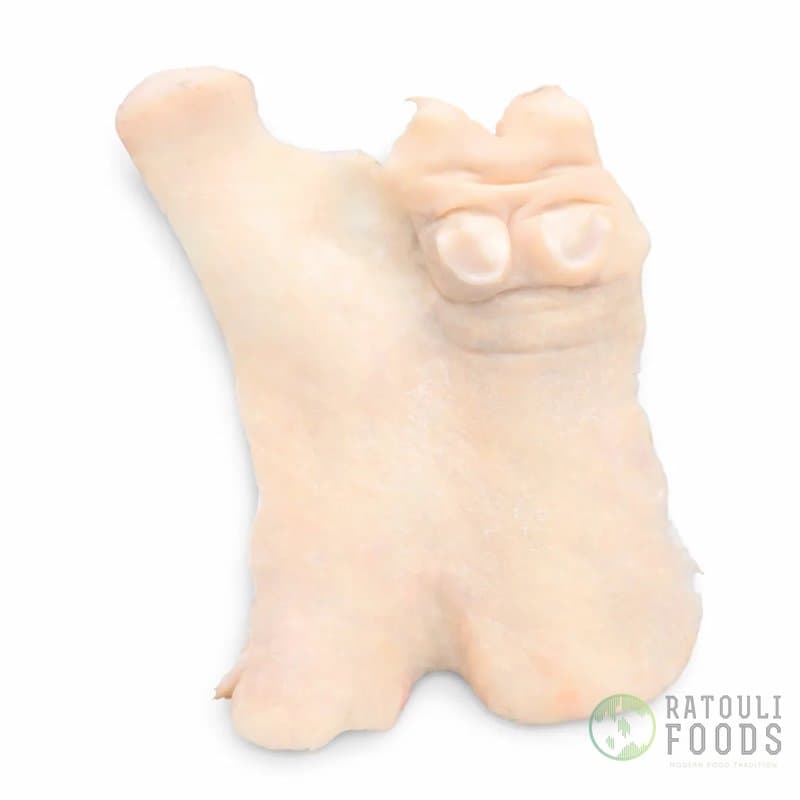
White ponmo is boiled cow skin. No flame touches it, so there is no smoke and no char. The skin comes out pale, sometimes near white, sometimes a soft cream colour. The bite is softer and more gelatinous, and it cooks down quicker than the burnt grade.
Why do some buyers ask for it? Simple. To a lot of people white ponmo looks cleaner. No black scrape marks, no scorched smell, just pale skin. That perception matters at the counter, even though both grades are cleaned and safe. White ponmo also suits cooks who want the skin to carry the soup's own flavour instead of adding a smoky note of its own. It works well in lighter dishes, in pepper soup and abula, and for anyone who finds burnt ponmo too strong.
- Flavour: mild, neutral, no smoke
- Colour: pale, cream to near white
- Texture: softer, more gelatinous, cooks down faster
- Best for: pepper soup, abula, lighter soups, cooks who want a milder skin
Both grades are still mostly collagen. Lean, low in fat, and not a complete protein on their own, so they sit alongside fish or meat in the pot. If you want the honest numbers, see the ponmo nutrition guide.
Which customers ask for which
After 14 years selling into West African and Surinamese shops across Europe, the pattern is steady. Brown ponmo moves more. Most buyers want the smoke. A Nigerian customer cooking egusi for the family, a market stall doing peppered ponmo, a caterer prepping for an owambe, they all reach for the burnt grade. That is the taste they expect.
White ponmo is the second line, and it has real, loyal demand. You hear it from cooks who think it looks cleaner, from people doing pepper soup or lighter dishes, and from buyers who simply grew up with the boiled version in their region. In Ghana ponmo is wele, built into waakye and plenty of staples, and the finish people prefer there is not always the same as the Nigerian default.
| Question at the counter | What they usually want |
|---|---|
| "The smoky one" / "the dark one" | Brown or burnt ponmo |
| "The clean one" / "the white one" | White ponmo |
| Egusi, ogbono, okra, ofada | Brown ponmo |
| Pepper soup, lighter soups, milder taste | White ponmo |
| Ponmo Ijebu by name | The thicker, prized regional grade, usually brown |
One more name to know. Ponmo Ijebu from Ogun State is the thicker, premium grade some customers ask for specifically. When someone names it, they are after thickness and quality, not just colour.
What a shop should stock
If you sell to a mixed African and Caribbean crowd, carry both, but weight your order toward brown. Brown ponmo is the volume line in almost every shop I supply. White ponmo earns its place as the second facing, for the cooks who want it and for the cleaner-look buyers. It should not be your main stock unless your customer base leans Ghanaian or pepper-soup heavy.
Look at your own counter. Watch what gets asked for by name. If most of your trade is egusi and draw soups, brown ponmo carries the shelf and a single white line covers the rest. If you sit near a strong Ghanaian community, push white higher in the order.
- Default split: brown as the main line, white as a steady second
- Plan extra stock around the New Yam Festival in August, Eid, December and party or owambe cooking, when demand jumps
- Frozen at -18 C holds quality and gives you control over shelf life
Here is what we carry under the Afri-mama brand: cow skin head mask and cow skin from the legs, burned, in 12 x 1 kg and 24 x 500 gram, with white ponmo available. EU approval NL208262EG, HACCP, a public NVWA inspection record, delivered DAP across NL, BE, DE, FR, ES, IT and the UK. The half-kilo packs are the easy way to trial white ponmo next to your brown without overcommitting.
If you also stock the rest of the cow offal range, line ponmo up with your shaki and abodi facings, so customers cooking a full pot can buy it all in one stop.
Sourcing for your store or wholesale?
Request a quote or browse the full catalogue.
Related guides