
Ponmo (kpomo) in English is cow skin
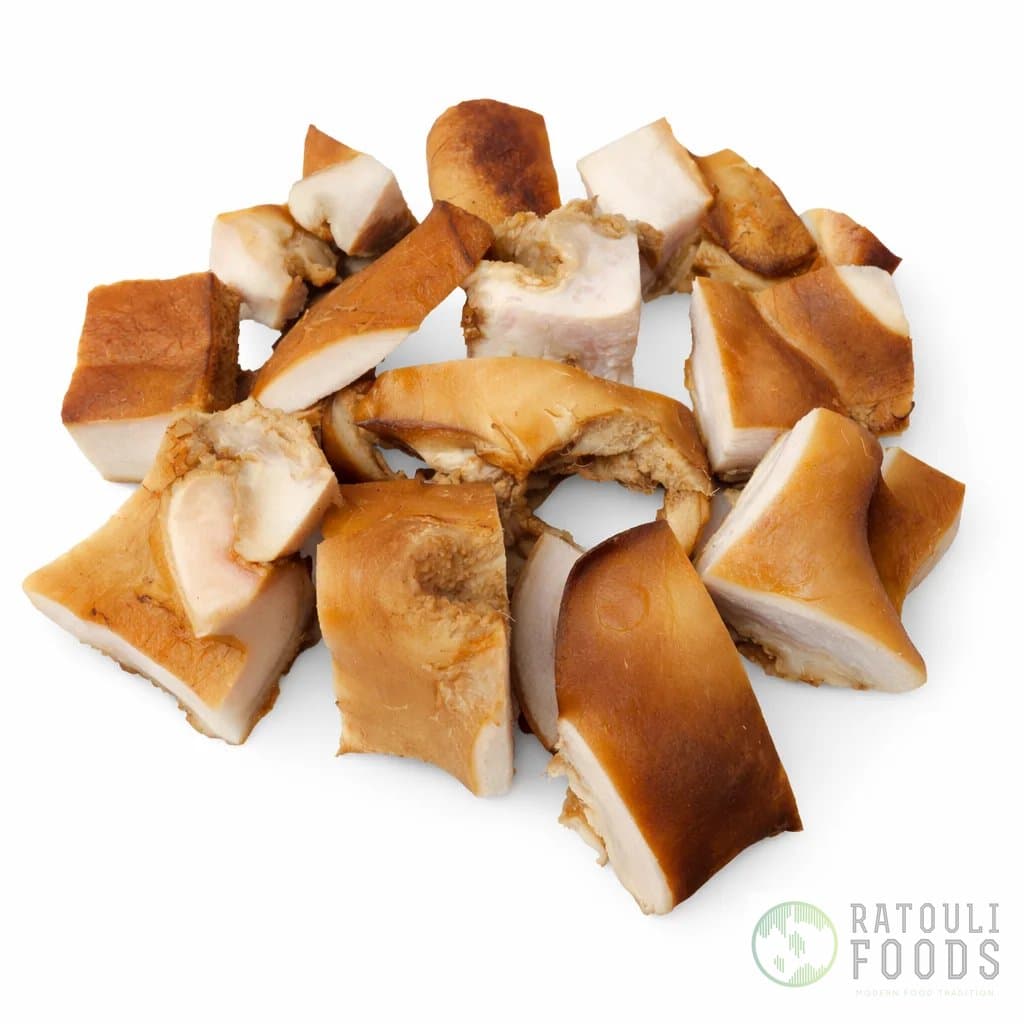
Ponmo in English is cow skin. You will also see it called cowhide or beef skin. It is the collagen-rich outer covering of the cow, eaten after the hair is removed. It is not tripe, not reed, not intestine. Kpomo and pomo are the same thing, spelled different ways.
The short answer: ponmo is cow skin
Ponmo in English is cow skin. That is the whole answer. The more formal words are cowhide and beef skin. All three point to the same thing. The outer covering of the cow, hair taken off, cooked until it turns soft and chewy.
Kpomo in English is also cow skin. Ponmo and kpomo are not two foods. Same word, written the way different people hear it. You will also see pomo, kponmo, and the phonetic spellings ponmoh and pomoh. Every one of them means cow skin.
The ponmo meaning is simple once you cut through the names. It is skin. Not meat in the muscle sense, not an organ. People search what is ponmo meat because it gets sold and cooked the way meat is, sitting in the soup pot next to the beef and the fish. Technically it is the hide of the animal, not a cut of muscle.
So why do so many people look this up? Two reasons. First, diaspora. A West African or Ghanaian cook in London, Amsterdam, Berlin, or Paris wants to tell a friend or a colleague what is in the soup, and there is no clean English word that everyone knows. Second, shopping. You stand at a freezer or type into a search bar, and the EU literal terms send you to leather, not food. You need the bridge between the local name and plain English.
Sourcing for your store or wholesale?
Request a quote or browse the full catalogue.
All the names: ponmo, kpomo, kanda, wele, pomo
Cow skin has a name in nearly every kitchen across West Africa, and each one is right in its own place. Trade in this product like I do and you learn them all, because the same frozen carton gets ordered under five different words in one week.
| Language / region | Name for cow skin |
|---|---|
| Yoruba (Nigeria) | ponmo, also pomo, kpomo, kponmo |
| Igbo (Nigeria) | kanda, akpukpo anu |
| Hausa / Northern Nigeria | ganda, ganada, fata, awo |
| Edo | ohian |
| Igala | ano |
| Ghana (Akan / Twi) | wele, also welle, wale, kahuro |
| French | peau de boeuf |
| Ivorian slang | kplo (smoked, peau de boeuf fumee) |
| UK African retail | beef mask |
Plain English stays the same across all of these. Cow skin, cowhide, beef skin. In Ghana the word is wele, and it shows up in waakye and dozens of everyday plates, so a Ghanaian customer almost never says ponmo. Same product, different counter.
One trap for shoppers in Europe. The literal translations into Dutch, German, Spanish, Italian, and Portuguese mostly bring back leather, not food. Koeienhuid or runderhuid in Dutch. Kuhhaut or Rinderhaut in German. Cuero de res or piel de vaca in Spanish. Cotenna or cotica di manzo in Italian. Pele de boi or couro de boi in Portuguese. Search those alone and you get tanneries and handbags. Pair the EU word with the African name, ponmo or wele, and you land on the food.
What ponmo is NOT: shaki, abodi, and intestine
This is where most of the confusion lives, and it matters when you cook and when you order. Ponmo is skin. It is not the stomach and it is not the gut. People lump all of these together as offal, then the soup comes out wrong because the textures and the cooking times are not the same.
- Shaki is tripe, the lining of the cow's stomach. It looks honeycombed or towel-like and needs long cooking. That is not ponmo.
- Abodi is beef reed, from the abomasum, another part of the stomach. Different cut, different chew. Not ponmo.
- Roundabout is intestine. Tube shaped, cleaned inside and out. Not ponmo.
Ponmo is the hide. Cooked, it goes soft and gelatinous and a little springy, and it melts some of its collagen into the pot, which is why a soup with ponmo in it feels thicker and rounder. Shaki stays chewier and holds its shape. Handle all three once and you never mix them up again. But on a packing list or a phone order it is easy to send the wrong one, so we keep them clearly separated. We have full guides on shaki and abodi if you want the detail on those two.
Brown vs white ponmo, grades, and how it is cooked
There are two main grades, and the difference is how the hair comes off.
- Brown or burnt ponmo. The hair is singed off over an open flame. That gives it a smoky flavour, a darker colour, and a firmer bite. This is the one most Nigerian cooks reach for.
- White ponmo. Scalded or boiled and then shaved, no flame at all. It comes out paler and softer, and a lot of people see it as the cleaner-looking option.
There is also a prized regional grade, Ponmo Ijebu, from Ogun State. Thicker, chewier, and people pay more for it. Whichever grade you buy, it is sold cleaned and cut. The burnt outer layer is scraped and washed before it ever reaches the pot, so you are not doing that work at home.
On the plate, ponmo goes into almost everything. Egusi soup. Ofada with ayamase stew. Efo riro. The draw soups like okra and ogbono. Abula, ewa agoyin, and pepper soup. Peppered ponmo on its own is a party and street favourite, served as small chops at owambe events. In Ghana, wele is built straight into waakye and the everyday staples.
On nutrition I will be straight with you, because the brief asks me to be. Ponmo is lean, low in fat, and high in collagen. But it is mostly collagen, so on its own it is not a complete protein. You eat it alongside beef, fish, or chicken, not instead of them. That honest point is exactly why the Nigerian government floated banning it more than once, citing low nutrition and pressure from the leather trade. People pushed back hard every time. When a country tries to ban a food and the public refuses, that tells you how much it matters. It is often called the common man's protein, and it is a real point of pride.
Where to buy frozen ponmo in Europe
We carry cow skin at Ratouli Foods under our Afri-mama brand, frozen at -18 C. The range is cow skin head mask and cow skin from the legs, both burned, in 12 x 1 kg and 24 x 500 gram. White ponmo is available as well.
The paperwork is in order, because we sell across the EU. We hold EU approval NL208262EG, we run HACCP, and our NVWA inspection record is public. We deliver DAP across the Netherlands, Belgium, Germany, France, Spain, Italy, and the UK, so the price you are quoted is the price delivered to your door.
Demand has a rhythm we plan around. It peaks at the New Yam Festival in August, around Eid, through December, and ahead of any big party or owambe cooking. Run a shop or a kitchen for West African or Ghanaian customers and you should order early for those windows, because that is when freezers empty fastest. Fourteen years in this trade and that pattern has never once broken.
Sourcing for your store or wholesale?
Request a quote or browse the full catalogue.
Related guides