

What is Surinaamse fladder, and how do you cook it
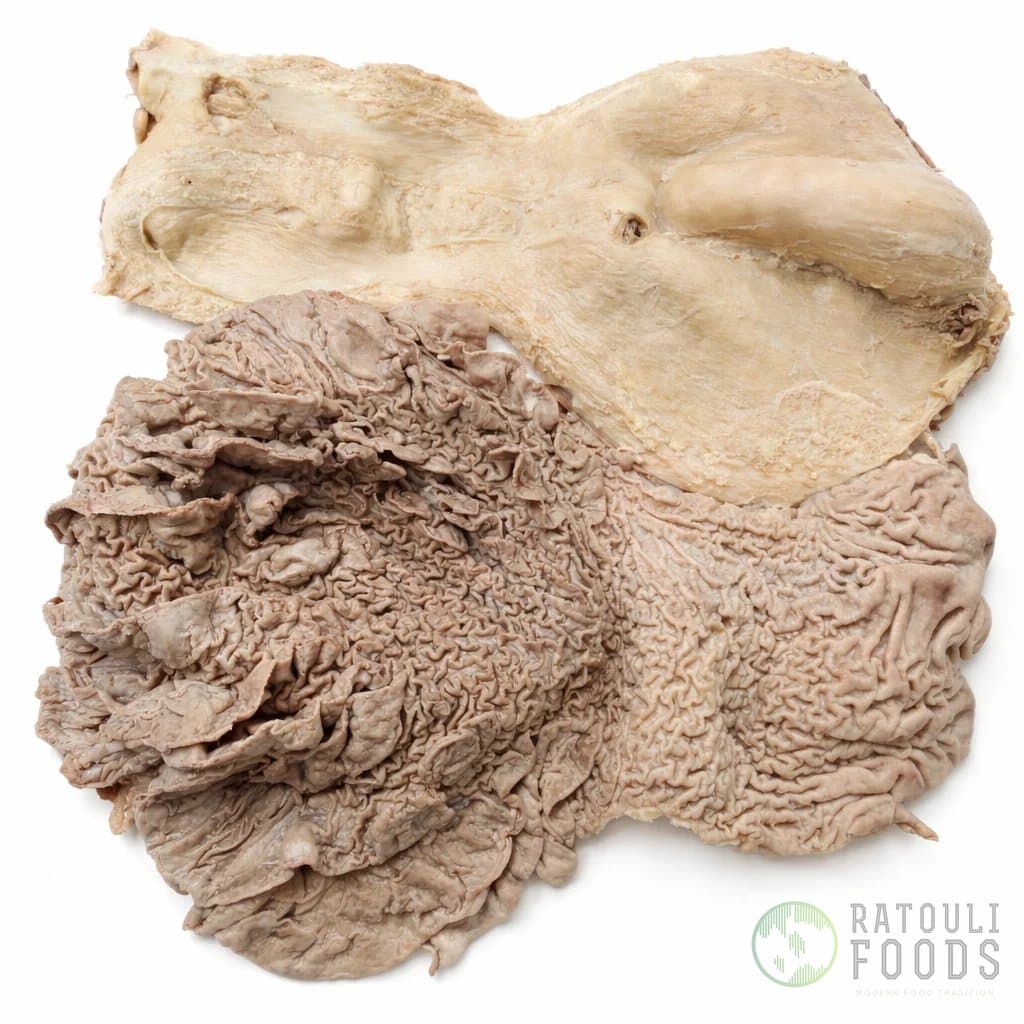
Surinaamse fladder is a Creole offal delicacy made from the lebmaag, the cow's fourth and true stomach. You clean it, soak it overnight, slice it into strips, then slow-cook it in a soup-vegetable bouillon with a Madame Jeanette pepper. It is served warm, in strips, next to hot Surinaamse sausages.
Wat is fladder, exactly
Let me answer it straight, because there is a lot of loose talk online. Surinaamse fladder is beef offal. To be precise, it is the lebmaag, the cow's fourth and true stomach, also called the abomasum. The most reliable Dutch sources, public broadcaster KRO-NCRV among them, point to the lebmaag. Some general sources call it pens or runderpens, which is tripe, and people mix the two up constantly. So if you read that fladder is "tripe", that is close but not right. The honest description is beef stomach, a specific cut of offal, not a generic piece of beef.
Raw, it cleans up pale and a bit rubbery. Give it a long, slow cook and it turns tender with a soft bite, and it drinks up whatever bouillon you simmer it in. That is the whole point of fladder. On its own it is plain. In a well-seasoned Creole bouillon with a Madame Jeanette pepper, it becomes the thing people grew up loving.
You will sometimes see it written as "bere fladder". Same product. We sell it under our Surinaamse Worsten brand, and we keep the description careful, because the word fladder gets stuck onto a few different things in shops and on packs.
The difference between vleesworst, bloedworst, kippenworst and fladder explained
Sourcing for your store or wholesale?
Request a quote or browse the full catalogue.
The heritage behind the dish
Fladder did not begin as a delicacy. It began as a scrap. Under slavery in Suriname, the enslaved Afro-Surinamese population got the parts of the animal nobody else wanted, the stomach and the blood and the offal. They cleaned those parts, seasoned them with patience and real skill, and turned them into food worth sitting down for. Fladder and bloedworst both come out of that history.
I think it matters to say that plainly. This is not a quirky food to gawk at. It is Creole cooking with a real story behind it, and the cleverness in it, taking the worst cut and making it good enough that everyone wants it now, deserves respect. When you cook fladder, you are cooking something that survived a hard chapter and came through as heritage. That is part of why it still shows up at Keti Koti, on 1 July, when families share a meal to mark the abolition of slavery.
For the Surinamese community in the Netherlands, around 365,000 people and the largest Caribbean community in Europe, fladder sits in the Afro-Surinamese, Creole strand of the food. It belongs to the same table as bloedworst, vleesworst and the warm-worst stall.
Cleaning and the overnight soak
Good fladder starts before the pot. The cleaning is the work. The raw stomach has to be scrubbed thoroughly, rinsed several times, then left to soak overnight in cold water. That overnight soak softens it and pulls out the strong smell that puts some people off offal. Skip it and you will taste exactly why it matters.
This is where the cooked-versus-uncooked choice comes in. We sell fladder in two forms:
| Form | What you get | What you do |
|---|---|---|
| Ongekookt (uncooked) | Raw cleaned offal | Soak overnight, then simmer it yourself from scratch |
| Gekookt (cooked) | Pre-cooked fladder | Reheat in your bouillon, ready much faster |
Want the full ritual and the deepest flavour? Take the ongekookt and do the soak and the slow cook yourself. Short on time, or new to offal? The gekookt gets you to the table sooner and is the easier place to start. Either way the next step is the same. It goes into a seasoned bouillon, not plain water.
Fladder recept: the slow-cook method
Here is how to klaarmaken fladder the Creole way. This is a method, not a stopwatch recipe, because the cook time depends on whether you started from ongekookt or gekookt and how tender you like it.
- After the overnight soak, drain and rinse the fladder, then slice it into strips. Strips, not chunks. That is how it gets served and how it carries the bouillon.
- Build a soup-vegetable bouillon: celery (selderij) for the backbone, plus the usual soup greens you would use for a Surinamese soup. This is the same family of flavour you taste at a warm-worst stall.
- Drop in a whole Madame Jeanette pepper. Whole, so it perfumes the pot without blowing your head off. Want more heat? Pierce it. Want it milder? Leave it whole and fish it out before serving.
- Simmer low and slow. Uncooked fladder needs the longest, often a couple of hours, until the strips are tender and have soaked up the bouillon. Pre-cooked needs only enough time to heat through and take on the seasoning.
- Taste and adjust the salt near the end. Offal can take a confident hand with seasoning.
Serve the fladder in strips, hot, with some of the bouillon. The classic way is alongside the hot Surinaamse sausages, vleesworst and bloedworst, all kept warm in spiced bouillon. Met peper en zuur, of course. Sambal and pickled vinegar on the side.
Where fladder fits at the table
Fladder rarely shows up alone. It belongs to a spread. Picture the warm-worst stall: sausages and offal pre-cut and kept warm in a heavily spiced kruidenbouillon, served in paper with sambal. That is the most authentic setting for fladder, more than any supermarket pack. It sits next to vleesworst and bloedworst, and at a Kwaku food stand it shares the table with pom, bara, roti and moksi alesi.
One thing buyers ask about. Fladder is beef offal, the lebmaag specifically, and it is pork-free. No pork goes anywhere near it. The accurate description is beef tripe and offal, not a generic beef cut, and that is exactly how we label it.
Our fladder is produced under HACCP, the cold chain kept unbroken at -18 C, EU approval NL208262EG. We offer 500g and 1kg retail packs plus bulk cartons, branded or unbranded, with DAP delivery across the EU and UK. Home cook trying it for the first time, or toko stocking it, the cooked and uncooked forms cover both ends. Soak it, season it well, give it time. That is the whole secret your grandmother already knew.
Sourcing for your store or wholesale?
Request a quote or browse the full catalogue.
Looking for the crispy 100% chicken version? See our sister brand Crispy Vleesworst.