
Surinaamse worsten: the complete guide to vleesworst, bloedworst, kippenworst and fladder
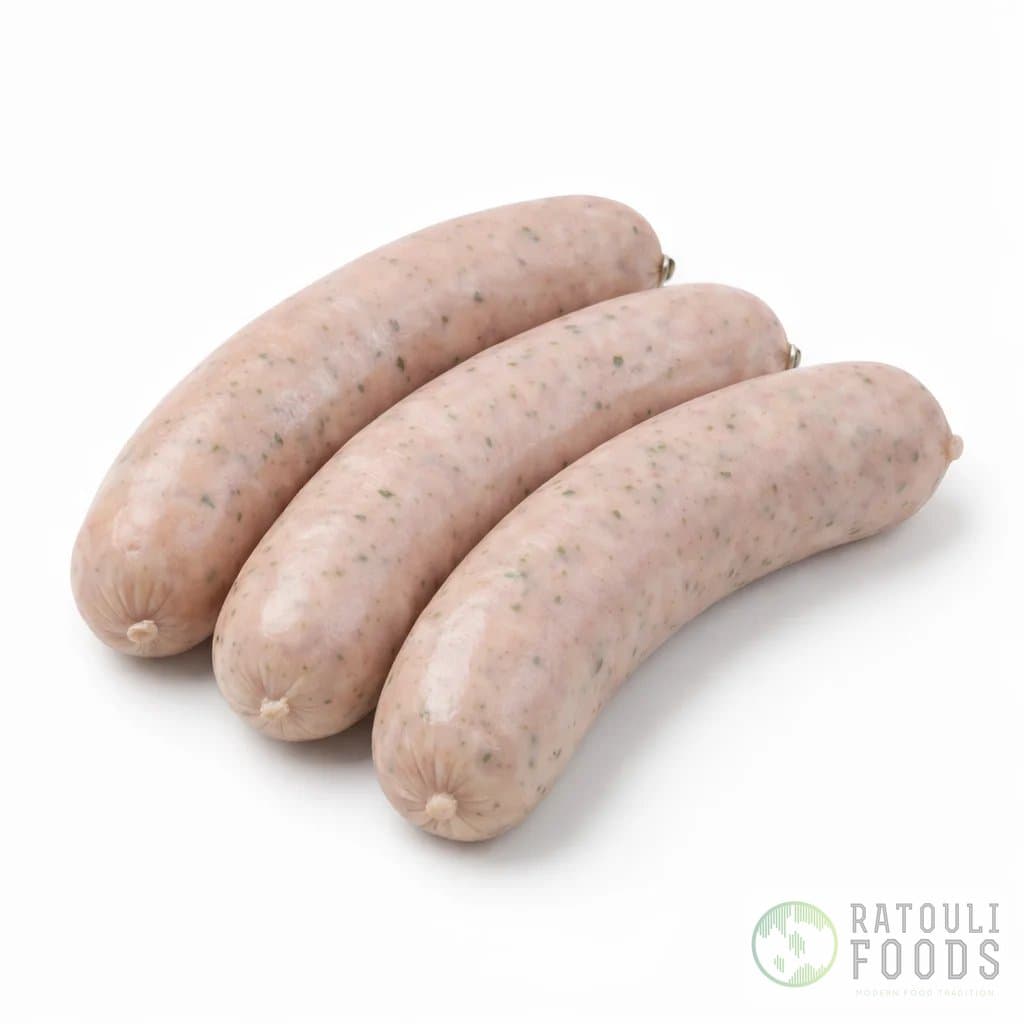
Surinaamse worst is not one thing. Vleesworst is a coarse, heavily peppered meat sausage. Bloedworst is blood sausage. Kippenworst is the 100% chicken line. Fladder is slow-cooked beef offal. The meat changes depending on where you buy it, and that is the whole story home cooks and toko buyers need.
What Surinaamse vleesworst actually is
Everyone asks the same thing at the stall. Is it pork, beef or chicken? The honest answer is that there is no single fixed meat. Surinaamse vleesworst is a coarse, heavily peppered sausage, and which animal goes in depends entirely on who made it and for whom.
The classic street version, sold from the Bijlmer stalls, is all beef in a beef casing. The vendor squeezes the filling out and you eat that, not the skin. At home and in most toko recipes it goes the other way. People use pork, or a half-om-half blend of beef and pork with speklap (pork belly), bound with egg and milk-soaked bread, seasoned with fresh pepper, garlic, onion, celery, beef bouillon and a little ajinomoto. That mix gets stuffed into varkensdarmen and steamed for roughly 45 minutes.
Then there is the newer line: 100% kip, no pork, no beef, no lamb, often in a non-animal casing. So when you read "Surinaamse vleesworst" you are really looking at three roads. The beef stall version, the pork or half-om-half home classic, and the chicken line for buyers who avoid pork. All of them are eaten hot, sliced, warmed in spiced bouillon, as a snack or a broodje filling, always met peper en zuur.
Sourcing for your store or wholesale?
Request a quote or browse the full catalogue.
The four products, plus crispy, by another name
Tokos, market stalls and family recipes all use slightly different names for the same things. Here is the quick reference so you know what you are buying and what to ask for.
| Product | Also written / called | Meat | Pork inside? |
|---|---|---|---|
| Vleesworst | vlees worst, vleeswors | Beef at the stall, pork or half-om-half at home | Often in the home version, no in the beef and chicken versions |
| Kippenworst | kipworst, worst kip, vleesworst (kip), kipworst Surinaams | 100% chicken | No |
| Bloedworst | bloed worst | Pork blood traditionally; beef-blood and chicken-blood versions exist | Yes, in the traditional version |
| Fladder | bere fladder (sometimes confused with pens) | Beef offal (lebmaag) | No |
| Crispy vleesworst | crispy worst, #crispyvleesworst | 100% chicken, deep-fried | No |
Hold onto two things. Kippenworst and crispy vleesworst are the no-pork lines, made with 100% halal ingredients, 100% kip, geen varken, geen rund. Bloedworst in its real, traditional form is pork, which is why we keep it on the foods side and never on the crispy site.
Bloedworst: the blood sausage, and its no-pork versions
Bloedworst is Surinamese blood sausage. The traditional recipe is pork blood mixed with breadcrumbs, onion, sea salt, black pepper, ginger, sugar and marjoram, packed into a pork casing and boiled. Next to a French boudin noir it is coarser, less sweet, less creamy. It tastes of the spice and the bread as much as the blood.
This is one of the dishes that carries real Afro-Surinamese history. Blood sausage came out of making something good from the scraps that enslaved people were left with. We treat it with respect, not as a curiosity.
Because the classic version is pork, it does not work for every buyer. Beef-blood and chicken-blood (kippenbloed) versions exist for exactly that reason, made for Hindu and Muslim customers who avoid pork. If you sell to a mixed neighbourhood, that distinction matters at the counter. Ask which blood the worst is made from before you assume.
Kippenworst: the 100% chicken line
Kippenworst, also written kipworst, is the 100% chicken version of vleesworst. No pork, no beef, no lamb. It is the direct no-pork counterpart to the classic, often made in a vegetarian casing, and it eats the same way: cooked and reheated, or fried, sliced into a broodje with peper en zuur.
This line exists for a clear reason. The Surinamese community in the Netherlands is roughly 365,000 people, the largest Caribbean community in Europe, and a large part of it avoids pork. Hindostani and Muslim buyers wanted the same warm worst the stall sells, without the pork. Kippenworst is the answer.
Kippenworst and crispy vleesworst are made with 100% halal ingredients, 100% kip, geen varken, geen rund. That is what goes in, and that is what we say plainly so buyers who avoid pork know exactly what they are getting.
Fladder: the slow-cooked beef offal
Fladder is a Creole delicacy and the one most people outside the community have never heard of. The most authoritative sources, including the public broadcaster KRO-NCRV, name it precisely: the lebmaag, the cow's fourth and true stomach. Some general sources call it pens or runderpens loosely, but the accurate description is beef tripe, a specific offal, not a generic beef cut.
Here is how it is made. The offal is soaked overnight, cleaned, sliced into strips and cooked slowly in a soup-vegetable bouillon with Madame Jeanette peppers. It comes out tender and deeply savoury, served in strips next to the hot sausages on a worstplankje.
Like bloedworst, fladder carries the same Afro-Surinamese heritage of turning what others discarded into something worth queuing for. We sell it under the Surinaamse Worsten brand in two forms: gekookt, cooked and ready to warm, and ongekookt, the raw cleaned offal you simmer yourself. We describe it as beef offal, plainly, because that is what it is.
How these worsten are eaten
The most authentic place to eat Surinaamse worst is not the supermarket pack. It is the warm-worst street stall. At Amsterdamse Poort in the Bijlmer, a vendor sells bloedworst, vleesworst and kippenworst six days a week in front of Slagerij Nico. The sausages sit pre-cut in a heavily spiced kruidenbouillon with celery and Madame Jeanette pepper, kept warm all day, and you get them in paper with sambal. That stall makes its worst from beef on purpose, so Hindu and Muslim customers can eat it too. That is the real-world precedent for no-pork Surinamese worst.
The everyday channel is the toko broodje, the puntje. You fill it with pom, bakkeljauw, kip kerrie, zoutvlees or worst, and you eat it met peper en zuur. Peper is the sambal heat. Zuur is the pickled vinegar that cuts through the fat. Without both, it is only half the dish.
At home, warm the sliced worst gently in a spiced bouillon rather than dropping it dry in a pan. The bouillon is what makes it taste like the stall.
The worstplankje
When you want to serve all of it at once, you build a worstplankje. It is the Surinamese answer to a sharing board, and it is how a lot of families serve worst at a verjaardag or after a long Sunday.
Lay out sliced vleesworst, bloedworst and kippenworst warmed in bouillon, fladder in strips, a bowl of sambal for the peper, pickled zuur on the side, and fresh puntjes to build your own broodje. Some people add bara or a little pom next to it. The point is range and warmth, not precision.
If you are buying for a board, get the sausages pre-cut where you can, and keep the no-pork items, kippenworst and the beef or chicken-blood bloedworst, clearly separated so every guest knows what they are reaching for.
Kwaku and Keti Koti
You cannot talk about these worsten without the culture they live in. Kwaku Summer Festival in Amsterdam Zuidoost started in 1975 as a children's football tournament in the Bijlmer, in the years of independence-era migration from Suriname. It grew into a festival that now runs four weekends across July and August at Nelson Mandela Park, drawing somewhere between 150,000 and 300,000 visitors. The 2026 edition runs 11 July to 2 August.
The food stands at Kwaku sell exactly these products, next to bara, pom, roti, moksi alesi, BBQ and Parbo beer. It is where crispy vleesworst became a video-first street food, the doorsnede bite that travels on a phone screen.
Keti Koti, on 1 July, is heavier and quieter. It commemorates the abolition of slavery, and people mark it with shared meals. Fladder and bloedworst belong to that history directly, dishes the enslaved made from scraps and turned into something families still cook with pride. We handle them as heritage, never as a gimmick.
Storage
These are perishable, cooked or part-cooked products, so treat them like fresh meat. Keep frozen worst at -18 C until you are ready to use it, and once you have warmed a portion in bouillon, eat it that day. Do not refreeze sausage you have already thawed and heated.
For retail packs, the 500g and 1kg sizes thaw fast in the fridge overnight. Warm only what you will serve and keep the rest frozen. Fladder follows the same rule. The gekookt version reheats gently in its bouillon, and the ongekookt version goes straight from frozen into the long simmer.
Across our cold chain the temperature does not break. We hold and ship at -18 C, under HACCP, so the worst that leaves Volendam arrives in the same condition it was packed.
Wholesale and sourcing
If you run a toko, an ethnic supermarket, an avondwinkel, a broodjeszaak, a snackbar, a restaurant or you sub-wholesale, this is the practical part. The Surinamese frozen-specialty market in the Netherlands is mature, concentrated in Amsterdam Zuidoost, Rotterdam around West-Kruiskade, Den Haag around Hobbemaplein and Almere. The pack vocabulary is the order vocabulary: 10kg per doos, los versus vacuum, and retail subpacks at 500g and 1kg.
Ratouli supplies all four sausages plus crispy. We offer 500g and 1kg retail packs and bulk cartons, branded or unbranded, with DAP delivery across the EU and UK. Cold chain unbroken at -18 C, EU approval NL208262EG, HACCP-compliant.
One canonical wholesale page on ratoulifoods.com handles every sausage, so you order vleesworst, bloedworst, kippenworst and fladder from one place. Tell us your channel and your no-pork needs, and we will spec the right mix of classic and chicken lines for your counter.
Sourcing for your store or wholesale?
Request a quote or browse the full catalogue.
Looking for the crispy 100% chicken version? See our sister brand Crispy Vleesworst.