

Telo with bakkeljauw: the Surinamese fish and chips
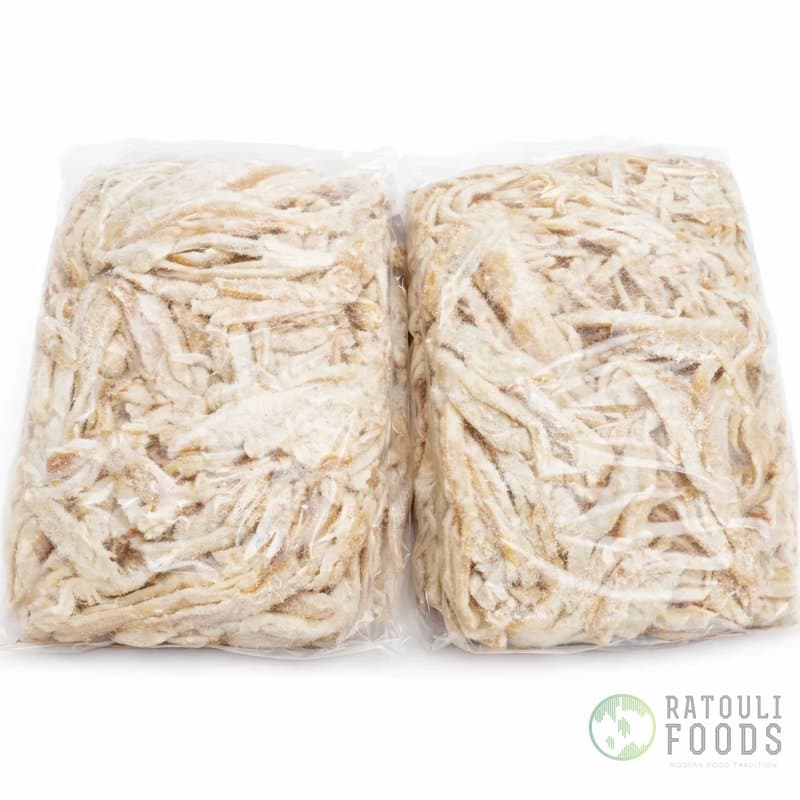
Telo met bakkeljauw is fried cassava served with salted white fish that you first desalt, then fry crisp or stew soft, with sambal on the side. Telo is the gebakken cassave. Bakkeljauw is the salted fish. Put them together and you have the Surinamese fish and chips, a plate you eat hot from the pan.
What telo met bakkeljauw actually is
Telo is fried cassava. You peel the root, cut it into thick fingers, boil it until it gives, then fry it golden so the outside cracks and the inside stays soft. That is your chip. The fish is bakkeljauw, salted white fish that you soak or boil to pull the salt out, then either fry crisp or stew down with onion and tomato. Both on one plate, sambal alongside, and the dish is done.
People call it the Surinamese fish and chips, and the name fits. A British chip shop hands you fried potato and battered cod. Suriname hands you gebakken cassave and salted saithe. Same idea, born on the other side of the ocean. A cheap, filling plate built around fried starch and preserved fish. The real difference is the heat. The British reach for vinegar or tartare. A Surinamese plate gets Madame Jeanette sambal that bites back.
This is a snack first, a meal second. It is what you eat standing at a toko counter, or pass around at a verjaardag, or make on a Sunday when you want something honest and a little greedy.
Sourcing for your store or wholesale?
Request a quote or browse the full catalogue.
The fish: desalting bakkeljauw the right way
Bakkeljauw is salted, traditionally dried, white fish. The name comes from the Portuguese bacalhau, which is why you also see it spelled bakkeljouw, bakkaljauw, or batjauw. In plain Dutch it is klipvis. One honest note, because most recipe blogs get this wrong. The fish behind diaspora bakkeljauw is usually not classic cod. More often it is saithe, koolvis in Dutch, Pollachius virens, the fish the UK sells as coley and the US as Atlantic pollock. Ling and tusk turn up too. We name the species because you have a right to know what you are buying.
The salt is what keeps the fish, and it is also the one step you cannot skip. Straight from the pack, bakkeljauw is far too salty to eat. You have to uitkoken, cook the salt out. Two ways:
- Boil it. Cover the fish with plenty of water, boil 15 to 20 minutes, drain, taste a flake. Still too salty? Fresh water and go again. This is the fast route.
- Soak it. Cover with cold water and leave it about 24 hours, changing the water every 3 to 4 hours. Slower, gentler, good when you have the time.
After that, rinse the fish under cold water, squeeze it dry, flake it apart, and pick out every bone with your fingers. Bones are what ruin a plate, so take your time here. Filet makes the work lighter, since it is near boneless already. Heel or moten on the bone is cheaper, but then you do the shredding and deboning yourself. Migas, the small shredded pieces, save you most of that work.
Fried or stewed: two ways to finish the bakkeljauw
Once the fish is desalted and flaked, you decide how it lands on the plate. Both ways are right.
Fried. Pat the flakes dry, then fry them in hot oil until the edges crisp up and go a little golden. Some cooks dust them lightly first. This is the version that earns the fish and chips name, because crisp fish next to crisp cassava is the texture people come for. A handful of sliced onion fried in the same pan finishes it.
Stewed. Soften onion and garlic in oil, add chopped tomato and a spoon of tomato puree, a Maggi cube, and a little trassi if you have it. Fold the flaked fish through and let it cook down soft and savoury, so it sits on the cassava and soaks in. Same base as a good broodje bakkeljauw, only plated next to telo instead of stuffed in a puntje.
Then the sambal. Madame Jeanette is the pepper you want, scotch-bonnet hot and fruity with it. A spoon on the side, not stirred through, so each person decides how brave they feel. A bit of zuurgoed pickle on the plate cuts the richness so the whole thing never feels heavy.
The snack culture around it
Telo met bakkeljauw sits in a wider family of Surinamese fish dishes, and it helps to know the neighbours. Broodje bakkeljauw is the stewed fish on a soft white puntje, the flagship street snack. Heri heri is the older plate, plantation-era, cassava with sweet potato, plantain, egg and bakkeljauw, and it has become the symbol meal of Keti Koti on the first of July, when Free Heri Heri hands out more than 10,000 portions across Amsterdam. There are bakkeljauwballetjes for parties, and moksi alesi for the big pot. Telo is the everyday one, the fish and chips of the bunch.
It travels because the community travels. Roughly 365,000 people of Surinamese descent live in the Netherlands, the largest Caribbean community in Europe, with Almere holding the highest share. That is where this snack lives now. In tokos, in home kitchens, on birthday tables. Salted fish runs through a lot of cultures, from Jamaican ackee and saltfish to Portuguese bacalhau, the fiel amigo on the Christmas Eve table. Telo met bakkeljauw is Suriname's chapter of that same long story.
One thing to keep straight, because it gets muddled. Bakkeljauw is salted fish, klipvis. It is not stokvis. Stokvis is air-dried and unsalted, a different product altogether. So the loose label Surinaamse stokvis for bakkeljauw is simply wrong, and now you know why.
Making it at home, start to finish
Here is the short version, so you can cook it without scrolling back.
- Desalt the fish. Boil bakkeljauw 15 to 20 minutes, drain, taste, repeat if needed. Or soak 24 hours, changing the water every 3 to 4 hours. Rinse cold, squeeze, flake, debone.
- Make the telo. Peel cassava, cut into thick fingers, boil until tender, then fry golden. Salt while hot.
- Finish the fish. Fry the flakes crisp, or stew them with onion, garlic, tomato, tomato puree, a Maggi cube and trassi.
- Plate it. Telo, fish, a spoon of Madame Jeanette sambal, a little zuurgoed on the side.
Buying tip. For a first try, filet is the easy default, because the deboning is mostly done for you. If you want the cheaper, more traditional route, heel or moten on the bone gives you more fish for your money, you just put in the knife work. Either way the fish must be desalted, and either way it keeps chilled, not at room temperature, because heavily salted fish still wants the fridge.
We sell the bakkeljauw for this from Volendam, named honestly by species. Get the fish right and the rest of the plate is easy.
Sourcing for your store or wholesale?
Request a quote or browse the full catalogue.
Sourcing or reselling salted fish? Our sister company Ratouli Seafood handles the trade side.