

Surinaamse vleesworst: the classic recipe and the broodje
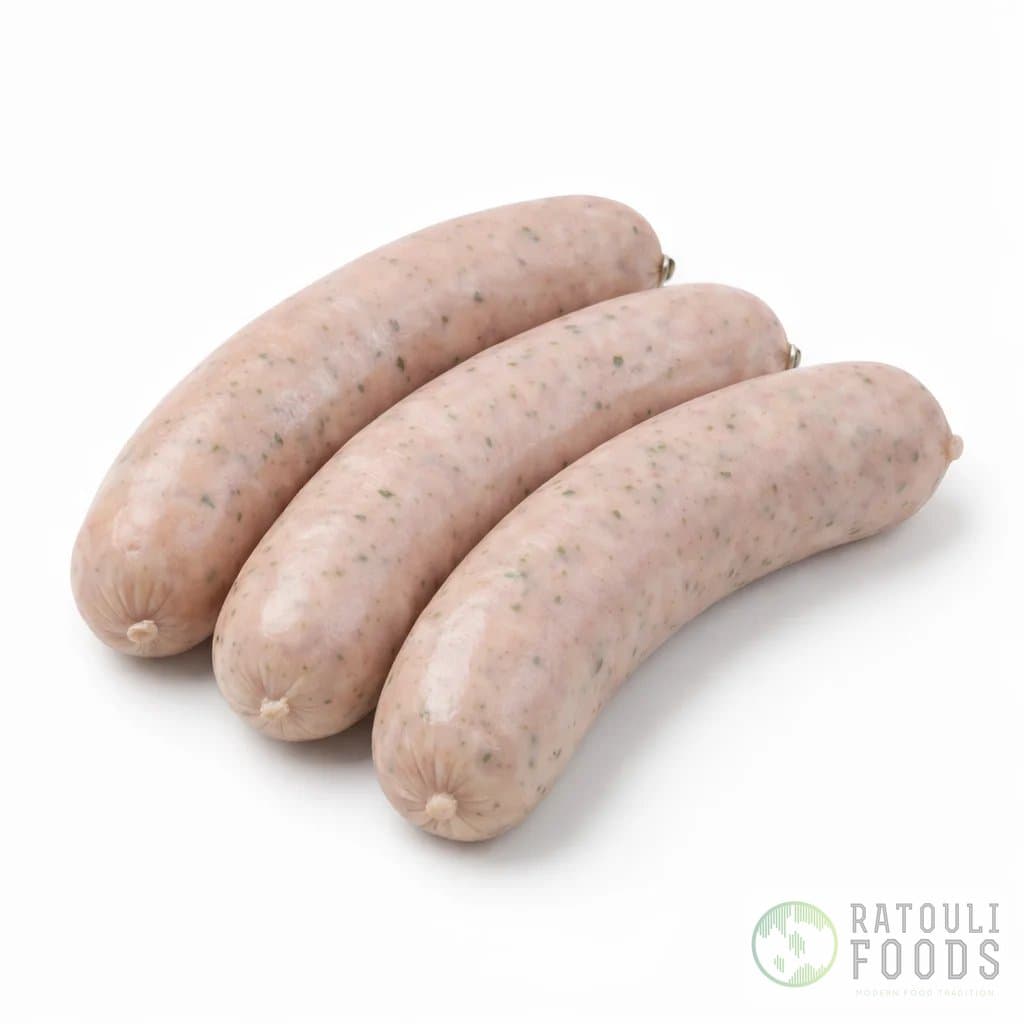
Surinaamse vleesworst is a coarse, heavily peppered Surinamese sausage. The classic home version uses half beef and half pork plus speklap, bound with egg and milk-soaked bread, seasoned with pepper, garlic, onion, celery and bouillon, stuffed in pork casing and steamed about 45 minutes. You eat it sliced, in a broodje, met peper en zuur.
What Surinaamse vleesworst actually is
There is no single fixed recipe. Anyone who tells you there is has only eaten one version. Vleesworst is the everyday Surinamese meat sausage. Coarse, well seasoned, made to be reheated and sliced rather than grilled whole.
Most home cooks and tokos make it half-om-half: half beef, half pork, with speklap (pork belly) worked in for fat and flavor. The street version at the Bijlmer stalls is a different thing. It is all beef in a beef casing, made that way on purpose so Hindu and Muslim customers can eat it. At those stalls people squeeze the filling out and leave the casing behind. Then there is a modern 100% kip line, no pork or beef, often in a vegetarian casing, for buyers who want the taste without the pork.
So when someone types surinaamse vleesworst recept into a search bar, they are really asking about three sausages: the pork or half-om-half classic, the all-beef stall version, and the chicken one. This recipe is the classic. The variants come at the end.
We have made these sausages in our own production for years, so the notes here come off the bench, not out of a textbook.
Sourcing for your store or wholesale?
Request a quote or browse the full catalogue.
The classic recipe, step by step
This makes roughly 2 kilos of vleesworst, enough for a good batch of broodjes with some left for the freezer. Read it through once before you start. The casing and the binder both want a few minutes of prep.
You need:
- 1 kg beef (chuck or another cut with some fat), coarsely minced
- 1 kg pork plus 200 g speklap (pork belly), coarsely minced
- 4 to 5 slices of white bread, crusts off
- 200 ml milk, for soaking the bread
- 2 eggs
- 1 large onion, very finely chopped
- 4 cloves garlic, crushed
- 2 stalks celery, finely chopped
- 1 to 2 fresh peppers (Madame Jeanette), to taste, finely chopped
- 2 beef bouillon cubes, crumbled
- 1 teaspoon ajinomoto (MSG), optional but traditional
- black pepper and salt to taste
- varkensdarmen (pork casings), rinsed and soaked
Soak the bread in the milk until it falls apart, then squeeze out the excess and mash it. This is your binder. It keeps the sausage tender and stops it going dense and rubbery, which is the mistake people make most.
In a large bowl, combine both meats and the speklap with the onion, garlic, celery, fresh pepper, crumbled bouillon, ajinomoto, black pepper and a little salt. Go easy on the salt. The bouillon already carries plenty. Add the soaked bread and the eggs. Mix with your hands until everything is even and slightly sticky. Now fry a small spoonful in a dry pan and taste it. This is your one chance to fix the seasoning before it goes into the casing, so use it. Vleesworst should taste peppery and savory, not shy.
Slide the soaked casing onto the nozzle of a sausage stuffer or a piping funnel. Fill steadily, keep the pressure even so you do not trap air pockets, and do not pack it too tight or the casing splits when it cooks. Twist into links or leave one long coil, your choice. Tie the ends.
Steam the worst over simmering water for about 45 minutes. A bamboo steamer works, a colander over a pot works. The sausage is done when it is firm to the touch and a thermometer reads 72 C in the center. No thermometer? Cut one open. The meat should be uniformly grey-brown with clear juices and no pink in the middle. Let it rest before slicing. That is vleesworst maken at home, and honestly it is not hard once the binder and the casing stop intimidating you.
The broodje vleesworst, the way it is meant to be eaten
The recipe is half the story. The broodje is the other half, and for most people it is the whole point.
Take a fresh puntje, a soft white sub roll. Slice the steamed worst thick, about a centimeter, and warm the slices through. The real move is not to pan-fry them. You heat them in a spiced bouillon, the way the warm-worst stalls do. A pot of water with celery, a crushed Madame Jeanette, a bouillon cube and a little salt, kept barely simmering, holds the slices warm and keeps them juicy. The slices drink up the spice. Spoon some into the roll while they are still dripping a little, and you have the real thing.
Then the two rules that are never optional: peper en zuur. Peper is sambal, fresh and hot. Zuur is pickled vegetables in vinegar, sharp and cooling against the fat. A broodje vleesworst without both is unfinished. It is the same logic that runs down the whole toko counter, where the puntje also comes filled with pom, bakkeljauw, kip kerrie or zoutvlees, always met peper en zuur.
If you want the most honest version of this dish, you do not make it at home at all. You go to the Bijlmer, to Amsterdamse Poort, where a vendor sells bloedworst, vleesworst and kippenworst six days a week in front of Slagerij Nico, kept warm and pre-cut in a heavily spiced kruidenbouillon and handed over in paper with sambal. That paper-wrapped puntje is the benchmark every home cook is quietly chasing.
The variants: beef and kippenworst
Once you can make the classic, the variants are small adjustments, not new recipes.
| Version | Meat | Casing | Why people choose it |
|---|---|---|---|
| Classic / half-om-half | Beef + pork + speklap | Varkensdarm (pork) | The traditional home and toko version, richest flavor |
| Beef (stall style) | 100% beef | Beef casing | Made for Hindu and Muslim customers, no pork |
| Kippenworst / kipworst | 100% kip (chicken) | Often vegetarian casing | The no-pork line, lighter |
For the all-beef version, drop the pork and speklap and use 2 kg beef with a fattier cut so it does not dry out. Keep everything else the same. This is what the warm-worst stalls make, beef on purpose, to serve Hindu and Muslim buyers. It is the real-world precedent for no-pork Surinamese worst, and it long predates any marketing line.
The kippenworst is 100% kip. No pork, no beef, no lamb, usually in a non-animal casing. The seasoning stays the same. The chicken just carries it more lightly. Shoppers genuinely search varken of kip before they buy, so here is the plain answer: 100% kip, geen varken, geen rund, made with 100% halal ingredients. The allergens to note are celery, soy and gluten.
Want it crispy-fried instead of soft? That is crispy vleesworst
From your kitchen to the counter
This recipe scales. The same sausage we just walked through is what fills the broodjes at the toko, the snackbar and the Kwaku stand.
Kwaku Summer Festival in Amsterdam Zuidoost started in 1975 as a Bijlmer children's football tournament, born out of independence-era migration, and now runs four weekends across July and August at Nelson Mandela Park, drawing well over a hundred thousand visitors. The 2026 edition runs 11 July to 2 August. The food stands there sell exactly this: vleesworst, bloedworst, kippenworst, bara, pom, roti and Parbo beer. Keti Koti on 1 July, which marks the abolition of slavery, brings the same sausages to a shared table with more weight behind them. These foods carry an Afro-Surinamese history worth respecting, scraps and offcuts that earlier generations turned into something worth lining up for.
If you cook for a living rather than for Sunday, the production version is the same recipe held to spec. We make vleesworst, kippenworst, bloedworst and fladder under the Surinaamse Worsten brand at Ratouli Foods, in 500 g and 1 kg retail packs and in bulk cartons, branded or unbranded. The cold chain stays unbroken at -18 C, DAP delivery across the EU and UK, EU-approval NL208262EG, HACCP-compliant. Tokos, broodjeszaken, snackbars and caterers from Amsterdam Zuidoost to Rotterdam, Den Haag and Almere order it that way. Make a single coil at home or move it by the carton, it is the same sausage, the same pepper, the same broodje at the end of it.
Sourcing for your store or wholesale?
Request a quote or browse the full catalogue.
Looking for the crispy 100% chicken version? See our sister brand Crispy Vleesworst.