
Stocking cow feet in your store: whole, cut, bones and labelling
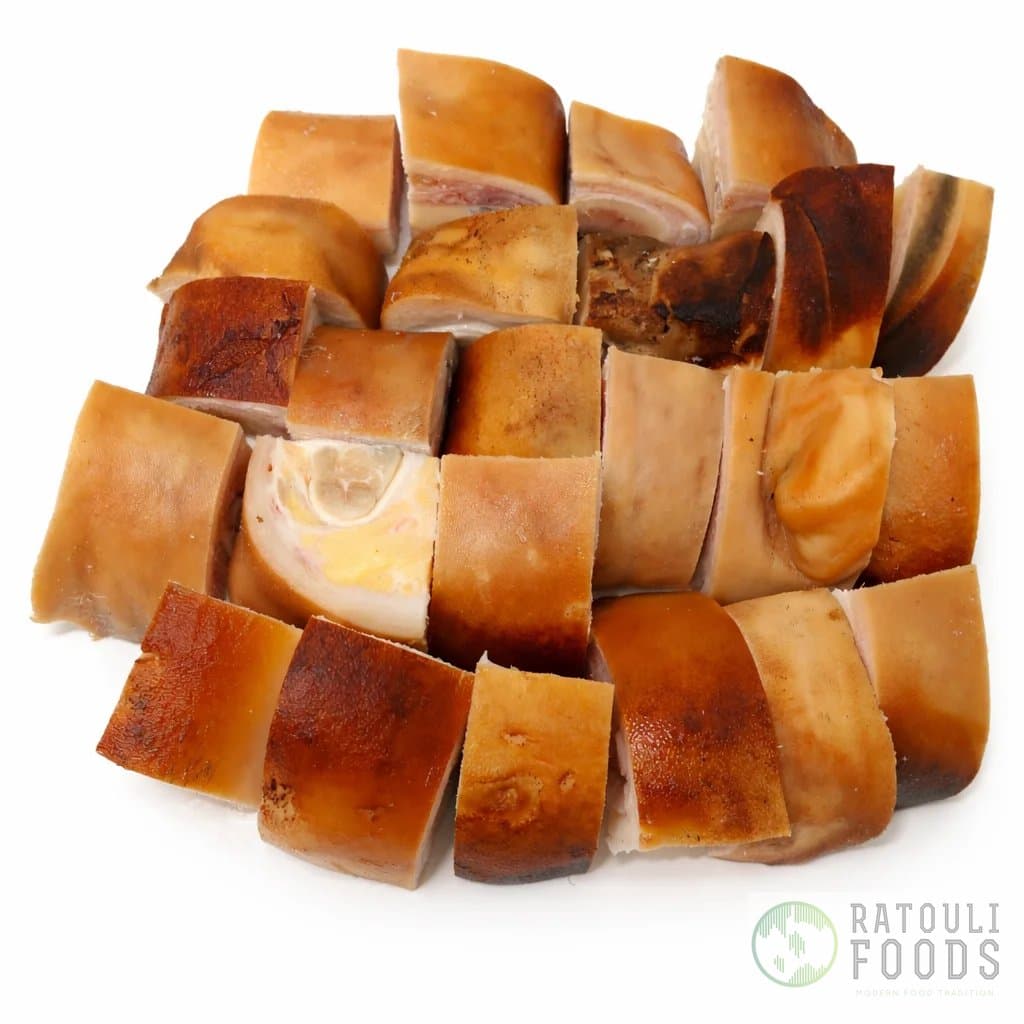
Stock burned cow feet with four core SKUs: whole feet in 20 kg cartons, cut legs in 10 x 1 kg and 20 x 500 gram, and leg bones in 24 x 500 gram. Keep it frozen at -18 C, order by the pallet ahead of festivals, and label it bokoto plus cow foot, cow leg and cow heel so every customer finds it.
What you are actually stocking
Burned cow feet is the foot, trotter and lower leg of the animal. It is bones, hoof, tendons, cartilage and skin, with almost no muscle meat on it. Nobody buys it for the meat. They buy it for collagen and gelatine. Cook it slow and it gives soup a thick, sticky body and stock a deep flavour. In the right neighbourhood it does not sit on the shelf long.
Burned, gebrand in Dutch, means the feet are machine de-haired and then singed over open flame. That takes off the hair, turns the skin light brown and adds a mild smoke. Your customers know that look. A pale, raw-looking foot reads as wrong to them. The burned finish is part of what closes the sale.
Get one thing right from day one. Keep cow feet apart from the other parts, both in the freezer and on the label. Bokoto is the foot and lower leg. It is not shaki, the honeycomb tripe from the stomach. Not abodi, the beef reed. Not ponmo, the cow skin sold on its own. Not roundabout, the intestine, and not fuku, the lungs. A customer who wants one does not want the other. Mix them up at the counter and you lose the sale.
Sourcing for your store or wholesale?
Request a quote or browse the full catalogue.
The SKUs to carry
You do not need ten lines. Four cover almost everyone, and Ratouli Foods packs all four under the Afri-mama brand, frozen at -18 C.
| SKU | Pack size | Who it is for |
|---|---|---|
| Cow feet, whole | 20 kg carton | Households and party cooks who cut at home, plus caterers buying volume |
| Cow legs, cut (1 kg) | 10 x 1 kg | Family shoppers who want a ready-to-pot bag. Your everyday seller |
| Cow legs, cut (500 gram) | 20 x 500 gram | Smaller households, single cooks, impulse buys near the till |
| Cow leg bones | 24 x 500 gram | Stock and soup makers who want bones alone for a clean, deep base |
Start with the 10 x 1 kg cut legs and the 20 kg whole carton. Those two carry the shop. Add the 500 gram cut and the leg bones once you know your turnover. The smaller packs move faster but they tie up more freezer slots per kilo, so do not over-commit early.
The cut SKUs sell themselves to anyone without a heavy cleaver at home. Sectioned legs go straight in the pot. Whole feet are cheaper per kilo and suit people who cook in big batches and do not mind the work. That is two different customers, so carry both.
Cold chain and shelf handling
This product is frozen at -18 C and it stays frozen until your customer walks out the door. There is no chilled, fresh version that holds. Cartons that thaw and refreeze go grey, weep and lose the collagen people are paying for. The cold chain is the whole job.
- Take delivery into a freezer that holds -18 C, not a fridge. Check the carton temperature when it lands and log it.
- Rotate first-in, first-out. Date the cartons on arrival so the oldest pack goes out first.
- Do not let display freezers crust over. Defrost the frost build-up on a schedule so packs stay visible and the label stays readable.
- If you portion whole feet in-store, use a clean separate board and refreeze fast. Most shops skip this and just sell the carton whole. Simpler, and safer.
Ratouli Foods works under EU approval NL208262EG, with HACCP and a public NVWA inspection record. That paperwork matters to you twice over. It keeps your own food-safety file clean if you get inspected, and it tells your customers the product was handled properly before it ever reached your freezer. Keep the approval number on file with your supplier invoices.
Reordering by pallet and timing the peaks
Cow feet is not a steady-line product. Demand jumps hard around a handful of dates, and a shop that runs out during a jump loses that customer to the next shop for the whole season. Order around the calendar, not just around last week's sales.
- August, New Yam Festival. Nigerian and Igbo customers cook in volume. Your biggest cow feet week of the year.
- Eid. Big family pots, large-batch cooking.
- December. Christmas and end-of-year party cooking across every community you serve.
- Weekends and party season. Cow foot soup and nkwobi are gathering food. Friday and Saturday move more than midweek.
Order by the pallet ahead of these peaks instead of topping up case by case after the shelf clears. A pallet of mixed SKUs, weighted to the 10 x 1 kg cut legs and the 20 kg whole cartons, holds fine in the freezer and covers you when a festival weekend cleans you out. Ratouli Foods delivers DAP across NL, BE, DE, FR, ES, IT and the UK, so you get a landed price with no customs surprises. That makes a pallet a lot easier to budget.
Labelling that sells to every customer
This is where most shops leave money on the shelf. One carton of cow feet feeds several cuisines at once, but only if all those customers can spot it. Label it in the names they actually use, not just the one on the supplier sheet.
The strongest single name in the West-African diaspora is bokoto, Yoruba for cow foot or cow leg. Put that on the shelf talker. Then add the English trade names so nobody walks past it: cow foot, cow feet, cow leg, beef trotters, cow heel, and the Caribbean bull foot. A Jamaican or Trinidadian customer hunting cow heel soup or cow foot souse should stop at the same freezer as the Nigerian customer hunting pepper soup or nkwobi.
| Customer | Name to show | Dish they cook |
|---|---|---|
| Yoruba | bokoto | Pepper soup, party pots |
| Igbo | cow foot | nkwobi in spiced palm oil |
| Caribbean / Jamaican | cow heel, bull foot | Cow heel soup, cow foot souse |
| Congolese / Ivorian | pieds de boeuf | Pieds de boeuf, smoked versions |
| Surinamese | koeienpoten | Long-cooked soups |
One cross-diaspora note worth keeping at the counter. The Lusophone and Angolan name mocoto comes from the Kimbundu mbokoto or mokoto, the lower leg of the ox, and that is plausibly the same root as the Yoruba bokoto. Same cut, same pot, different language. Some UK halal shops also cross-tag it as Paya next to beef trotters, so add that if you serve a South-Asian crowd. The more honest names you show, the fewer customers walk past a freezer that had exactly what they came for. For the neighbouring lines, point people to the shaki, abodi and ponmo guides so they do not confuse the foot with the tripe, the reed or the skin.
Sourcing for your store or wholesale?
Request a quote or browse the full catalogue.