
Stocking cow ears in your African food store: packs, cold chain and labelling
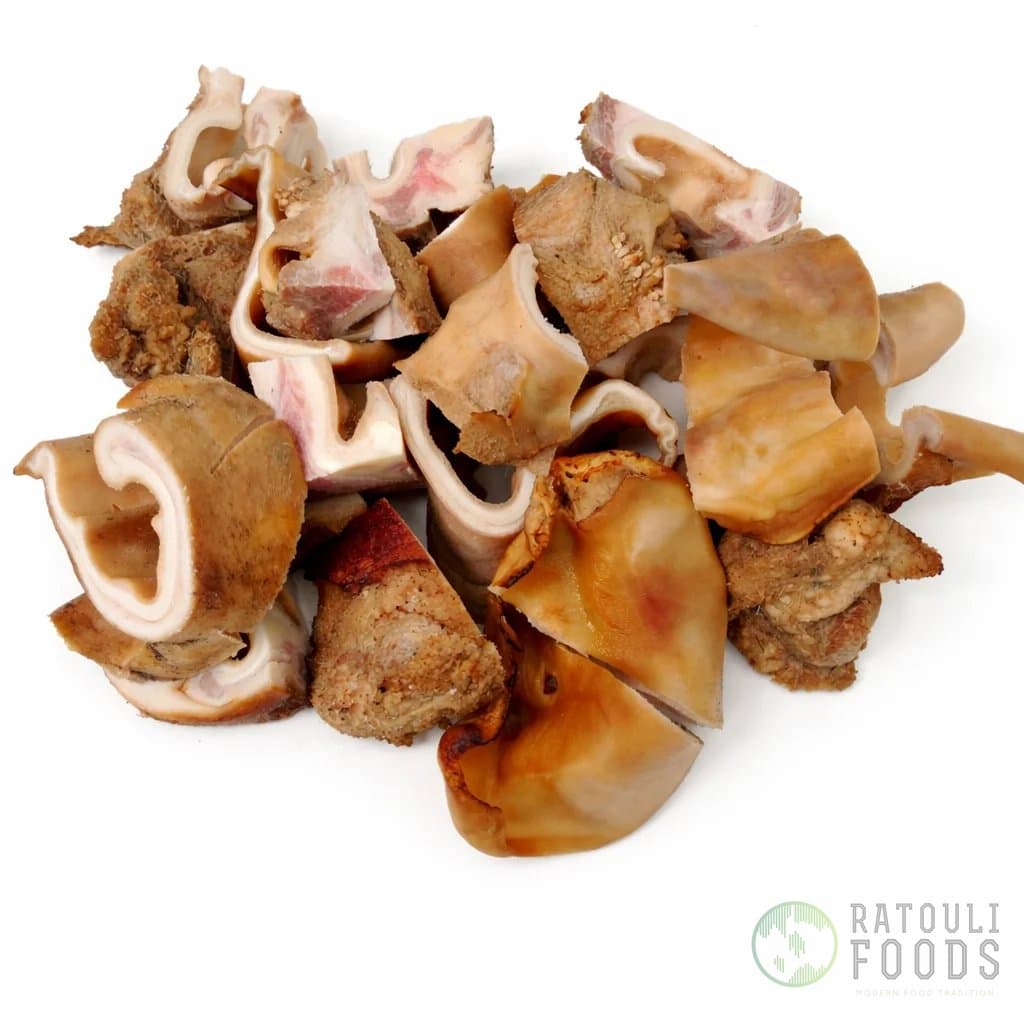
To stock cow ears, order them cleaned, cut and frozen, hold them at -18 C, and label them as Cow Ears or Beef Ears so shoppers find them fast. Ratouli Foods supplies them under Afri-mama in cartons and 500 gram packs, delivered DAP across the EU and the UK.
What you are actually stocking
Cow ears, also called beef ears, are the ear of the cow. Cleaned, de-haired and singed so no bristle is left. The bite is what sells them. Crunchy cartilage running through soft, gelatinous skin, and the whole piece is heavy with collagen. Cook it long and slow and it goes tender while the cartilage keeps a clean crunch.
Be clear with your staff and your customers about what this is, because the offal range gets mixed up fast. Cow ears are not tripe, which is Shaki. They are not skin, which is Ponmo or Kpomo. They are not beef reed, which is Abodi. They are not feet, which is bokoto. It is the ear. Lean meat with collagen, gelatine and cartilage.
On the counter it moves into nkwobi, pepper soup, beef stew, and the assorted-meat pot that Yoruba shoppers call orisirisi. People ask for it by a few names depending on where they are from: cow ears, beef ears, oreilles de boeuf, koeienoren, orejas de res. Stock it under the names your customers actually say and you cut down the back-and-forth at the counter.
Sourcing for your store or wholesale?
Request a quote or browse the full catalogue.
Pack formats and the cleaned-cut-frozen spec
Ratouli Foods supplies cow ears frozen under the Afri-mama range, cleaned and cut, ready to go straight into a pot without extra prep on your side. They sit in the same offal pack formats as cow feet, Shaki, Abodi and Ponmo, so you build one order across the assorted-meat line and take a single delivery.
Two formats cover most of what a store or wholesale counter needs. Cartons for the buyers who break it down themselves or run a busy kitchen. And 500 gram packs for the chiller display, where shoppers pick up one bag at a time.
| Format | Best for | State |
|---|---|---|
| Carton | Wholesale, restaurants, stores that repack | Cleaned, cut, frozen at -18 C |
| 24 x 500 gram packs | Retail chiller and front-of-store display | Cleaned, cut, frozen at -18 C |
Everything ships under EU approval NL208262EG, with HACCP in place and a public NVWA inspection record you can point a buyer to. For cow ears wholesale that paperwork is not a nice-to-have. It is the difference between a buyer trusting your counter and walking it back.
Cold chain: hold it at -18 C
Frozen cow ears are easy to handle, as long as the chain stays cold. Hold them at -18 C from delivery to sale. Get them off the dock and into the freezer fast, and do not let them sit at ambient while someone finishes another job.
A few habits keep the stock clean and the customer happy:
- Receive into the freezer the same hour the truck arrives. No staging at room temperature.
- Rotate first in, first out. Old stock to the front, new behind it.
- Keep packs sealed until sale so they do not pick up freezer burn or odour.
- Tell retail shoppers to keep them frozen until they cook, then cook from frozen or after a controlled thaw in the chiller.
We deliver DAP, so the product reaches your door across NL, BE, DE, FR, ES, IT and the UK without you arranging the freight. Your job starts at the dock. Straight into the freezer, and the cold chain holds.
Labelling that sells
Good labelling is the cheapest sales work you will ever do. Put the right name on the pack and the shelf and the product sells itself, because the shopper already knows it from home. Get the name wrong and a real buyer walks past their own ingredient.
Lead with Cow Ears and Beef Ears on the English-facing label, because UK African shops already sell it under both. Shops like John and Biola, Pride of Africa and Thilda African Food list it as a pepper soup cut, described as chewy, gelatinous and full of collagen. Match that language. It is what your customers search and ask for.
- Front of pack: Cow Ears (Beef Ears). Both names, no guessing.
- Add the dish cue if you have room: good for pepper soup, nkwobi and assorted meat.
- Carry the local name for your main customer base: koeienoren, oreilles de boeuf, orejas de res, Rinderohren, orecchie di manzo, orelhas de boi.
- Keep the storage line plain: keep frozen at -18 C.
If you run a beef ears supplier listing online or a printed price list, use the same two names there. A buyer searching frozen cow ears or beef ears supplier should land on your product without translating in their head.
Where ears sit in the assorted-meat range
Cow ears rarely sell alone. They go into the pot with the rest of the offal, so they sell best sitting next to it on the shelf. A shopper buying ears today is usually buying cow feet, Shaki and a couple of others for the same dish.
Stock cow ears for store alongside the full assorted-meat range and the basket size climbs on its own. Put them next to the cuts they cook with and you save the customer a second trip and yourself a second conversation. If you carry the guides, cross-link the cow feet, Shaki, Abodi and Ponmo pages from the ear listing so a shopper building an assorted-meat order sees the whole set.
Demand is steady through the year, then it jumps. Parties, the New Yam Festival, Eid and December all pull hard on the offal range at once. Plan your reorder around those dates. Set a clean reorder point on cow ears the same way you do on cow feet, build the order across the Afri-mama offal line, and let one DAP delivery refill the whole assorted-meat shelf before the rush, not during it.
Sourcing for your store or wholesale?
Request a quote or browse the full catalogue.
Related guides