
Ponmo vs shaki vs abodi: cow skin, tripe and reed compared
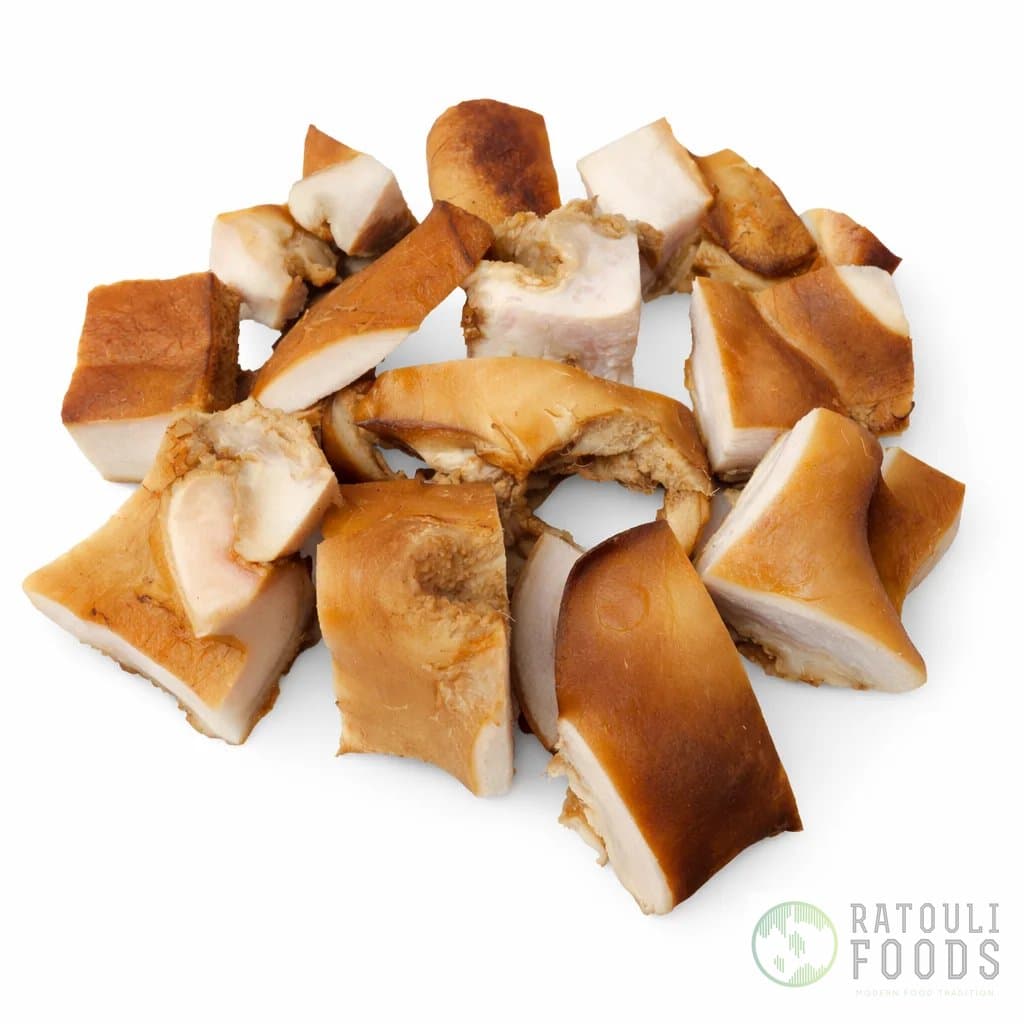
Ponmo is edible cow skin. Shaki is honeycomb tripe, the lining of the cow's second stomach. Abodi is beef reed, the abomasum or fourth stomach. So no, ponmo is not tripe. They sit next to each other on a market table but they come from three different parts of the cow and behave differently in the pot.
The short answer, with a table
I have sold these three cuts for 14 years, and the same question lands at the counter every week. Is ponmo the same as shaki? Is abodi just another word for tripe? No on both. Each one is a separate part of the cow. Put them side by side and the difference between ponmo and shaki stops being a question.
Here is the whole thing in one view.
| Name | What it actually is | Part of the cow | Texture |
|---|---|---|---|
| Ponmo | Edible cow skin (cattle hide) | Outer skin, the hide | Chewy and gelatinous, cooks down to gelatin |
| Shaki | Honeycomb tripe | Reticulum, the second stomach | Spongy, slightly springy, holds shape |
| Abodi | Beef reed | Abomasum, the fourth stomach | Firmer, denser bite than tripe |
So ponmo vs abodi is skin against stomach. Ponmo vs shaki is skin against tripe. Shaki vs abodi is two different stomachs from the same animal. A cow has four stomach compartments. Shaki comes from one, abodi from another. Ponmo is not a stomach at all.
Sourcing for your store or wholesale?
Request a quote or browse the full catalogue.
What ponmo is, and what it is not
Ponmo is the skin of the cow. The collagen-rich outer covering, eaten after the hair comes off. That is the part people miss. Same cow, but this is the hide, not the gut. You will see it written pomo, kpomo or kponmo, and it sells under plenty of other names depending on who is at the stove. Igbo speakers call it kanda or akpukpo anu. In the north it is ganda, ganada, fata or awo. The Edo say ohian, the Igala say ano. In Ghana it is wele, and it goes straight into waakye and a long list of staples. Plain English is cow skin, cowhide or beef skin.
Let me be exact, because the question is ponmo tripe never stops coming up. No. Ponmo is not tripe, that is shaki. It is not beef reed, that is abodi. It is not intestine, that is roundabout. One animal, four products, four counters.
Two grades you should know. Brown or burnt ponmo has the hair singed off over flame. That gives it a smoky flavour, a darker colour and a firmer bite. White ponmo is scalded or boiled and shaved with no flame, so it comes out paler and softer, and a lot of buyers read it as cleaner. The premium regional grade is Ponmo Ijebu from Ogun State, thicker and prized. It sells cleaned and cut, with the burnt outer scraped and washed.
How they cook, and which dish each one belongs in
This is where the difference between ponmo and shaki actually matters, because they do different jobs in the pot.
Ponmo cooks down. It is chewy and gelatinous, and it melts toward gelatin as it simmers, so it adds body and thickens whatever it sits in. That is why you find it in draw soups like okra and ogbono, in egusi, in efo riro, in ofada and ayamase stew, in abula, in pepper soup, and next to ewa agoyin beans. Peppered ponmo on its own is party and street food, served as small chops. In Ghana the same skin, wele, gets built into waakye.
Shaki holds its shape. Honeycomb tripe stays springy and a bit spongy even after a long cook, so it gives you something to bite. It is the texture cut in a soup, not the thickener. Abodi is firmer and denser than tripe, so it sits between the two. Cook it long and slow until it gives.
A quick rule for the kitchen:
- Want the soup to thicken and carry body? Ponmo.
- Want a springy, spongy bite in the broth? Shaki.
- Want a firm, meaty chew that takes a long simmer? Abodi.
None of them swaps for the other. Ponmo is mostly collagen, so on its own it is not a complete protein. You eat it alongside other meat and fish, never as the only protein on the plate. That is just honest, and it takes nothing away from how good it is in the pot.
How a shop should label all three so the right customer finds them
If you run a shop or a webshop and you list these as ponmo, shaki and abodi only, you lose every customer who searches in their own language. That is real money walking out. The fix is simple. Label each cut with the African name plus a plain literal term, and do it per cut. Never one generic label across all three.
For ponmo, lead with the African name, then add cow skin or cowhide or beef skin. Selling into Europe, pair the African name with the local literal term, because that local term on its own mostly returns leather. Dutch koeienhuid or runderhuid. German Kuhhaut or Rinderhaut. Spanish cuero de res or piel de vaca. Italian cotenna or cotica di manzo. Portuguese pele de boi or couro de boi. French is peau de boeuf, and the Ivorian slang kplo means smoked beef skin specifically. In UK African retail you also see the euphemism beef mask.
Practical labelling list:
- Ponmo: list pomo, kpomo, kponmo, kanda, ganda, wele, plus cow skin and beef skin. State brown or burnt versus white, and flag Ponmo Ijebu where you carry it.
- Shaki: list it as honeycomb tripe and beef tripe, not just shaki.
- Abodi: list it as beef reed and abomasum, and note it is a different cut from tripe.
Then cross-link them. A customer who lands on ponmo is usually after shaki and abodi for the same pot. Put the three guides next to each other and let them grab the set.
Why ponmo matters, and what we carry
Do not treat ponmo as a throwaway cut. It is a prized delicacy and a point of pride, often called the common man's protein. The Nigerian government floated a ban on it more than once, citing low nutrition and pressure from the leather industry, and people pushed back hard every time. That pushback tells you everything about how much it means at the table.
At Ratouli Foods we carry it under our Afri-mama brand, frozen at -18 C. We stock cow skin head mask and cow skin from the legs, burned, in 12 x 1 kg and 24 x 500 gram, and white ponmo is available too. It is EU approved under NL208262EG, runs on HACCP, and there is a public NVWA inspection record you can check. We deliver DAP across NL, BE, DE, FR, ES, IT and the UK.
Demand climbs around the New Yam Festival in August, at Eid, through December, and whenever there is a big owambe to cook for. Stocking for those weeks, order early. And if you need the matching cuts, see our guides on shaki and abodi so you build the pot right.
Sourcing for your store or wholesale?
Request a quote or browse the full catalogue.
Related guides