
What everyone calls ponmo: cow skin names across cultures
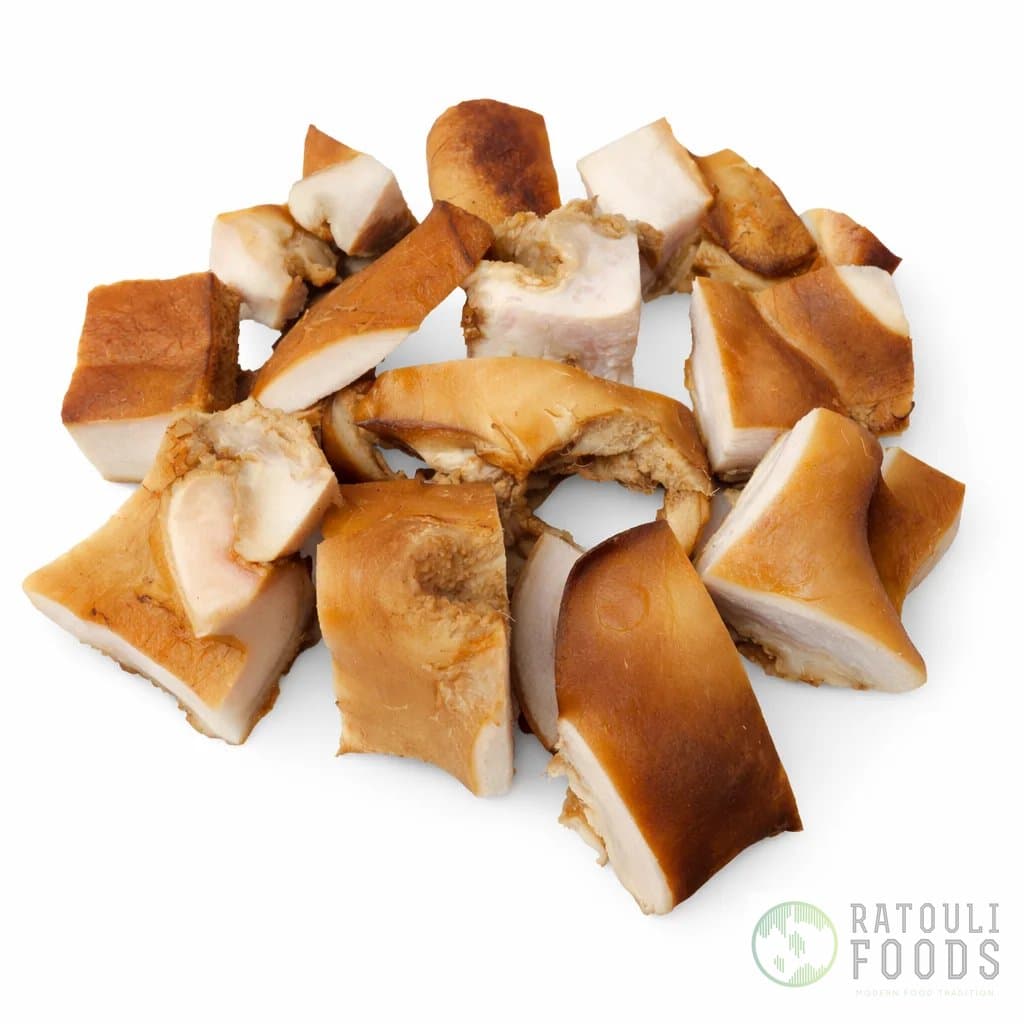
Ponmo is edible cow skin, the collagen-rich outer hide eaten once the hair is off. Yoruba say ponmo or kpomo. Igbo say kanda. Hausa say ganda. Ghanaians say wele. French speakers say peau de boeuf. Same thing, different word, depending on who is cooking it.
One ingredient, many names
I have sold cow skin for 14 years into West-African and Surinamese kitchens across Europe. The single biggest reason a customer cannot find it is the name. Type one word into a search bar, get nothing. Type the right one, and the whole market opens up.
So let me be clear about what we are talking about. Ponmo is the skin of the cow, the hide, cleaned and with the hair off, then cooked until it turns soft and gelatinous. It is not tripe. Tripe is the stomach lining, which is Shaki. It is not beef reed, that is Abodi, the abomasum. It is not intestine either, the part people call roundabout. Ponmo is skin and nothing else.
The mix-up is fair, because every group that eats it has its own word. Yoruba cooks built the name most people know: ponmo, also written pomo, kpomo or kponmo. You will see ponmoh and pomoh too, which are just spellings of how it sounds. Search ponmo kanda wele together and you cover most of the continent in one go.
Sourcing for your store or wholesale?
Request a quote or browse the full catalogue.
The full map: cow skin names across cultures
Here is the table I wish every shop and every buyer had in front of them. It lines the names up so you can match what a customer asks for against what sits on your shelf. The kpomo and kanda overlap trips up plenty of people, so the language column tells you who uses which word.
| Name | Language / region | Notes |
|---|---|---|
| Ponmo (pomo, kpomo, kponmo) | Yoruba, Nigeria | The best-known name. Phonetic spellings: ponmoh, pomoh. |
| Kanda, akpukpo anu | Igbo, Nigeria | Kanda is the everyday word. Akpukpo anu is the fuller term. |
| Ganda, ganada, fata, awo | Hausa and Northern Nigeria | Several words in use across the north. |
| Ohian | Edo, Nigeria | |
| Ano | Igala, Nigeria | |
| Wele (welle, wale, kahuro) | Akan / Twi, Ghana | The Ghanaian name, built into waakye and everyday staples. |
| Peau de boeuf | French (general) | Literal French for cow skin. |
| Kplo | Ivorian slang | Smoked beef skin specifically, peau de boeuf fumee. |
| Beef mask | UK African retail | The euphemism you see on some UK labels. |
| Cow skin, cowhide, beef skin | Plain English | What to write so any English speaker understands. |
That handles the African and francophone words. The European literal terms are a separate headache, and I deal with them next, because they bite you if you use them on their own.
What wele means, and why the EU words mislead you
Wele is the Ghanaian word for cow skin, full stop. The wele meaning is the exact same ingredient as ponmo and kanda, just cooked the Ghanaian way. If you eat waakye, the skin in that pot is wele. People also write it welle, wale or kahuro. So when a Ghanaian customer asks for wele and a Nigerian asks for ponmo, you are reaching for the same box in the freezer.
The European literal translations are where buyers go wrong. Each language has a word for cow skin, but type it on its own and you mostly land on leather and tanning, not food. So pair the EU word with the African name every time you search or label.
- Dutch: koeienhuid or runderhuid
- German: Kuhhaut or Rinderhaut
- Spanish: cuero de res or piel de vaca
- Italian: cotenna or cotica di manzo
- Portuguese: pele de boi or couro de boi
A shop in Germany should write Rinderhaut (ponmo) on the label. A Dutch shop, runderhuid (kanda). That way a leather search does not bury your food product, and every customer, African or local, knows what they are buying.
Brown and white, and the grades worth knowing
Once the name is sorted, the next question is the type. There are two processing grades, and they cook differently.
Brown ponmo, sometimes called burnt ponmo, is singed over an open flame to take the hair off. The fire gives it a smoky flavour, a darker colour and a firmer bite. This is the one most Nigerian soups want. Ivorian kplo is this style, smoked beef skin, peau de boeuf fumee.
White ponmo is scalded or boiled and shaved instead of flamed. No fire touches it, so it stays paler and softer. A lot of cooks see it as the cleaner option. Same ingredient, different finish.
One grade is worth naming on its own. Ponmo Ijebu, from Ogun State, is thicker and prized above the rest. When a customer asks for Ijebu by name, they know exactly what they want and they will pay for it.
The texture is the whole point. Ponmo is chewy and gelatinous, and as it cooks it breaks down toward gelatin, giving a soup body and thickening it. The honest part: it is lean and low in fat, and it is mostly collagen, so on its own it is not a complete protein. People eat it next to meat or fish, not in place of them.
Where it goes in the pot, and what we stock
Cow skin earns its place because it carries flavour and thickens the pot. In Nigerian kitchens it goes into egusi soup, ofada and ayamase stew, efo riro, okra and ogbono draw soups, and abula. It rides in ewa agoyin beans and pepper soup. Peppered ponmo on its own is a party and street favourite, served as small chops at any owambe. In Ghana the same skin is wele, built into waakye and plenty of staples.
It matters to people. Cow skin is a prized delicacy and a point of pride, often called the common man's protein. The Nigerian government floated a ponmo ban more than once, pointing at low nutrition and pressure from the leather trade, and consumers pushed back hard every time. That fight tells you how much this ingredient means.
What we carry under the Afri-mama brand, frozen at -18 C: cow skin head mask and cow skin from the legs, burned, in 12 x 1 kg and 24 x 500 gram. White ponmo is available too. It is sold cleaned and cut, with the burnt outer scraped and washed. EU approval NL208262EG, HACCP in place, a public NVWA inspection record, delivered DAP across NL, BE, DE, FR, ES, IT and the UK. Demand climbs around the New Yam Festival in August, Eid, December, and any big party cook.
Still sorting out which cut is which? Read the Shaki guide for tripe and the Abodi guide for beef reed. Knowing the difference is half the battle at the counter.
Sourcing for your store or wholesale?
Request a quote or browse the full catalogue.
Related guides