

How to clean and cook ponmo (cow skin)
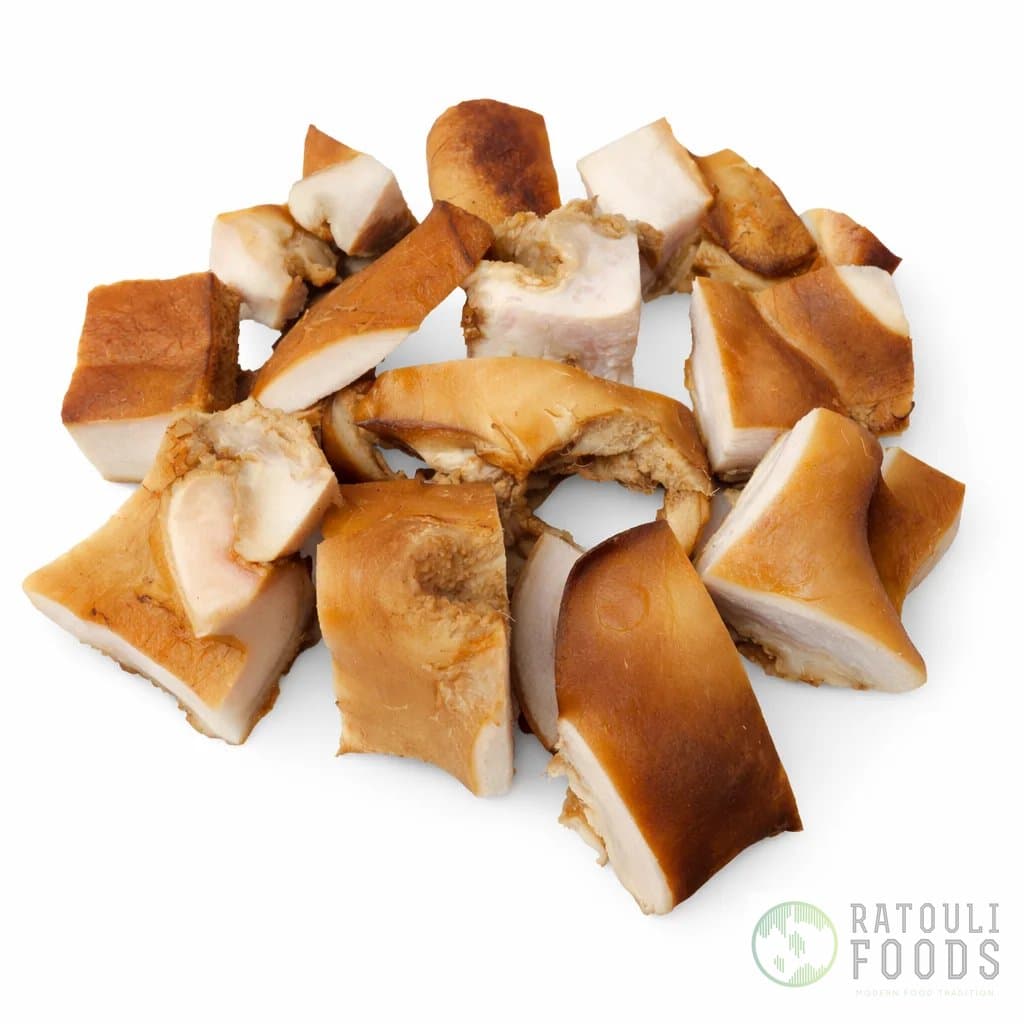
Ponmo is edible cow skin. To clean burnt ponmo, scrape off the soot or ash with a knife, rub it with coarse salt, then rinse it well. To cook it, boil the cleaned pieces with salt and a little onion for 30 to 45 minutes until soft, then add them to your soup or stew.
What ponmo actually is, and what it is not
Ponmo is cow skin. The collagen-rich outer hide, eaten after the hair comes off. That is all it is. People call it different things depending on where they grew up, but it is one cut.
It is not tripe. Tripe is Shaki, the stomach lining, and that has its own guide. It is not beef reed either, which is Abodi, the abomasum. And it is not intestine. So if a recipe asks for ponmo and you reach for one of those, you will get a different texture and a different result.
The names you will hear, depending on the kitchen:
- Yoruba: ponmo, also written pomo, kpomo, kponmo
- Igbo: kanda, also akpukpo anu
- Hausa and the North: ganda, ganada, fata, awo
- Edo: ohian. Igala: ano
- Ghana, in Akan and Twi: wele, the skin that goes into waakye and plenty of staples
- French: peau de boeuf. Plain English: cow skin or beef skin
Searching for it in Dutch, German, Spanish, Italian or Portuguese mostly returns leather and tanning, not food. Koeienhuid, Kuhhaut, cuero de res, cotenna, couro de boi. Put the African name next to it, ponmo or wele, and you will land on the right thing.
Sourcing for your store or wholesale?
Request a quote or browse the full catalogue.
Brown ponmo or white ponmo, and which to buy
There are two grades. They cook a little differently, so it helps to know what is in front of you.
Brown ponmo, also called burnt, has the hair singed off over flame. That gives it a smoky note, a darker colour and a firmer bite. White ponmo is scalded or boiled and shaved instead of burned, so no flame touches it. It comes out paler and softer, and plenty of people read it as the cleaner of the two. Neither one is better. It comes down to the dish and your taste.
If you can get Ponmo Ijebu, that is the prized grade. Thicker, from Ogun State, and it holds its bite through a long-cooked soup.
On nutrition I will give it to you straight. Ponmo is lean and low in fat, and it is rich in collagen. But it is mostly collagen, so on its own it is not a complete protein. You eat it next to meat or fish, not in place of them. People call it the common man's protein, and that respect is earned. The Nigerian government floated banning it more than once, citing low nutrition and pressure from the leather trade, and buyers pushed back hard every time. That tells you how much it means at the table.
How to clean ponmo
This is the step people skip, and it decides whether your soup tastes clean or tastes of ash. Burnt ponmo carries soot on the surface from the singeing. You want that gone.
Here is how to clean ponmo properly:
- Lay the piece on a board. Take a sharp knife or the back of a spoon and scrape the dark, sooty surface off. You are lifting the burnt layer and any grit, not shaving the whole skin away.
- Rinse under running water as you go, so you can see what is still left to scrape.
- Rub the pieces hard with a handful of coarse salt. The salt takes off the last of the soot and any film, and it cuts the raw smell.
- Rinse again through two or three changes of water, until the water runs clear and the skin looks clean rather than grey.
White ponmo needs much less of this. It never went over a flame, so a salt rub and a good rinse usually does it. Cut everything to roughly the size you want on the plate. Ponmo barely shrinks the way meat does, so what you cut is close to what you eat.
How to cook ponmo and soften cow skin
Cleaned ponmo still needs a boil before it goes near a soup. The question I get most is how to soften cow skin, and the honest answer is time and a little patience.
Put the cut pieces in a pot, water to cover, a good pinch of salt, half an onion, and a stock cube if you use one. Bring it to a boil, then drop it to a simmer. Burnt ponmo is firmer, so it wants about 30 to 45 minutes to go tender. White ponmo softens faster, often 20 to 30 minutes. Thick Ijebu ponmo can take an hour. You are after a piece you can bite through cleanly with a slight chew left in it. Not rubber, not mush.
A few things that help:
- Do not over-salt the boil if the ponmo is heading into a salted stew after. You can add salt at the end, you cannot take it out.
- Keep the dark, gelatinous boiling liquid. As ponmo cooks it releases gelatin, and that water gives your soup body and a natural thickening. Pour it in.
- If a piece is still tough after its time, give it another ten minutes. Do not crank the heat to a hard boil, that toughens the bite.
Once it is tender, ponmo is ready to carry the dish. Drop it into egusi, into ofada and ayamase, efo riro, okra or ogbono draw soups, abula, ewa agoyin, or a clear pepper soup. In Ghana the same skin, wele, goes straight into waakye. For peppered ponmo, the small chops you see at owambe parties and on the street, fry or grill the boiled pieces briefly, then toss them in a hot blend of pepper, onion and a little oil. Serve them on a stick or in a bowl. They go fast.
A note from the trade
I have spent 14 years in West-African and Surinamese food wholesale, working out of Volendam. The cleaning and cutting you just read is real work, and at shop or catering volume it eats hours. So a plain note, in case it saves you some.
At Ratouli Foods, under our Afri-mama brand, we ship ponmo already cleaned and cut, frozen at -18 C. We carry cow skin head mask and cow skin from the legs, burned, in 12 x 1 kg and 24 x 500 gram packs, and white ponmo too. That takes most of the prep off shops and caterers. You thaw, boil and cook.
It runs under EU approval NL208262EG, with HACCP in place and a public NVWA inspection record, and we deliver DAP across NL, BE, DE, FR, ES, IT and the UK. Demand climbs around the New Yam Festival in August, around Eid, in December, and through any big party season, so order ahead of those weeks. If you also buy Shaki or Abodi, check the separate guides. They cook nothing like ponmo.
Sourcing for your store or wholesale?
Request a quote or browse the full catalogue.
Related guides