

How to clean and cook cow ears (beef ears)
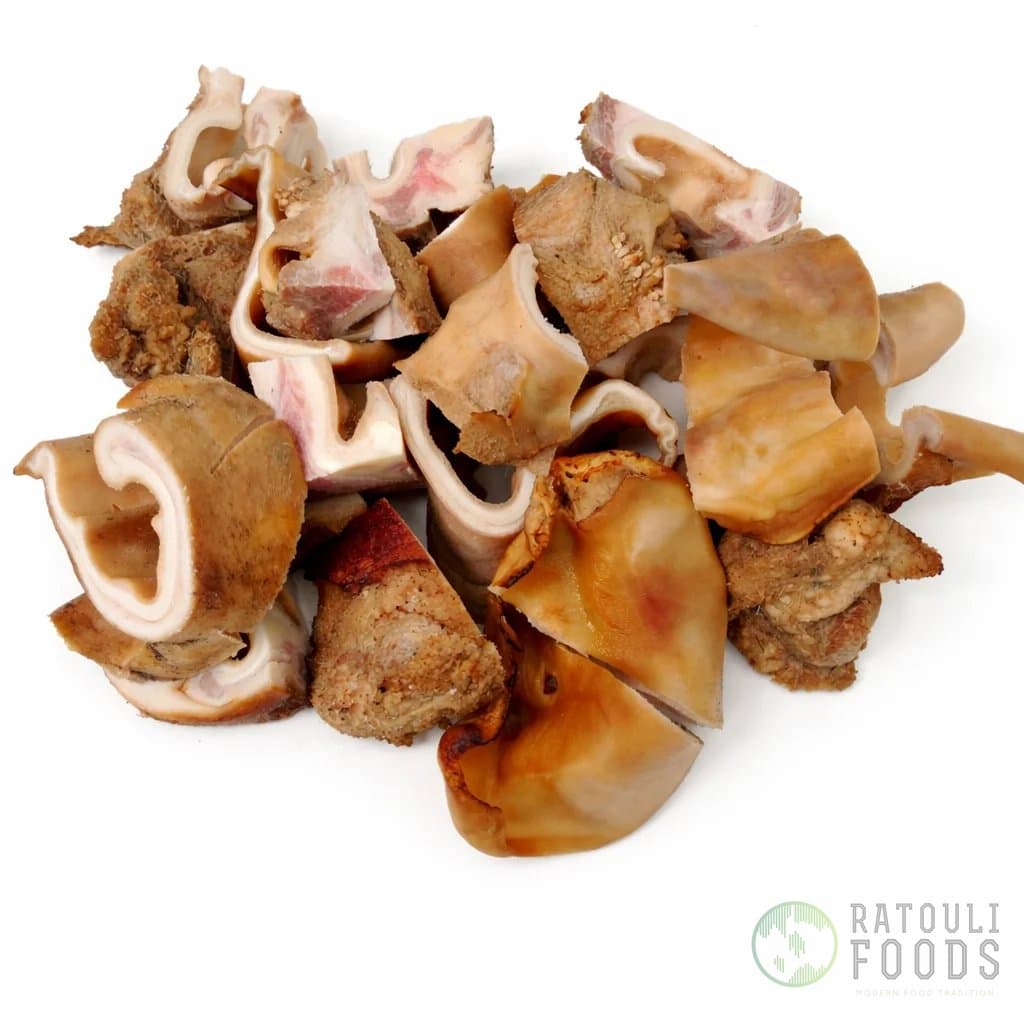
Clean them first. Scrape off the singe residue, rinse, then wash with salt. Par-boil 15 to 20 minutes and drain. Then cook them long and slow into nkwobi, pepper soup or assorted meat for an hour or more. The cartilage stays crunchy while the skin goes soft.
What cow ears actually are
Cow ears, sold in UK and EU African shops as cow ears or beef ears, are the ear of the cow. Cleaned, de-haired, usually singed over a flame. That is the cut. It is not tripe, which is Shaki. It is not skin, which is Ponmo or Kpomo. It is not beef reed, which is Abodi. And it is not feet, which is bokoto. It is the ear, and it cooks differently from all of them.
Texture is why people buy it. Crunchy cartilage runs through the middle, soft gelatinous skin sits around it. Lean meat, heavy on collagen and gelatine, so it firms a pot and gives every spoon a chewy bite. Shops describe it as chewy and full of collagen, and that is exactly what it does once it hits the pot.
It turns up all over West African cooking. Igbo nkwobi, pepper soup, Yoruba assorted meat (orisirisi), beef stew, head-meat dishes. The name changes by language. The cut does not.
| Language | Name |
|---|---|
| English | Cow ears, beef ears |
| Dutch | Koeienoren |
| French | Oreilles de boeuf |
| German | Rinderohren |
| Spanish | Orejas de res |
| Italian | Orecchie di manzo |
| Portuguese | Orelhas de boi |
Sourcing for your store or wholesale?
Request a quote or browse the full catalogue.
How to clean beef ears before cooking
Most cow ears arrive already singed, so the hair is gone, but you will often see dark singe residue on the surface. That comes off with a knife and a bit of patience. Lay the ear flat and scrape the burnt bits away with the back or edge of a knife. Work both sides until the surface looks clean and pale. If the ear has folds, open them out and scrape inside, because that is where soot and grit hide.
Once scraped, rinse under cold running water and look again. Then do a salt wash. Rub coarse salt over the ears, work it in for a minute, rinse it off. The salt lifts the last of the residue and any slime, and it cuts the raw smell. Some cooks add a splash of lime or vinegar to the salt rub. Fine if you want to, but plain salt does the job.
One last check before the pot. Run your fingers along the cartilage edges and feel for any stiff hair the singe missed. Pull or trim those out. Clean beef ears feel smooth, and nothing comes off black on your hand when you rub them.
Par-boiling and cooking long and slow
Cow ears need time. Cartilage will not soften in a quick simmer, so plan for a long, low cook. Start with a par-boil. Put the cleaned ears in a pot, cover with water, add salt, an onion and whatever you usually start a meat pot with, and boil for 15 to 20 minutes. Drain off that first water, since it carries the last of the residue. Now you have par-boiled ears ready for the real cooking.
From here it depends on the dish, but the principle holds. Low heat, an hour or more. Slice the ears into strips or bite-size pieces first, cutting across the cartilage so every piece has that crunchy edge. Then build your pot:
- Simmer steadily, topping up with hot water if it dries out, until the skin is soft and a fork goes through it with light pressure.
- Taste as you go. Collagen-rich cuts thicken the liquid the longer they cook, so a stock that looked thin at the start turns silky by the end.
- Stop while the cartilage still has snap. Cooked right, the skin is tender and the cartilage keeps a crunch. That contrast is the whole point of the cut.
Short on time? A pressure cooker brings ears tender in 25 to 35 minutes after the par-boil. You lose a little of the slow-cooked depth, but the texture holds.
Nkwobi, pepper soup and assorted meat
Cow ears earn their place in three dishes. For cow ears nkwobi, par-boil and cut the ears, then dress them in the classic nkwobi sauce: palm oil thickened with ground ehu seeds and potash, pepper, onion and utazi on top. The ear works here because the cartilage gives the chew nkwobi is built around, and the gelatine clings to the palm oil. Plenty of cooks mix ears with cow foot and Shaki in the same bowl for a range of textures.
For cow ears pepper soup, the ears go into a light, hot broth with pepper soup spice, scotch bonnet, ginger and uziza. Shops often sell beef ears as a pepper soup cut, and for good reason. The collagen bodies up the broth without any thickener, and the crunchy bite stands out against the thin, peppery liquid. Cook it long enough for the skin to go soft, then serve hot.
For assorted meat, the Yoruba orisirisi, ears are one piece in a mixed pot alongside Shaki, Ponmo, Abodi and bokoto. Each cut brings a different texture. The ear brings the crunch. Boil the assortment together, then finish it in stew, efo riro or alongside ofada and ayamase. Ears also drop neatly into a regular beef stew or any head-meat dish where you want more bite. If you cook the other parts too, the cow feet, Shaki, Abodi and Ponmo guides cover those.
Buying cow ears cleaned and cut
Cleaning ears at home is honest work, but it takes time, and at volume it eats your prep. That is the part we handle. Ratouli Foods stocks cow ears frozen under the Afri-mama range, cleaned and cut, held at -18 C. They come in the offal range pack formats, cartons and 500 gram packs, ready to par-boil straight from frozen. For a shop or a caterer running assorted meat through a busy week, that takes out most of the scraping and salting before you even start.
The trade details, since they matter for shops and caterers. EU approval NL208262EG, HACCP in place, and a public NVWA inspection record you can check. We deliver DAP across the Netherlands, Belgium, Germany, France, Spain, Italy and the UK, so the price you see is the price landed at your door. Demand for ears sits right alongside the rest of the assorted-meat offal, and it climbs at parties, the New Yam Festival, Eid and through December. Order ahead of those weeks.
Want to talk quantities or pack sizes for your shop? Get in touch from the Ratouli Foods contact page and we will sort it out.
Sourcing for your store or wholesale?
Request a quote or browse the full catalogue.
Related guides