
The history of bakkeljauw: from plantation ration to favourite sandwich
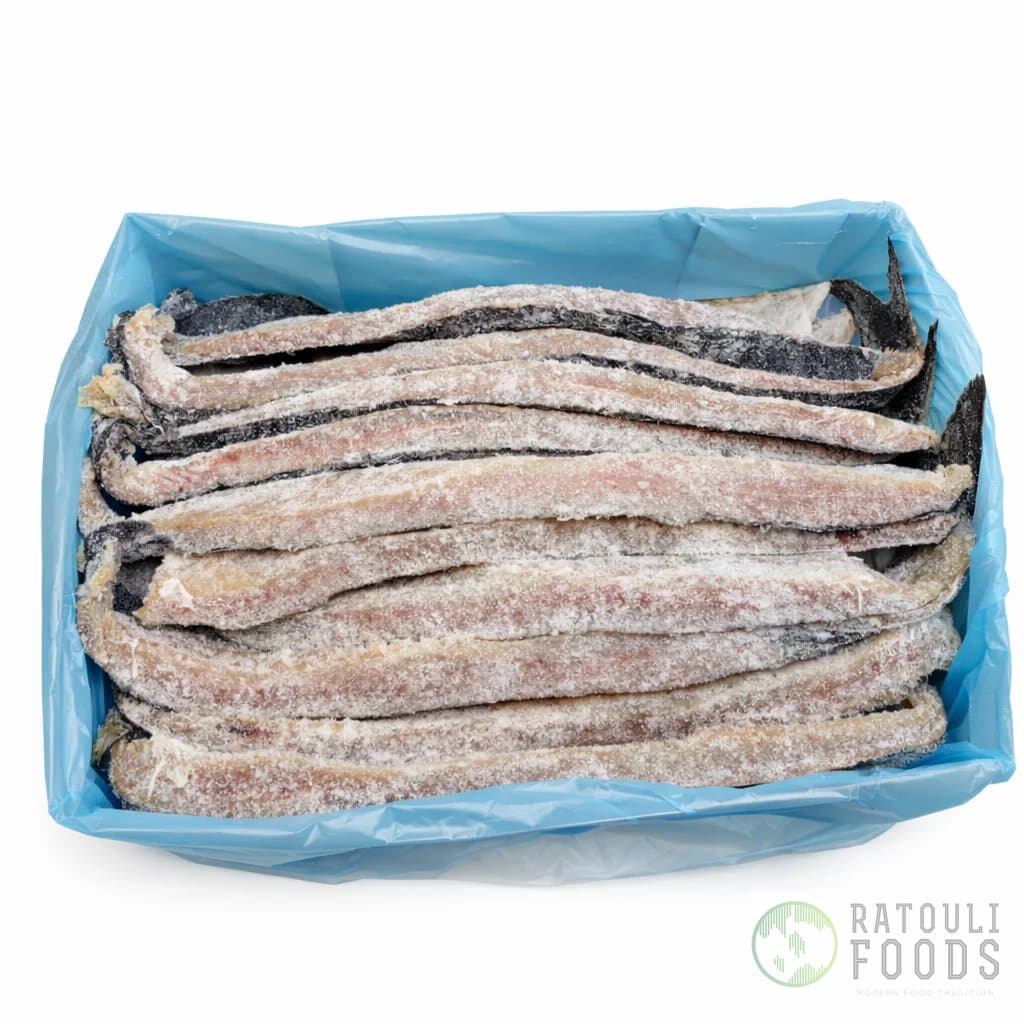
Bakkeljauw is salted, traditionally dried white fish, the Surinamese word for what the Dutch call klipvis. The name comes from the Portuguese bacalhau. Heavy salting kept the fish edible for up to a year, which is exactly why it could survive the months-long sea voyage to colonial Suriname and feed the people working the plantations.
Where the word bakkeljauw comes from
Say bakkeljauw out loud next to the Portuguese word bacalhau and you hear the whole story in one breath. The geschiedenis bakkeljauw starts in southern Europe, not in Suriname. Portuguese sailors called their salted fish bacalhau. The Spanish said bacalao. As that fish moved along the Atlantic trade routes, the word moved with it. By the time it reached Suriname it had worn down into bakkeljauw, and a handful of spellings are still in daily use: bakkeljouw, bakkaljauw, and the short form batjauw.
The Dutch name for the same thing is klipvis, sometimes rotsvis. Both point back to one simple object. White fish, split open, packed in salt, hard and pale and built to last. So when people search for klipvis geschiedenis or geschiedenis bakkeljauw, they are really asking about one fish with two names, one European and one Surinamese, carried across an ocean.
It helps to keep the family of words straight, because the same product wears a different name in almost every kitchen that loves it.
| Language / culture | Word for salted fish |
|---|---|
| Portuguese | bacalhau |
| Spanish | bacalao |
| Italian | baccalà |
| French | morue salée |
| German | Klippfisch |
| Dutch | klipvis, rotsvis |
| Surinamese | bakkeljauw, batjauw |
| English / Caribbean | saltfish, salt cod |
Sourcing for your store or wholesale?
Request a quote or browse the full catalogue.
Salt, the only refrigerator they had
To understand why anyone bothered, picture the problem. You catch a lot of fish in cold northern waters, and you need it to still be food months later and thousands of kilometers away. No ice. No freezer. No -18 C cold store. Just salt.
So the fish is split, gutted, and buried in salt. The salt pulls the water out and makes the flesh a place where bacteria cannot live. Done properly, salted fish keeps for up to a year. That one fact is what made the long colonial voyages to Suriname possible. A barrel of bakkeljauw loaded in Europe was still good when it was unloaded on the far side of the Atlantic, after weeks at sea in the heat.
This is the part of the klipvis geschiedenis that gets skipped. Salting was not a flavour choice. It was the only way to move protein across an ocean before refrigeration existed. The taste we now go looking for, that deep salty cure, is the taste of a preservation method older than every modern kitchen tool. The fish is still cured the same way today, which is why every cook has to desalt it before eating, a step the Surinamese call uitkoken.
From plantation ration to plantation kitchen
Salted fish did not arrive in Suriname as a delicacy. It arrived as a ration. It was cheap, it kept without spoiling, and a barrel of it could feed a lot of people for very little money. That is why it was handed out to the enslaved men and women working the plantations. The colonial logic was cold and simple. Feed the workforce something that travels and lasts, and spend as little as possible doing it.
What happened next is the real story. People took that hard, over-salted ration and made it worth eating. They learned to draw the salt back out with long soaking and boiling. They flaked it, picked out the bones, and stewed it with whatever the land and the kitchen gardens gave them. Onion, garlic, tomato, hot pepper. They folded it into one-pot meals built around cassava and plantain. The ration became a cuisine.
The clearest proof is heri heri, the plantation-era plate of cassava, sweet potato, plantain, boiled egg and bakkeljauw. It started as survival food and it never left. On July 1, during Keti Koti, the day that marks the end of slavery, heri heri is the symbol meal. In Amsterdam the Free Heri Heri initiative hands out more than 10,000 portions of it. A dish that began as a colonial ration is now served, freely and proudly, on the day of freedom itself. That is the whole arc in one plate.
What bakkeljauw actually is, and what it is not
Here is where most recipe blogs get it wrong, and where being honest is worth more than being neat. Almost every recipe online calls bakkeljauw gezouten kabeljauw, salted cod. For the fish in the diaspora trade, that is usually not true.
Classic salt cod is Gadus morhua. But after the cod stocks of the Grand Banks collapsed, the world switched to cheaper white fish for salting. The Dutch encyclopedia is plain about it. Most klipvis is cod, but in Suriname, the Antilles and Central Africa cheaper species took over. The main one is saithe, which the Dutch call koolvis (Pollachius virens, sold in the UK as coley or coalfish and in the US as Atlantic pollock), alongside ling and tusk. Albert Heijn even labels its product honestly: Lufo Bakkeljauw filet Alaska pollock. So when you buy bakkeljauw, you are most likely buying salted saithe or pollock, not cod. We say so on the tin, because a buyer deserves to know what is in the pot.
One trap worth flagging. Pollachius virens (saithe, the bakkeljauw fish) and Pollachius pollachius (pollack, also called lythe) are two different fish despite the similar Latin. The bakkeljauw fish is the saithe.
A few names get confused with bakkeljauw but are genuinely different things.
- Stokvis (stockfish, stoccafisso): air-dried but UNSALTED. It is not a bakkeljauw synonym, even though some people loosely call bakkeljauw Surinaamse stokvis. Bakkeljauw is salted. Stokvis is not. They are not the same fish in the same state.
- Makayabu: salted cod split with the backbone in, usually unwashed so it carries heavy surface salt. It is a Central African staple, eaten by Congolese cooks, and we sell it as its own SKU. Related to bakkeljauw, but its own thing.
Bakkeljauw also comes in a few forms. Filet is near-boneless and ready after desalting, the convenient default you find in retail, and it costs a bit more. Split-and-salted on the bone comes as heel (whole) or moten (chunks), cheaper, but you do the shredding and deboning yourself. Migas is the small shredded boneless and skinless pieces, the economical format.
How bakkeljauw earned its place on the table
None of this history matters at the table if the fish does not taste good. It does, once you treat it right. The first step is not optional. Desalting, uitkoken. Two ways work. Boil it 15 to 20 minutes in plenty of water, drain, taste, and repeat until the salt is where you want it. Or soak it about 24 hours, changing the water every 3 to 4 hours. Then rinse it cold, squeeze it dry, flake it, and pick out every last bone.
From there it becomes the dishes people actually queue for. The flagship is broodje bakkeljauw. Flaked fish stewed with onion, garlic, tomato, tomato puree, a Maggi cube and trassi, then piled onto a Surinaamse witte puntje with zuurgoed and a smear of Madame Jeanette sambal. There is telo, fried cassava with bakkeljauw, the Surinamese answer to fish and chips. There is heri heri, moksi alesi, and bakkeljauwballetjes.
This food has a real home. In the Netherlands there are around 365,000 people of Surinamese descent, the largest Caribbean community in Europe, with the highest share living in Almere. From there it reaches family in France, the US, Guyana and Aruba. And it sits in good company with other salted-fish cultures. Jamaican ackee and saltfish. Portuguese bacalhau on Christmas Eve. Congolese makayabu. Different names, same instinct. Take a fish that was salted to survive a journey and turn it into something worth coming home for.
That is the geschiedenis bakkeljauw in one line. It was sent across an ocean to be cheap. It stayed because it was good. We are a family business in Volendam that has handled this fish for years, and we still treat it with the respect a dish like that has earned.
Sourcing for your store or wholesale?
Request a quote or browse the full catalogue.
Sourcing or reselling salted fish? Our sister company Ratouli Seafood handles the trade side.