
Why cow feet are burned: the singeing step explained
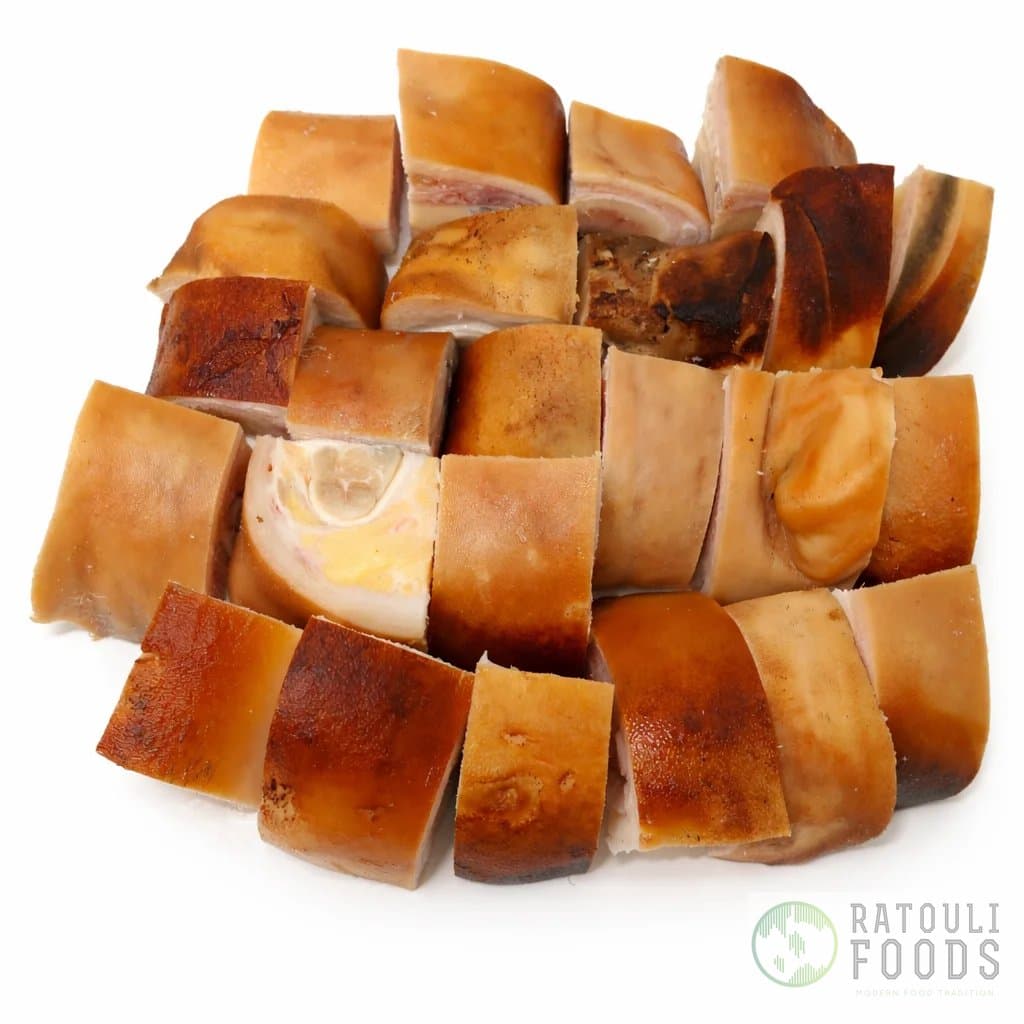
Cow feet are burned to take off the last hair after machine de-hairing. The feet pass over an open flame, the fine hair burns away, and the skin turns light brown with a mild smoky flavour. Then they get washed and cut. Burned is the look most buyers expect on the counter.
What burned cow feet actually are
Bokoto is the foot and lower leg of cattle. Trotter, hoof, tendons, cartilage, leg bones and skin, with almost no muscle meat on it. People buy it for the collagen. Cook it slow and that collagen turns to gelatine. That is what gives soup a full, sticky body and gives stock a depth no cube will ever match.
Burned does not mean cooked, and it does not mean charred black. In Dutch we say gebrand, and the carton reads gebrande koeienpoten. It points to one step in the cleaning, where the feet are singed over flame to clear off the last hair. That is all the word means here. A burned cow foot is a cleaned cow foot.
The same product carries a lot of names, depending on who is at the counter. Yoruba customers call it bokoto. Igbo cooks know it from nkwobi, cow foot in spiced palm oil with ugba, utazi, ehuru, crayfish and potash. Caribbean buyers ask for cow foot, cow heel or bull foot. In Angolan and Brazilian kitchens it is mocoto, from the Kimbundu mbokoto, most likely a cousin of the Yoruba word. One foot, many tables.
Sourcing for your store or wholesale?
Request a quote or browse the full catalogue.
How the feet are de-haired and singed
The work runs in order, and the singeing sits near the end. First the feet go through a de-hairing machine. Most of the coarse hair comes off there. But a machine never gets every fine hair, not around the hoof and not in the folds of the skin. That is the job for the flame.
The feet pass over an open flame and the rest of the hair burns off in seconds. The skin takes on that light-brown colour you see on a burned cow foot, and it picks up a mild smoke at the same time. After that they get washed to clear the soot and any loose burnt bits, scraped where they need it, and cut to whatever format the buyer wants.
- Machine de-hairing. Takes off most of the hair, fast.
- Singeing over flame. Burns off the last fine hair. This is the singed cow foot step. In German you hear it called abflammen or absengen.
- Washing and scraping. Clears the soot and ash.
- Cutting. Whole, or cut into sections, bone-in.
So when someone asks why cow feet are burned, the short answer is hair removal. The colour and the smoke are real, but they ride along with the cleaning. They are not the reason you do it.
Burned versus not burned, and what changes
Both versions are in the trade. Some feet sell de-haired but not singed, so the skin stays pale. Burned feet are de-haired and then singed, so the skin runs light brown and carries a faint smoke. The difference comes down to that last step and the look it leaves.
| Trait | Burned (gebrand) | Not burned |
|---|---|---|
| Last hair removed | Yes, by flame | By machine only |
| Skin colour | Light brown | Pale |
| Flavour note | Mild smoke | Plain |
| Prep at home | Wash and cook | May need extra cleaning around the hoof |
The collagen and the gelatine are the same either way. Burning does not add or take away the body it gives your soup. What it changes is the surface. The colour, the trace of smoke, and the fact that the fine hair is gone. In a working kitchen that last one counts, because picking stray hairs off a wet trotter is nobody's favourite job.
Why the diaspora expects the burned look
Walk into the right shop in Lagos, Accra, Kingston or Paramaribo and the cow foot on display is brown, not pale. That is what people grew up seeing. The burned colour reads as cleaned and ready in most West-African and Caribbean kitchens. A pale foot can look half-done to a buyer who knows the product, even when it is perfectly clean.
The mild smoke earns its keep too. In a Nigerian or Ghanaian pepper soup, in Igbo nkwobi, in Caribbean cow heel soup or cow heel souse, that faint smoke sits well under the spice and the palm oil. Small thing, but it is part of the taste people remember from home. Ivorian cooks even ask by name for pied de boeuf fume, the smoked version, for exactly this reason.
That is why we singe. Not for show. The people cooking it want the brown foot with the light smoke. Demand climbs around the New Yam Festival in August, at Eid, in December and through party season, and that brown foot is what moves. Hand a buyer a pale one when they expect burned cow feet and you will hear about it.
Formats, cuts and what Ratouli Foods carries
One SKU feeds several cuisines at once. The same burned cow feet go into Nigerian and Ghanaian pepper soup, Igbo nkwobi, Caribbean and Jamaican cow foot or cow heel soup, Congolese pieds de boeuf and Surinamese soups. That is a big part of why it moves across so many counters.
It comes in a few formats. Whole feet, or cut into sections. Bone-in is standard, because a lot of the gelatine sits in the bone. The leg bones sell on their own and make excellent stock. The cow skin off the legs sells separately too. Under the Afri-mama brand, frozen at -18 C, we carry:
- Cow feet whole, in 20 kg cartons
- Cow legs cut, in 10 x 1 kg and 20 x 500 gram
- Cow leg bones, in 24 x 500 gram
- Cow skin from legs
Keep one thing straight. Bokoto is the foot and lower leg, nothing else. It is not Shaki, the honeycomb tripe from the stomach. It is not Abodi, the beef reed. It is not Ponmo, the cow skin off the body. And it is not roundabout or fuku. For the detail on those, read our guides to Shaki, Abodi and Ponmo. They are different cuts and they cook differently.
We run on EU approval NL208262EG, work to HACCP, hold a public NVWA inspection record, and deliver DAP across NL, BE, DE, FR, ES, IT and the UK. If you need a steady line on burned cow feet for a shop or a kitchen, the format and the volume are here.
Sourcing for your store or wholesale?
Request a quote or browse the full catalogue.