

How to desalt bakkeljauw (uitkoken): boiling vs 24-hour soaking
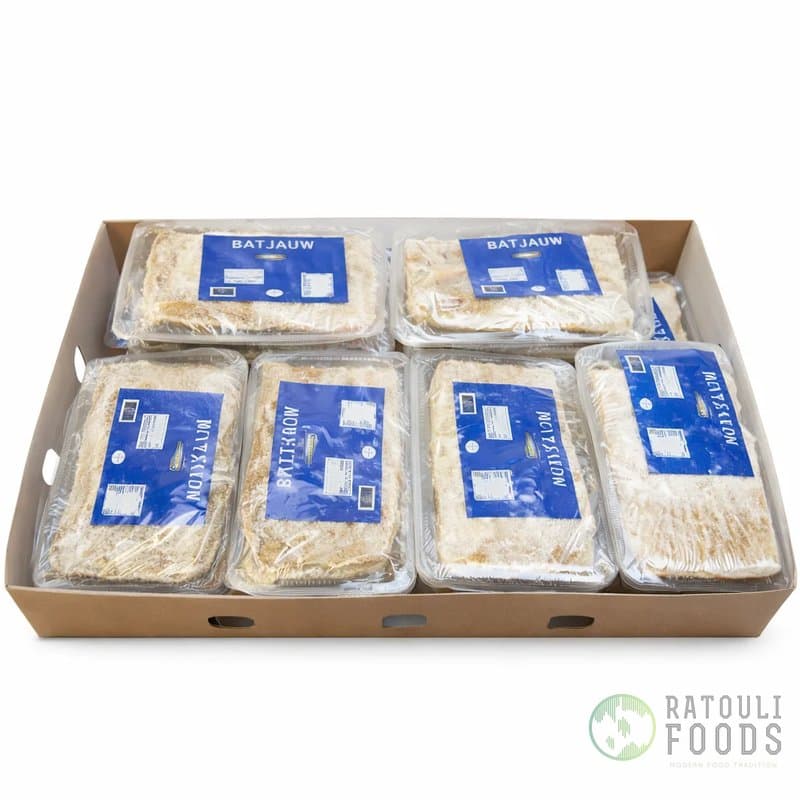
To desalt bakkeljauw you boil it in plenty of fresh water for 15 to 20 minutes, drain, taste, and repeat until the salt drops to where you want it. Or you soak it for about 24 hours and change the water every 3 to 4 hours. Then rinse it cold, squeeze it dry, flake it, and pick out every bone.
Why bakkeljauw has to be desalted first
Bakkeljauw is salted white fish, traditionally also dried the old way for the long trip to Suriname. The heavy salting is what kept it good for up to a year, and there is a lot of it. Straight from the pack the fish runs somewhere around 20 to 22 percent salt by weight. Cook it as it comes and nobody can eat it. So uitkoken, the desalting step, is not optional, and it is not something to rush.
The fish you are working with is usually saithe (koolvis), sometimes pollock, ling or tusk. Bakkeljauw is the Surinamese word for what plain Dutch calls klipvis, so the pack might say bakkeljauw, bakkeljouw, batjauw or klipvis. The label changes, the salt does not, and neither does the job: pull most of that salt back out so the fish itself can taste like fish again. Leave a little behind. You are seasoning it, not stripping it bare.
You have two ways to get there, boiling and soaking. Boiling is fast and right for when you want to cook today. Soaking is slow and gentle, and it gives you the cleanest texture. Most home cooks pick one based on the time they have. Here is how we do both at home in Volendam.
Sourcing for your store or wholesale?
Request a quote or browse the full catalogue.
Method 1: bakkeljauw uitkoken by boiling (fast, same day)
This is the quick route. You decided an hour ago that tonight is broodje bakkeljauw night, so this is your method. When people say bakkeljauw uitkoken, this is usually what they mean.
- Put the fish in a pot and cover it with plenty of cold water. Use more than you think you need. The salt needs somewhere to go.
- Bring it to a boil, then let it simmer for 15 to 20 minutes.
- Pour off all that water and throw it away. It is salt water now.
- Break off a small piece and taste it. Still too salty? After one round, almost always.
- Cover with fresh cold water and boil again, another 15 to 20 minutes. Drain, taste again.
- Repeat until the fish tastes pleasantly salty instead of harsh. Two rounds is normal. Thick whole pieces sometimes want three.
The taste test is the method. Forget the clock and trust your mouth. Filet desalts faster than fish on the bone because it is thinner, so the water gets to the middle quickly. A thick moot from a whole salted fish holds the salt deeper, so give it the extra round.
One thing to know. Boiling cooks the fish at the same time, so by the end it falls apart easily. That is fine. You were going to flake it anyway.
Method 2: bakkeljauw ontzouten by soaking (slow, cleanest result)
If you can plan a day ahead, soaking is the gentler way. The fish stays firmer, the flavour is rounder, and you keep more control. This is bakkeljauw ontzouten the patient way, and it is how I prefer it when I am making heri heri for a crowd.
- Put the fish in a large bowl or container and cover it fully with cold water.
- Leave it on the counter or in the fridge for about 24 hours.
- Change the water every 3 to 4 hours. Pour off the salty water, rinse the bowl, refill with fresh cold water.
- Six or seven changes across the day is the right rhythm.
- Near the end, taste a small piece. Still too sharp? Give it a few more hours and one more change.
You do not have to get up in the night for it. Change the water before bed, change it again first thing in the morning, and the long overnight stretch does the fish no harm. In warm weather, keep the bowl in the fridge so the fish stays cold and safe while it soaks.
Soaking and boiling reach the same place from different roads. Soaking keeps the texture and takes time. Boiling trades a little firmness for speed. Both work. Pick the one that fits your day.
Rinse, squeeze, flake, and pick out the bones
However you desalted it, the finishing steps are the same, and they matter as much as the soak.
- Rinse cold. Run the desalted fish under cold water one last time to wash off any salt sitting on the surface.
- Squeeze dry. Press the fish in your hands to push out the water it soaked up. Wet fish waters down whatever you cook it in.
- Flake it. Pull the fish into shreds with your fingers or two forks. This is also when you find the bones.
- Pick out every bone. Run your fingertips through the flakes. Saithe and pollock carry fine pin bones that hide in the flesh. Take your time here. The one bone you miss is the one everyone remembers.
The product form decides how much picking you do. Filet, often sold as zonder of met weinig graten, is near boneless and ready fast, which is why it is the easy choice for a first try. Whole salted fish, sold as heel or in moten, costs less but it makes you shred and debone properly. Migas, the small shredded boneless and skinless pieces, skips most of the bone work, because the deboning was done before it was packed.
Now make broodje bakkeljauw
Your fish is desalted, flaked and boneless. Here is what we do with it most often at home.
Soften a chopped onion and some garlic in oil. Add tomato, a spoon of tomato puree, and the flaked bakkeljauw. Stir in a Maggi cube and a little trassi, the shrimp paste that carries the whole stew. Let it cook down until it comes together. Pile it onto a Surinaamse witte puntje with zuurgoed pickle, and a spoon of Madame Jeanette sambal if you want the heat. That is broodje bakkeljauw, the one everyone knows.
The same desalted fish goes into heri heri with cassava, sweet potato, plantain and egg, the plate that fills tables on Keti Koti every July 1. It goes with telo, the fried cassava that is Suriname's answer to fish and chips. It works in moksi alesi, and rolled into bakkeljauwballetjes. Get the desalting right and all of it opens up to you.
We sell bakkeljauw in filet, whole, moten and migas at Ratouli Foods, so you can match the form to how much knife work you feel like doing. First time cooking it? Start with filet. It forgives a lot, and it gets you a good broodje bakkeljauw on the first try.
Sourcing for your store or wholesale?
Request a quote or browse the full catalogue.
Sourcing or reselling salted fish? Our sister company Ratouli Seafood handles the trade side.