

Bakkeljauw, makayabu or stokvis: what is the difference in the kitchen?
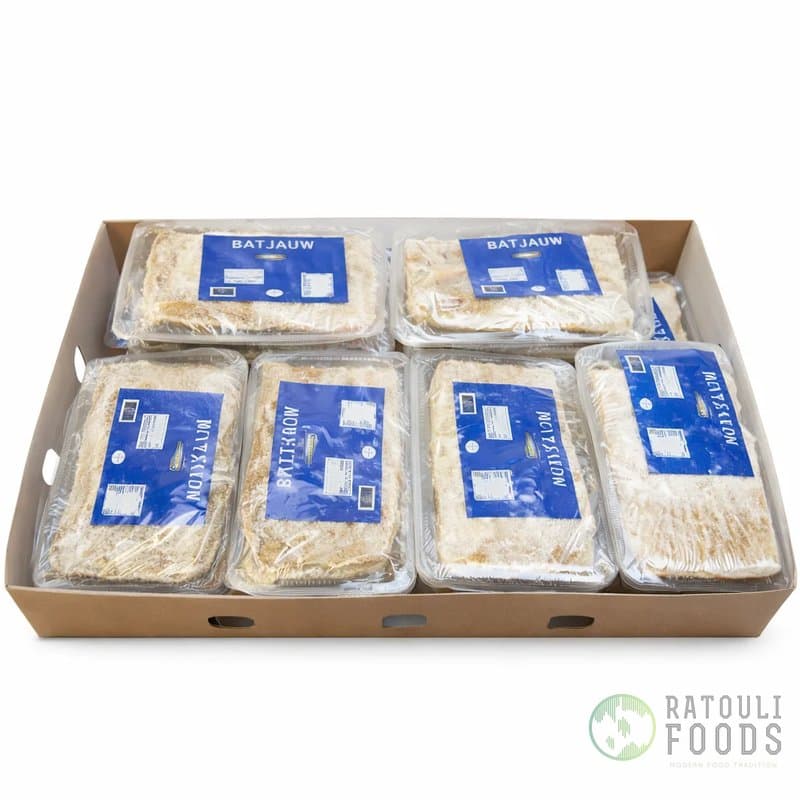
Bakkeljauw is salted saithe or pollock that you soak or boil to pull the salt out before cooking. Makayabu is salted cod, split on the bone, with much heavier surface salt, eaten across Central Africa. Stokvis is air-dried and unsalted, so you soak it to soften, not to desalt. Different fish, different prep.
The short answer, then the long one
People stand at our counter, ask for bakkeljauw, then point at the makayabu next to it and ask if it is the same thing. It is not. And the word stokvis gets used for all of it, which only adds to the confusion. So here is the clean version before we go deeper.
Bakkeljauw is salted white fish, usually saithe or pollock, preserved in heavy salt and traditionally dried. You have to take the salt out before you eat it. Makayabu is salted cod, split open with the backbone still in it, carrying more surface salt and usually sold unwashed. It is a staple in Congo, Gabon and across Central Africa. Stokvis is the odd one out. It is air-dried cod with no salt at all, so when you soak it, you are softening the fish, not rinsing salt away.
That is the whole bakkeljauw makayabu verschil and the bakkeljauw stokvis verschil in three sentences. The rest of this post is about how that changes what you do in your kitchen.
Sourcing for your store or wholesale?
Request a quote or browse the full catalogue.
The table: salt, bone, prep, and where it comes from
If you read one part of this, read this part. The differences that matter at the stove are the salt level, whether the bone is still in, and how you prep it.
| Fish | What it is | Salted? | Bone / form | Prep before cooking | Home region |
|---|---|---|---|---|---|
| Bakkeljauw | Salted, traditionally dried saithe or pollock (klipvis) | Yes, heavy | Filet, moten, heel, or migas | Desalt: boil 15 to 20 min and repeat, or soak about 24 hours changing the water every 3 to 4 hours | Suriname and the Netherlands |
| Makayabu | Salted cod, split open on the bone | Yes, heavier surface salt, usually unwashed | Split with the backbone in | Soak and rinse well to pull off the heavy salt, then debone | Central Africa (DR Congo, Congo, Gabon) |
| Stokvis | Air-dried, unsalted cod | No | Whole dried fish, very hard | Soak to rehydrate and soften, sometimes for days. No salt to remove | Norway, eaten in West Africa, Italy, Caribbean |
One line to keep in your head. With bakkeljauw and makayabu you soak to remove salt. With stokvis you soak to bring the fish back to life. That is the real bakkeljauw stokvis verschil, and it is why calling bakkeljauw "Surinaamse stokvis" is technically wrong. Bakkeljauw is salted klipvis, not unsalted stokvis.
Why makayabu is not just heavier bakkeljauw
This is the part people get wrong most often, so let me be specific. Makayabu and bakkeljauw are both salted, both white fish, both sold dry. From across the shop they look like cousins. Three things set them apart.
- The species. Makayabu is cod. Diaspora-trade bakkeljauw usually is not. Most bakkeljauw sold for the Surinamese and Antillean kitchen is saithe (koolvis, Pollachius virens), sometimes ling or tusk, not the classic kabeljauw the recipe blogs keep writing about. We name the species honestly on our packs, because that is the truth of the trade since the old cod grounds collapsed.
- The salt and the wash. Makayabu carries more salt on the surface and usually comes unwashed, so you rinse and soak it harder before it is fit for the pot. Bakkeljauw is salted to keep for up to a year, but the desalting is more about boiling and tasting than scrubbing off a salt crust.
- The bone. Makayabu is split with the whole backbone left in. You commit to deboning. Bakkeljauw you can buy as near-boneless filet if you want the easy life, or on the bone if you want it cheaper.
So the bakkeljauw makayabu verschil is not strength. It is cut, species, and how the fish lands in your kitchen. We sell makayabu as its own SKU for exactly that reason. It belongs to a different dish and a different table.
Which fish for which dish
Now the useful part. You came for fish to cook tonight, not a biology lesson. Here is what I reach for.
Bakkeljauw is the Surinamese workhorse. Desalt it, flake it, pick the bones, and it goes into broodje bakkeljauw, the fish stewed with onion, garlic, tomato, tomato puree, a Maggi cube and trassi, piled on a witte puntje with zuurgoed and Madame Jeanette sambal. It is the fish in heri heri, the cassava and plantain and egg plate that becomes the symbol meal of Keti Koti on the first of July. It is what you eat with telo, the fried cassava that is our fish and chips. Also moksi alesi and bakkeljauwballetjes. If the recipe is Surinamese, you want bakkeljauw.
Makayabu is for the Central African table. Soaked, deboned and cooked down with onion, tomato and pepper, often with rice, fufu or plantain. If you grew up with a Congolese or Gabonese kitchen, this is the fish you already know, and you do not want bakkeljauw standing in for it.
Stokvis goes where a dish is built around long-soaked, unsalted dried fish. The West African panla and okporoko stews, Italian stoccafisso, some Caribbean plates. It needs the most patience and the most planning, because rehydrating it is slow.
Quick rule. Surinamese plate, grab bakkeljauw. Congolese plate, grab makayabu. A stew that calls for soaked unsalted dried fish, grab stokvis.
How to desalt bakkeljauw without ruining it
Most of the questions we get are really one question. How do I get the salt out. The Surinamese word is uitkoken, and there are two honest ways to do it.
- The fast way. Put the fish in a pot with plenty of water and boil it for 15 to 20 minutes. Drain, taste a small piece, and if it is still too salty, do it again with fresh water. Two rounds is usually enough.
- The slow way. Soak it in cold water for about 24 hours, changing the water every 3 to 4 hours. This keeps more of the texture, and it is worth it if you have the time.
After either method, rinse the fish under cold water, squeeze it dry, flake it apart, and pick out every bone you find. Then it is ready for the pan. If you bought filet, this goes quickly. If you bought moten or heel on the bone, give yourself more time for the shredding and deboning. You get a cheaper fish that way, and many cooks say more flavour too.
Makayabu follows the same logic but expects a harder rinse and a longer soak because of that heavier surface salt. Stokvis skips the salt question entirely and just needs time in water to soften. Get the prep right and the rest of the cooking is easy.
Sourcing for your store or wholesale?
Request a quote or browse the full catalogue.
Sourcing or reselling salted fish? Our sister company Ratouli Seafood handles the trade side.