
Bakkeljauw filet or on the bone? Which to buy and why
Buy bakkeljauw filet if you want speed and almost no bones, and you accept paying a little more. Buy bakkeljauw met graten, sold as heel or moten, if you want a lower price and richer taste and you do not mind shredding and picking out bones. Both need desalting first.
The short answer
People ask me this at the toko counter almost every week. Filet or on the bone. Same fish, salted the same way, but they sit at opposite ends of price and effort.
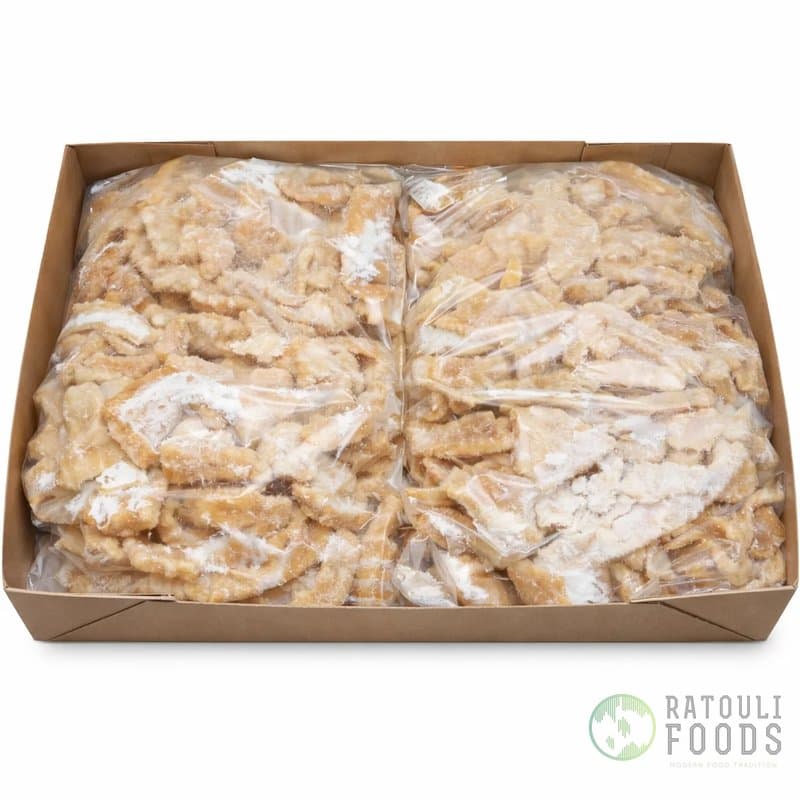
Bakkeljauw filet is cut without fins and main bones, so it is near-boneless. After uitkoken you flake it straight into the pan. It costs more per kilo, and it is what most supermarkets stock. Bakkeljauw met graten keeps the backbone in. You get it as heel, the whole split fish, or as moten, the chunks. It is cheaper, and the work lands on you. You shred it by hand and pick out every bone before it goes in the dish.
One rule covers both. You cannot skip the uitkoken. Bakkeljauw is heavily salted so it keeps for up to a year, and straight from the pack it is too salty to eat. Boil it in plenty of water for 15 to 20 minutes, drain, taste, and boil again if it is still too salty. Or soak it about 24 hours and change the water every 3 to 4 hours. Then rinse it cold and squeeze it dry.
Sourcing for your store or wholesale?
Request a quote or browse the full catalogue.
Filet vs on the bone, side by side
Here is how I would lay it out for a customer who asks me straight.
| What matters to you | Bakkeljauw filet | Bakkeljauw met graten (heel / moten) |
|---|---|---|
| Bones | None or very few, fins and main bones removed | Backbone in, you debone by hand |
| Price per kilo | Higher | Lower |
| Work after desalting | Flake and cook, minutes | Shred, pick bones, then cook |
| Flavour | Clean, milder | Fuller, the bone gives more depth |
| Where you find it | Mass retail default | Toko and specialist counters |
| Best for | Quick weeknight broodje, beginners, kids' plates | Big pots, heri heri, cooks who have time |
There is a third format worth knowing too. Migas is the small shredded pieces, boneless and skinless, made from faces, wings, tails and thin loins. It is the cheaper pick when you are making bakkeljauwballetjes or moksi alesi and you want the fish already broken down.
Which one suits which cook
Pick by how you cook, not by the label.
- You want a broodje bakkeljauw on a Tuesday night. Go filet. Desalt it, flake it, stew it with onion, garlic, tomato, a little tomato puree, a Maggi cube and trassi, and put it on a witte puntje with zuurgoed and Madame Jeanette. Twenty minutes of fish handling and you are done.
- You are cooking heri heri for the family or for Keti Koti. Go on the bone. That fuller flavour earns its place next to the cassava, sweet potato, plantain and egg. You have a big pot going anyway, so the deboning fits the rhythm of the cook.
- You are cooking for kids or for someone who hates finding bones. Filet, every time. The peace of mind is worth the higher price.
- You are watching the price and you have an hour to spare. On the bone. You pay less per kilo and you control the texture, shredding it as fine or as chunky as you want.
- You are making balls or rice dishes where the fish gets mixed in. Migas. It is already shredded, so it saves you the longest step.
New to bakkeljauw kopen? Start with filet for your first dish or two. Once you know how the desalting feels and how flaked fish should taste, the on-the-bone work stops being a hurdle and starts being worth the saving.
What you are actually buying
Let me be straight about the fish itself, because most recipe blogs get it wrong. They write gezouten kabeljauw, salted cod. Diaspora-trade bakkeljauw usually is not classic cod.
It is most often salted saithe, koolvis in Dutch, the species sold in the UK as coley and in the US as Atlantic pollock. Some packs are Alaska pollock instead, which is a separate fish, and you will also find ling (leng) and tusk (lom) in the trade. The encyclopedia entry on klipvis says the same. After the Grand Banks cod stocks collapsed, saltfish everywhere shifted to these cheaper white species. That is not a downgrade. It is the honest description of what has been in the toko for years, and it is what keeps bakkeljauw affordable.
Two things people mix up, so I will keep them apart. Bakkeljauw is salted fish, klipvis. Stokvis is unsalted air-dried fish, a different product, never the same thing even though some people loosely call bakkeljauw Surinaamse stokvis. And makayabu, the Central African salted cod split with the backbone in, is its own product with its own SKU at our counter, heavier on surface salt and usually unwashed.
Buying and storing it right
A few practical notes for the shop and the kitchen.
- Storage. Heavily salted bakkeljauw keeps in the fridge, chilled, not at room temperature. Buy what you will cook over the next stretch rather than stockpiling on a shelf.
- Pack sizes. Retail pouches run roughly 350 to 600 g, which is right for a household broodje session. For horeca there are 5 kg bags and 10 kg boxes.
- Saltiness varies by batch. Always taste after desalting. Some pieces need one boil, others need two. Trust your tongue, not the clock.
- Debone over a plate, not the pot. Filet or on the bone, run your fingers through the flaked fish in good light before it goes in the dish. Even filet can hide the odd small bone.
Not sure which to take home? Ask at the counter. Tell us the dish and how much time you have, and we will point you to filet or to heel or moten. That is the whole point of bakkeljauw kopen at a counter that knows the fish.
Sourcing for your store or wholesale?
Request a quote or browse the full catalogue.
Sourcing or reselling salted fish? Our sister company Ratouli Seafood handles the trade side.