

Storing bakkeljauw: how long it keeps and why it stays in the fridge
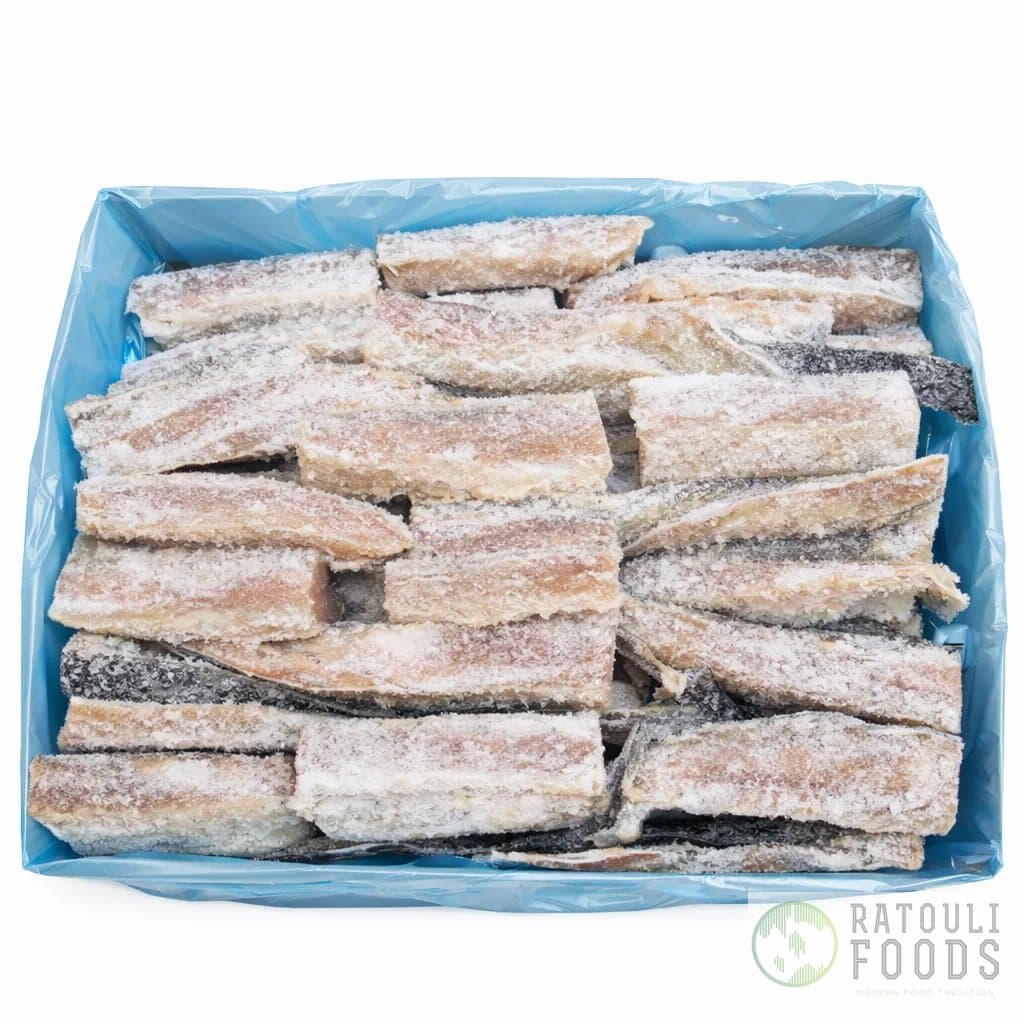
Sealed, salted bakkeljauw keeps up to a year in the fridge. The salt does the preserving, not the freezer. Once you desalt it through uitkoken or soaking, the salt is gone, so cook and eat it within one to two days, or freeze it.
How long bakkeljauw keeps, in plain numbers
I get the bakkeljauw houdbaarheid question almost every week, usually with a worried face. Nobody wants to throw away good fish, and nobody wants to make their family sick. So let me give you the numbers first.
Salted bakkeljauw, still sealed in its pack and kept in the fridge, keeps for up to a year. That is not a marketing line. Heavy salting is what carried this fish on the long voyages to Suriname in the colonial era, when there was no refrigeration at all. The salt is the preservative. Once you open the pack, use it within a few weeks if you keep it cold and dry, or freeze it. Once you have desalted it, the clock changes completely. Then you have one to two days in the fridge.
| State of the fish | Where to keep it | How long |
|---|---|---|
| Sealed, salted pack | Fridge | Up to a year |
| Opened, still salted | Fridge, wrapped | A few weeks |
| Desalted (after uitkoken or soaking) | Fridge | 1 to 2 days |
| Desalted | Freezer at -18 C | 2 to 3 months |
That is the whole picture for bakkeljauw bewaren. The rest of this post is the why, because once you understand how salt works, you stop second-guessing yourself.
Sourcing for your store or wholesale?
Request a quote or browse the full catalogue.
Why salt preserves fish (kept simple)
Bacteria and mould need water to grow. Not the fish itself, the free water inside it. Salting pulls that free water out and ties up most of what is left, so there is almost nothing for spoilage organisms to live on. That is the whole trick, and it is centuries old.
In a fish factory there is a precise version of this, and it is worth knowing because it explains why your pack is the way it is. It is called water-phase salt, WPS for short. The formula is the percentage of salt divided by the salt plus the moisture, times a hundred. You do not need to do the maths. The point is this. At 17 percent WPS or higher, a salted fish is stable enough to sit at room temperature. Below that, it has to stay chilled.
Bakkeljauw is salted hard, around 20 to 22 percent salt, with moisture cut to roughly 51 percent for the Dutch market. So why does it still ship and store cold rather than on a shelf? Because the people who handle it properly, us included, treat chilled as the safe default for eating quality and texture, not just the bare safety line. Cold keeps it firm, keeps the fat from going off, and keeps it tasting clean. So the honest answer to the fridge question is simple. The salt makes it safe, and the cold keeps it good.
How to store an opened pack
Once the pack is open, the fish is still heavily salted, so you have time. But now your two problems are air and damp, not bacteria. Keep both away and you are fine.
- Wrap it tight. Press out the air, use a sealed container or a clamped bag. Loose air dries the surface unevenly and lets damp settle in spots.
- Keep it cold. The fridge, not the counter. A few weeks is realistic when it is wrapped well.
- Keep it dry until you want to use it. Do not rinse the salt off and then store it. The surface salt is part of what is protecting it.
- A little white salt crust on the surface is normal. That is the cure working, not spoilage. Brush or rinse it off only when you are ready to cook.
If you bought split-and-salted moten on the bone, or migas, the same rules apply. These cheaper formats hold just as well as filet. They simply ask a bit more work from you later, when you shred and debone.
Once it is desalted, the rules flip
Desalting is the step Surinamese cooks call uitkoken. You either boil the fish in plenty of water for 15 to 20 minutes, drain, taste, and repeat until it is right, or you soak it for about 24 hours and change the water every 3 to 4 hours. Then you rinse it cold, squeeze it dry, flake it, and pick out every bone. My grandmother tasted a flake at the end every single time. You should too.
Here is the part people miss. The moment you finish desalting, you have removed the salt that was doing all the preserving. What you have now is a piece of plain cooked white fish. It behaves like any cooked fish, which means it is perishable. Eat it within one to two days, kept in the fridge in a sealed container.
If you desalted more than you need, do not leave it sitting. Either turn it into broodje bakkeljauw or heri heri that same day, or freeze the extra flaked fish at -18 C, where it holds for two to three months. Frozen desalted bakkeljauw is honestly very handy. You can pull it straight into a pan with onion, tomato, a Maggi cube and a touch of trassi and have the filling ready in minutes.
Common worries, answered straight
A few things come up so often that they deserve plain answers, because most of the fear around salted fish is just unfamiliarity.
Is the white crust mould? Almost never. On salted bakkeljauw that white bloom is salt working its way to the surface. Real spoilage smells sour or sharp and feels slimy. Salt crust is dry and tastes of salt. If you are ever unsure, trust your nose over your eyes.
Does it have to be cod? No, and this is worth saying clearly. Most diaspora bakkeljauw is not classic cod. It is usually saithe, called koolvis in Dutch, sometimes ling or tusk. The salting and the storage work exactly the same whatever the species. We name our fish honestly because you deserve to know what you are buying.
And do not confuse bakkeljauw with stokvis. Stokvis is air-dried and unsalted, so it stores by a completely different logic. Bakkeljauw is salted klipvis. The salt is the whole reason it keeps the way it does.
Sourcing for your store or wholesale?
Request a quote or browse the full catalogue.
Sourcing or reselling salted fish? Our sister company Ratouli Seafood handles the trade side.