

From lampredotto to rennet: why the cow's fourth stomach is a prized cut
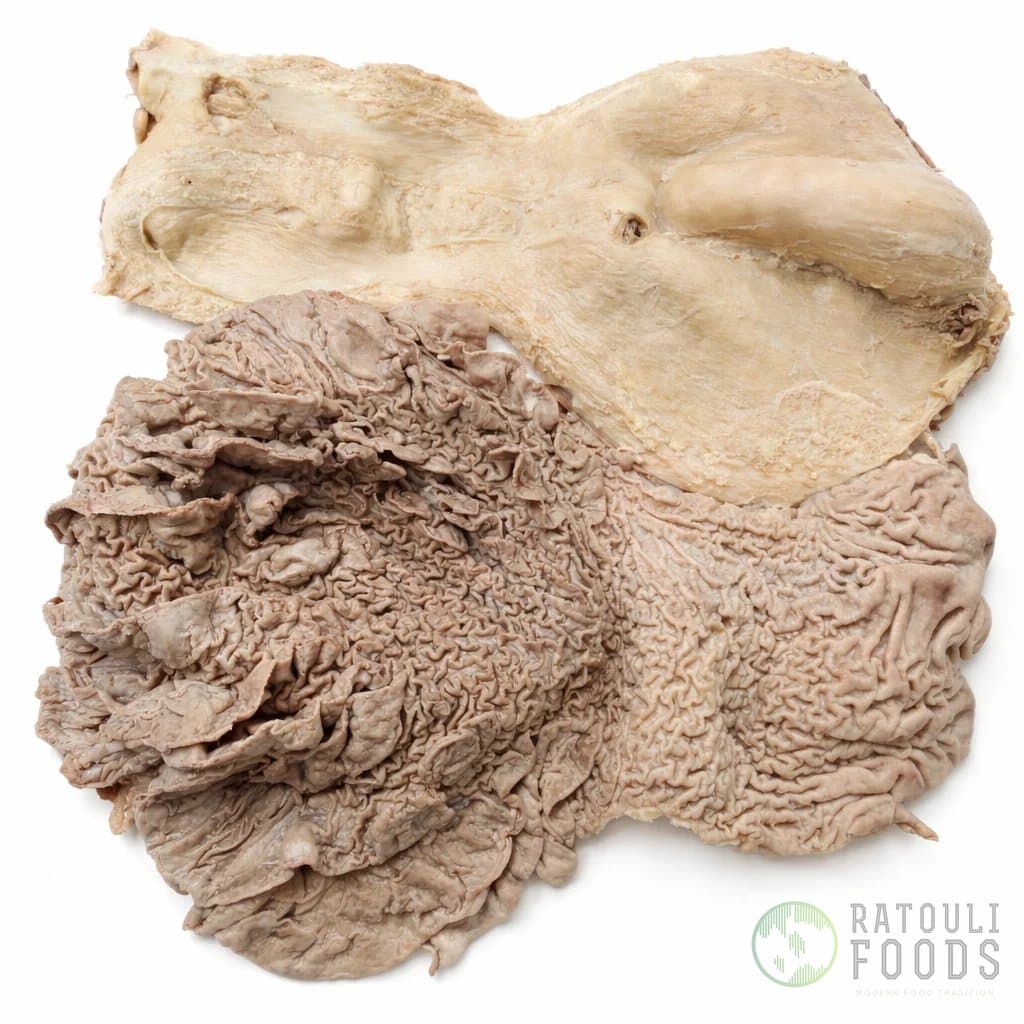
Abodi is beef reed. That is the abomasum, the cow's fourth and last stomach. Florence sells the same chamber as lampredotto, and that chamber is also where cheese gets its rennet. So reed tripe is not scrap. Three food cultures have valued it for centuries.
What is reed tripe, and which stomach is it
A cow has four stomach chambers, not one. Each chamber gives you a different tripe. The rumen is the big smooth blanket tripe. The reticulum is honeycomb tripe, what the trade calls Shaki. The omasum is book or bible tripe, all those thin leaves. The abomasum is the fourth and last chamber, and that one is reed tripe. In West-African kitchens reed tripe is abodi.
The abomasum is the only chamber that works like a human stomach. It makes acid and enzymes and does the real digesting, which is why people call it the true stomach, or the glandular stomach. The first three chambers ferment grass. The fourth one digests. That is why abodi has a smoother, denser chew than Shaki, and why it takes pepper and spice so well.
One honest note on names. In the diaspora trade this product gets labelled all sorts of ways. Beef reed, reed crown when it is rolled into a ring, cow reed, cow stomach, maw, even rennet-bag. The spellings drift too: abody, abudi, abuddi. The labels move around. The definition does not. Abodi is the abomasum, the cow's fourth stomach. If you want the full breakdown of how it differs from honeycomb tripe, our Shaki guide covers the reticulum side.
| Stomach chamber | Tripe type | Trade name |
|---|---|---|
| Rumen | Blanket / flat / smooth tripe | Smooth tripe |
| Reticulum | Honeycomb tripe | Shaki |
| Omasum | Book / bible / leaf tripe | Manyplies |
| Abomasum | Reed tripe | Abodi (beef reed) |
Sourcing for your store or wholesale?
Request a quote or browse the full catalogue.
Lampredotto: the same stomach, sold on a Florence street corner
Walk through Florence and you will find men at carts, the trippai, selling a sandwich called lampredotto. The filling is the abomasum. They simmer it in broth with herbs, chop it, pile it into a bun, then dunk the bun in the cooking liquid. It has been street food there for generations. People queue for it at lunch.
Lampredotto is part of what Florentines call the quinto quarto, the fifth quarter. A carcass splits into four quarters of prime meat. Everything else, the offal, is the fifth quarter. Poor cooks took those cuts because the good ones went to the rich, and over time they turned the fifth quarter into food people travel for. West-African, Caribbean and Surinamese cooking runs on the same logic. Nothing on the animal gets thrown away, and the offal often carries the best flavour.
The Florentine butchers even split the abomasum in two. The gala is the lower section, more layered, with a bolder bite. The spannocchia is the upper part, fattier and milder. Same chamber, two textures. When a working trade bothers to name two halves of one stomach, that tells you how seriously the cut is taken. This is the same reed that goes into your pepper soup.
The rennet stomach: why this chamber makes cheese
Here is where the abomasum earns its other name. Inside that fourth chamber sits an enzyme called rennin, or chymosin. It curdles milk. For thousands of years cheesemakers have lined the abomasum, or used an extract from it, to set milk into curds. That extract is rennet. No rennet, no hard cheese.
That is why so many European languages name the chamber after cheese, not after digestion. In Dutch it is the lebmaag. In German, Labmagen, and people call it the Kasemagen, the cheese stomach. The French say caillette, from caille, curdled. The Spanish say cuajar, from cuajar, to curdle. The Portuguese coalheira works the same way. Italians keep two names, abomaso for the cut and lampredotto for the dish. Six languages, one stomach, and most of them point straight at cheese.
So the rennet stomach has fed people two ways for millennia. As a cut you simmer and eat, and as the thing that made cheese possible in the first place. When you cook a pot of abodi, you are handling the original cheese stomach. That is not a marketing line. It is just what the abomasum is.
Abodi in the pot: how the diaspora cooks the fourth stomach
In Yoruba, Igbo and Hausa kitchens abodi is a regular in assorted meat, what Yoruba cooks call orisirisi, the mix of cuts that goes into one rich pot. You will find reed in pepper soup, in egusi, in Igbo nkwobi, in ofada and ayamase stew. It runs alongside Shaki and ponmo in the same dish, each one bringing its own texture.
Cook it long and slow. The abomasum is dense, and it rewards time. In a mixed pot the rule is simple. The tougher offal goes in first, the softer cuts later, so everything finishes tender at the same moment. Reed takes pepper and chilli deep into the cut because of that smoother surface, and that is half the reason cooks reach for it.
On nutrition, keep it honest. Cooked beef reed sits in the normal tripe range. Roughly per 100 grams:
- About 85 to 95 kcal, so it is lower in fat than most beef cuts.
- Around 18 to 20 grams of complete protein, with a high collagen share.
- Over 100 percent of your daily B12 in a serving.
- Meaningful selenium and zinc.
- Around 178 mg of cholesterol per 5 ounce portion, so portion it like any organ meat.
Demand for assorted meat peaks around the New Yam Festival in August, around Eid, and through December. That is when the pots get bigger and the reed moves fastest.
How Ratouli supplies abodi
I have been in West-African and Surinamese food wholesale out of Volendam for 14 years. We supply abodi B2B across the Netherlands, Belgium, Germany, France, Spain, Italy and the UK. It ships frozen at -18°C, delivered DAP to your door, scalded, cleaned and cut, ready for the pot.
Pack sizes are 12 x 1 kg and 24 x 500 gram cases, so you can match your turnover. A small shop and a busy kitchen do not buy the same way. We work under EU approval NL208262EG, with HACCP in place and a public NVWA inspection record you can check. We carry a full Shaki range next to the abodi, so a shop can stock the reticulum and the abomasum from one order.
The short version. The cut your customers call abodi is the same fourth stomach Florence turns into lampredotto, and the same chamber that gives cheese its rennet. Reed tripe has a long pedigree. We keep the supply clean, frozen and consistent, so you can cook it the way your people have for generations.
Sourcing for your store or wholesale?
Request a quote or browse the full catalogue.
Related guides