

Why we sell pig feet salted, not fresh
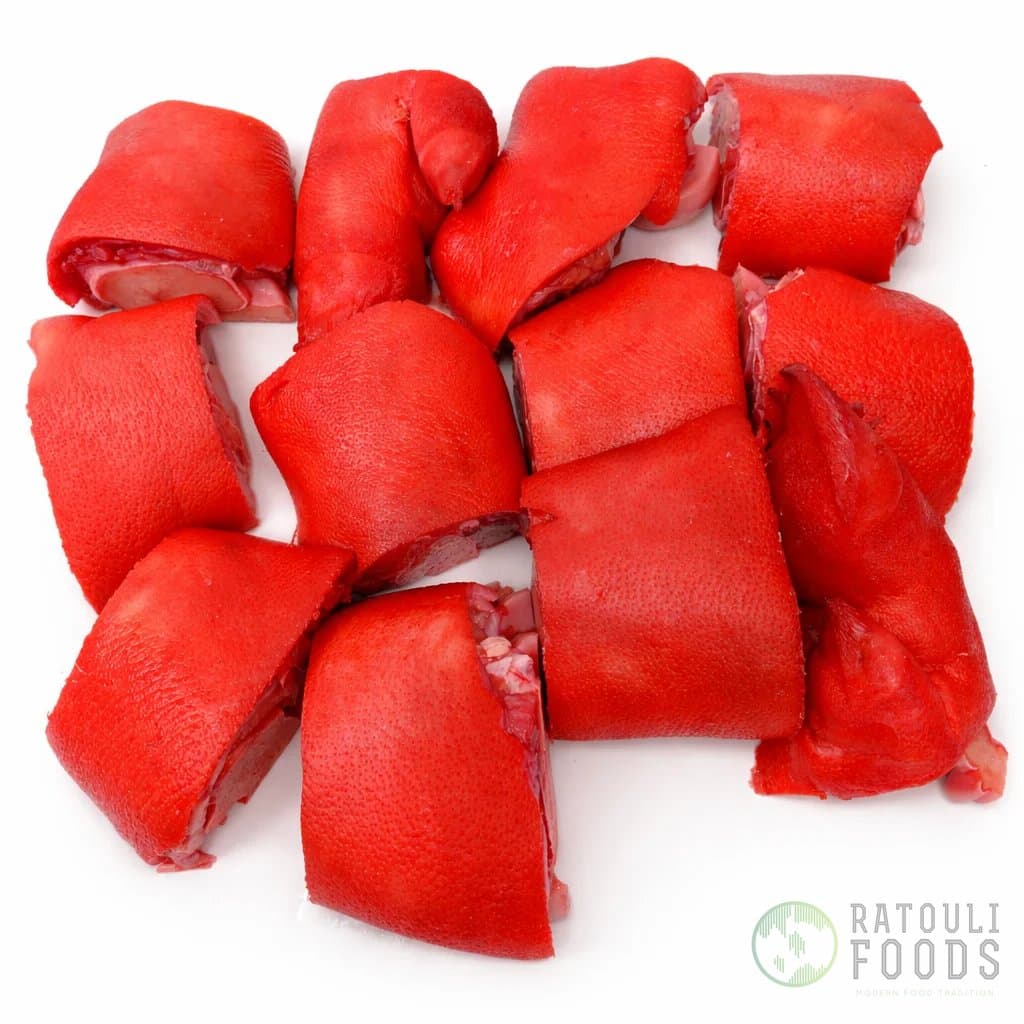
If you have only ever stocked fresh pig feet, salted feet can look like a step down. They are not. For West-African, Surinamese, Antillean and Caribbean kitchens, the salt is the whole point. It does two jobs at once. It keeps the foot stable for months, and it builds the savoury taste the cook is actually paying for. Here is the case, the way we would put it to a buyer over coffee.
Salt does two jobs: it preserves, and it seasons
Start with preservation. Salt pulls water out of the meat and the skin. Less free water means far less room for spoilage, so a salted foot keeps far longer than a fresh one. That is why this cut travels well and sits in a warehouse without trouble.
The second job is taste. The cure does not just hold the foot in place. It changes the flavour and gives that deep savoury note a fresh foot never has. The diaspora cook knows that taste and asks for it. A desalted, slow-stewed salt foot lands differently on the plate, and that difference is the reason it sells.
Sourcing for your store or wholesale?
Request a quote or browse the full catalogue.
Brine cure versus dry cure, and why brine wins for feet
There are two ways to get salt into a foot. Dry cure packs the meat in salt. Brine cure submerges the foot in a strong salt solution and keeps it wet the whole time. For feet, brine is what you see most. All that skin and tendon around the bone takes the brine evenly, and the product arrives wet, ready to be desalted and cooked.
This matters for a buyer because it sets the handling. A strong-brine foot is built for warm climates and long supply chains. That is exactly why it moves into markets where the cold chain is not guaranteed from end to end.
Shelf life: what the salt actually buys you
This is the part that makes the cut easy to stock. Our strong-brine salted feet carry a shelf life of at least about 18 months ambient. Frozen, feet hold up to about 24 months. That window lets a wholesaler or toko sit on stock, ride out a quiet week, and not write off product between orders.
For planning, you order to a pallet schedule instead of to next week's footfall. Salted product forgives a long lead time in a way fresh never will.
What the collagen does in the pot
A pig foot is mostly skin, tendon and connective tissue wrapped around bone. There is not much lean meat on it, and that is fine. The cook is not after a steak. Slow cooking breaks the connective tissue down and renders out collagen and gelatin. The gelatin is what thickens a bean pot or a souse and gives the dish that sticky, rich body. Run the pot longer and you get more of it. That is not a sales line. It is the reason the foot earns its place in these cuisines.
On the numbers, per 100 g pig feet run roughly 15 to 19 g protein, with low to moderate fat, plus the collagen that does the work in the pot. For a kitchen feeding a crowd, it is a cheap cut doing a job an expensive cut cannot.
Who this is for, and how we ship it
We sell to wholesalers, retailers, tokos, butchers and foodservice across the EU and UK, with DAP delivery from about one pallet. Production runs under EU approval NL208262EG with HACCP controls. For weights, pack sizes and current availability, the salted pig feet sit on our pork catalog page next to the rest of the cured pork range.
The short version. Salted is not the lesser version of fresh. For these kitchens it is the version the dish was built around.
Sourcing for your store or wholesale?
Request a quote or browse the full catalogue.