
Fresh or frozen import: why you do not want your sausage shipped in a styrofoam box
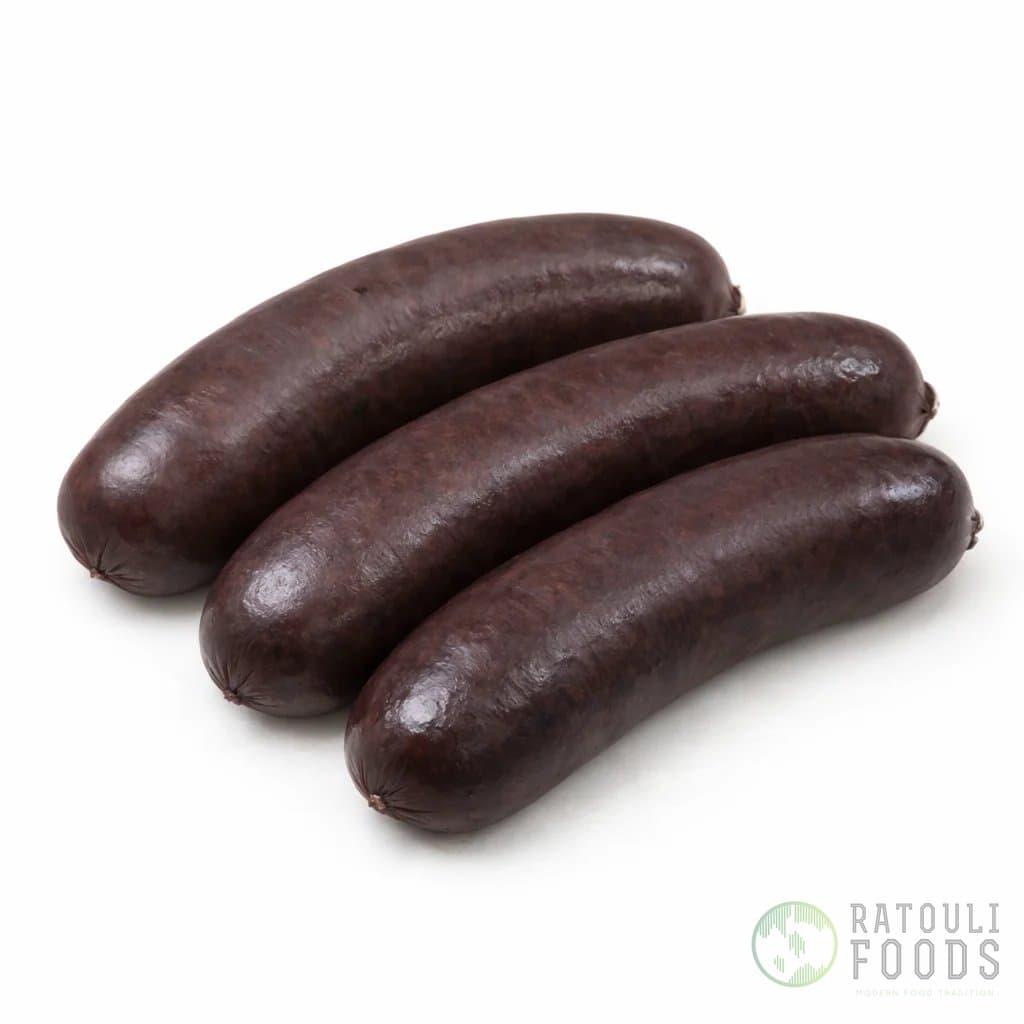
For the catering trade, fresh, EU-approved Surinamese sausage is the safer choice than a frozen import in a styrofoam box, because you keep the thaw risk, the flavour and the traceability in your own hands. We deliver under EU approval number NL208262EG, work to HACCP and know exactly where every length of vleesworst (meat sausage), bloedworst (blood sausage) and kippenworst (chicken sausage) comes from, and every kilo of bakkeljauw. An unknown frozen batch that has already been thawed and refrozen once cannot promise that. This piece explains where things go wrong in the chain and what a regular supplier does differently, especially now that the buying window for Kwaku 2026 is open.
What goes wrong in the chain: thaw risk and quality loss with frozen import
The biggest risk with frozen import is not in your freezer. It is in the links you do not see. A box of sausage or bakkeljauw from an unknown import channel has often been partly thawed and refrozen once or several times on the way. During transshipment, in a waiting truck, on a loading dock in the sun, in a styrofoam box that only holds temperature for a few hours. Every thaw-freeze cycle does three things.
- Moisture loss and drip. Ice crystals break the cell structure apart. At the next thaw, the moisture runs out. Sausage turns drier and grainier, bakkeljauw loses its bite. You are paying for kilos that partly disappear as drip in the tray.
- Flavour and texture. Vleesworst should be coarse and peppery, bloedworst creamy, kippenworst firm. After a few cold shocks that texture collapses. You taste it, and so does your guest at the stand.
- Food safety. Every time a product passes through the danger zone, bacteria get their chance. With anonymous import you do not know whether the cold chain stayed unbroken. On a warm Kwaku Saturday, with a terrace full of guests, that is no small detail.
The styrofoam box is the symbol of the problem. It holds up for a few hours, not for a whole transport chain. What is really inside, you often only find out when you open it.
Sourcing for your store or wholesale?
Request a quote or browse the full catalogue.
EU approval NL208262EG and HACCP: what it means in practice for your business
We deliver under EU approval number NL208262EG. That number belongs to an approved establishment that produces and trades under supervision within the EU rules for products of animal origin. For you as a toko, caterer or stallholder, it means you know which company you are doing business with, and that this company can be checked.
HACCP is the working method behind it. We run on a HACCP-based food safety plan: chill temperatures are logged, the cold chain stays closed from production to delivery, and every batch is traceable. For the catering trade that counts twice over. You also need your own HACCP plan or an approved hygiene code to be allowed to operate at an event like Kwaku. A supplier who has their own side in order makes your paperwork and your accountability to the municipality easier, not more complicated.
The difference in one sentence: an EU approval number and a HACCP working method are things you can verify, an anonymous frozen box is something you have to hope about.
Traceability and origin: knowing where your sausage and bakkeljauw come from
Traceability means that for every box you can trace where the product comes from and when it was delivered. With us that is not an extra, it is simply how an EU-approved establishment is supposed to work. We know from which production run each length of vleesworst, bloedworst and kippenworst comes, and from which batch every kilo of bakkeljauw. If a question comes from a guest, an inspection or an internal check, the answer is ready.
With anonymous frozen import it is different. The chain often runs via a handful of intermediaries, the label sometimes says no more than a country and a weight, and the brand name on the box tells you nothing about the route the product really travelled. You then cannot prove where your sausage comes from. And that is exactly the question your customer at the Kwaku stand can ask you.
For anyone who has been 14 years in the trade, this is the basis. You do not sell anything whose origin you cannot account for.
100% halal ingredients and 100% chicken: an honest answer for your customers
Our kippenworst and crispy vleesworst are 100% chicken, no pork, no beef, with 100% halal ingredients. That is a factual answer you can give your guest or customer straight away.
It matters, because the classic Surinamese vleesworst is usually pork in a pork casing, and bloedworst has traditionally been pork-based. For part of the visitors at Kwaku and in Zuidoost this is a real question: can I eat this or not. With the chicken line you have a clear answer to that. With an unknown frozen import that answer is often a guess, because you do not know exactly what is in the box. With us it is fixed. 100% chicken, 100% halal ingredients, and we leave it at that.
Fresh delivery versus stock from an unknown box: the real difference
The real difference between fresh, EU-approved delivery and stock from an unknown frozen box is control. Over your own quality and over your own margin. Below the two are set side by side.
| Point | Fresh, EU-approved delivery (NL208262EG) | Anonymous frozen import |
|---|---|---|
| Cold chain | Closed and logged, HACCP-based | Unknown number of thaw-freeze cycles possible |
| Flavour and texture | Coarse and peppery, creamy, firm as it should be | Drip, drier, collapsed texture |
| Origin | Traceable per batch and length | Often only country and weight on the label |
| Halal answer | Chicken line: 100% chicken, 100% halal ingredients | Contents not always clear |
| Fixed point of contact | One supplier, set delivery time, restocking possible | Changing intermediaries |
In practice you see the difference at the mid-week restock and in the tray at the end of the day. Fresh sausage gives your portion exactly what you pay for. A batch that already took damage on the way costs you moisture, flavour and ultimately regular customers at the stand.
Sourcing for the Kwaku season: order in time, deliver fresh
Kwaku Summer Festival 2026 runs from Saturday 11 July to Sunday 2 August, four weekends in the Nelson Mandelapark in Amsterdam Zuidoost. Stallholders submit their menu and prices as early as mid-June and pay the facility costs in advance, so buying is in full swing by late June. Caterers and tokos usually order 1 to 3 weeks before the first Saturday. The buying window is open now.
There is something else at play there besides freshness. On the grounds you settle up pin-only at Kwaku, no cash, and stallholders are paid out weekly in arrears. That creates a cashflow pressure of around six weeks. A regular supplier who delivers fresh on time and reliably before 11 July takes a good chunk of risk out of that window, because you know what is coming and when.
What we supply for the Kwaku season: Surinamese vleesworst, bloedworst, kippenworst, fladder (beef tripe), crispy vleesworst (100% chicken), bakkeljauw, salted herring and beef casings. We deliver DAP, with an agreed delivery time and the option to reorder between weekends. Order in time, and you deliver fresh. For the full sausage range and for buying as a wholesaler there are separate pages within our brands. For a quote tailored to your stand, business or toko, get in touch directly.
Sourcing for your store or wholesale?
Request a quote or browse the full catalogue.