

Salted pig tail pack formats: bucket, vacuum and frozen carton, and what each one tells you about the buyer
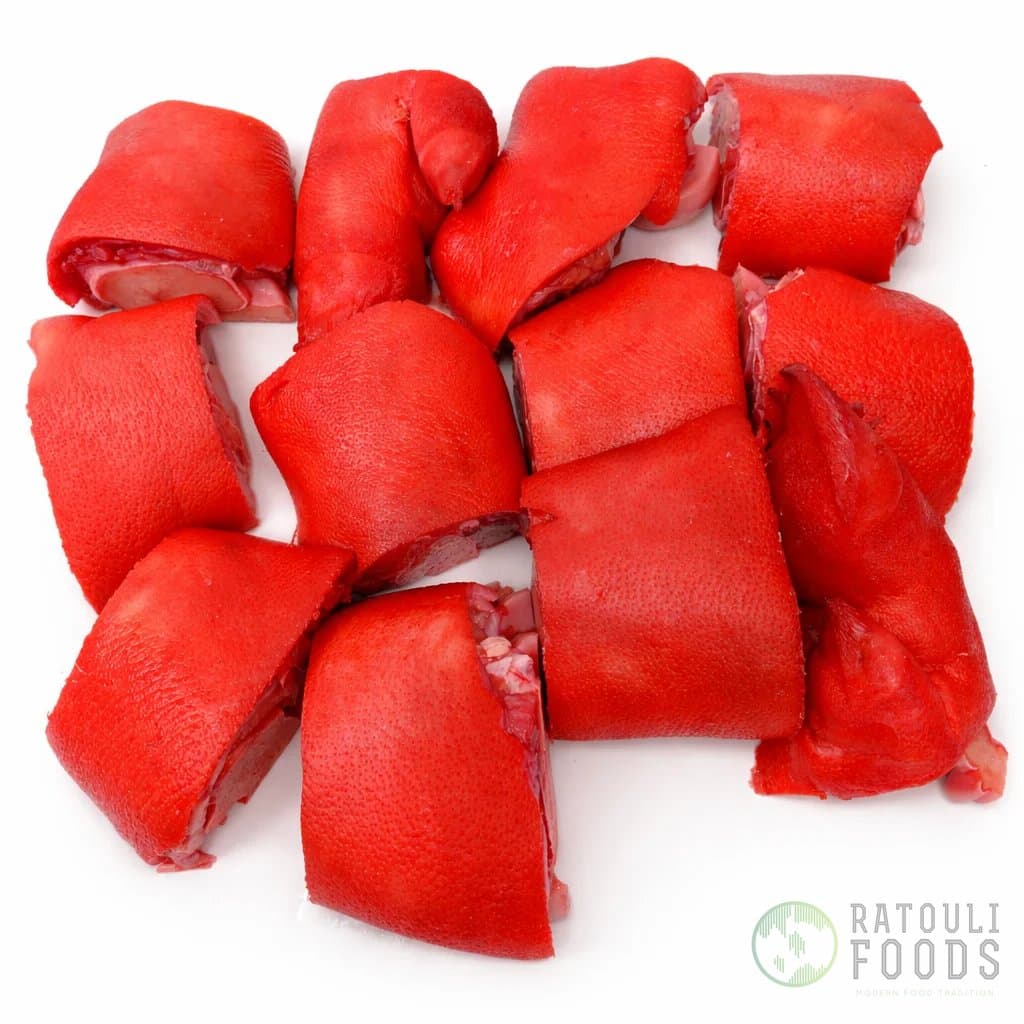
Pig tails ship in four packs, and they do not compete with each other. Each one is built for a different counter. The buyer asking for the 12.5 kg bucket is not the buyer asking for a 30 lb frozen case, and the format he names tells you which community he sells to before he says anything else. Here is how the salted pig-tail packs map to channel, and what that mapping does to your minimum order and your pallet.
Two families: salted bucket and frozen carton
The pig-tail conversation splits in two. Salted bucket and vacuum on one side, which is how the Surinamese and Antillean trade buys. Frozen multi-piece carton on the other, which is what foodservice kitchens and butchers reach for. They are not interchangeable, and that is the useful part. The format a buyer wants already tells you who he serves.
Salted product sells on four things: guaranteed weight, freshness, hygiene, and a seal that survives export. A bucket that seeps in transit comes back as a return, so the seal matters as much as the meat in it.
Sourcing for your store or wholesale?
Request a quote or browse the full catalogue.
The salted bucket: tokos, Caribbean grocers, shop restaurants
Buckets, emmers, are the format the Surinamese and Antillean trade grew up on. Resealable, leak-proof, sealed for export. They run from a small 2 kg bucket up to 12.5 kg for shops and busy kitchens. Next to the buckets sit vacuum units from 125 g to 600 g, and the toko retail sizes most shops actually shelve are 1 kg and 1.5 kg.
A toko owner who wants something he can stack and sell by the unit buys the 1 kg and 1.5 kg vacuum packs. A shop with a hot counter, or a small restaurant attached to the grocer, buys the 12.5 kg bucket and portions it down himself. Same product, two jobs. Ask for the 12.5 kg bucket and you are running volume. Ask for 1 kg vacuum and you are filling a shelf.
The frozen carton: foodservice and butchers
The frozen multi-piece pack runs around 2 kg, several pieces to a pack, frozen at processing with a 24-month shelf life at -18C. That long window is the whole point for a kitchen. A chef pulls one 2 kg pack, thaws what the service needs, and leaves the rest in the freezer without watching a clock.
For the Caribbean and North-American trade the frozen case steps up to 30 lb, roughly 13.6 kg. Different buyer again. That is a Caribbean grocer or a foodservice distributor who moves pig tails in bulk and wants one SKU to cover a week. In the UK, Afro-Caribbean grocers shelve salted pig tail at retail in 300 g, 350 g, 900 g and 1 kg, so a wholesaler supplying that trade is usually breaking bulk down into those four counter sizes.
What the format does to your minimum order and pallet
On a DAP-from-one-pallet model, pack format is not a detail. It decides who can sell the product at all. Three numbers do the work: carton weight, units per carton, cartons per pallet. Together they set your minimum order, and they decide whether a single toko can take a clean pallet or whether you have to put two or three accounts on one.
A 12.5 kg bucket builds a pallet fast. Fewer units, more weight each, a full pallet on a modest order. A 2 kg frozen carton works the other way: more cartons to fill the same pallet, which suits a distributor splitting one delivery across several drops. The 30 lb case sits in between and tends to go to buyers who order by the layer, not by the carton. Match the format to how the buyer actually orders and the pallet builds itself. Get it wrong and you are either sitting on stock or short of a full load.
This is the same packing logic we run across the salted-pork range. If you want to see how the pieces, packs and shelf life line up on a live product, the salted pig-feet page in the catalogue shows the format detail we hold to, and salted pig tail follows the same discipline.
Tell us the channel, the community and how you order, and we will tell you which format to take and how it lands on a pallet. Delivery is DAP from roughly one pallet, EU approval NL208262EG, HACCP throughout.
Sourcing for your store or wholesale?
Request a quote or browse the full catalogue.