
One cut, four kitchens: where salted pig tail sells across the diaspora
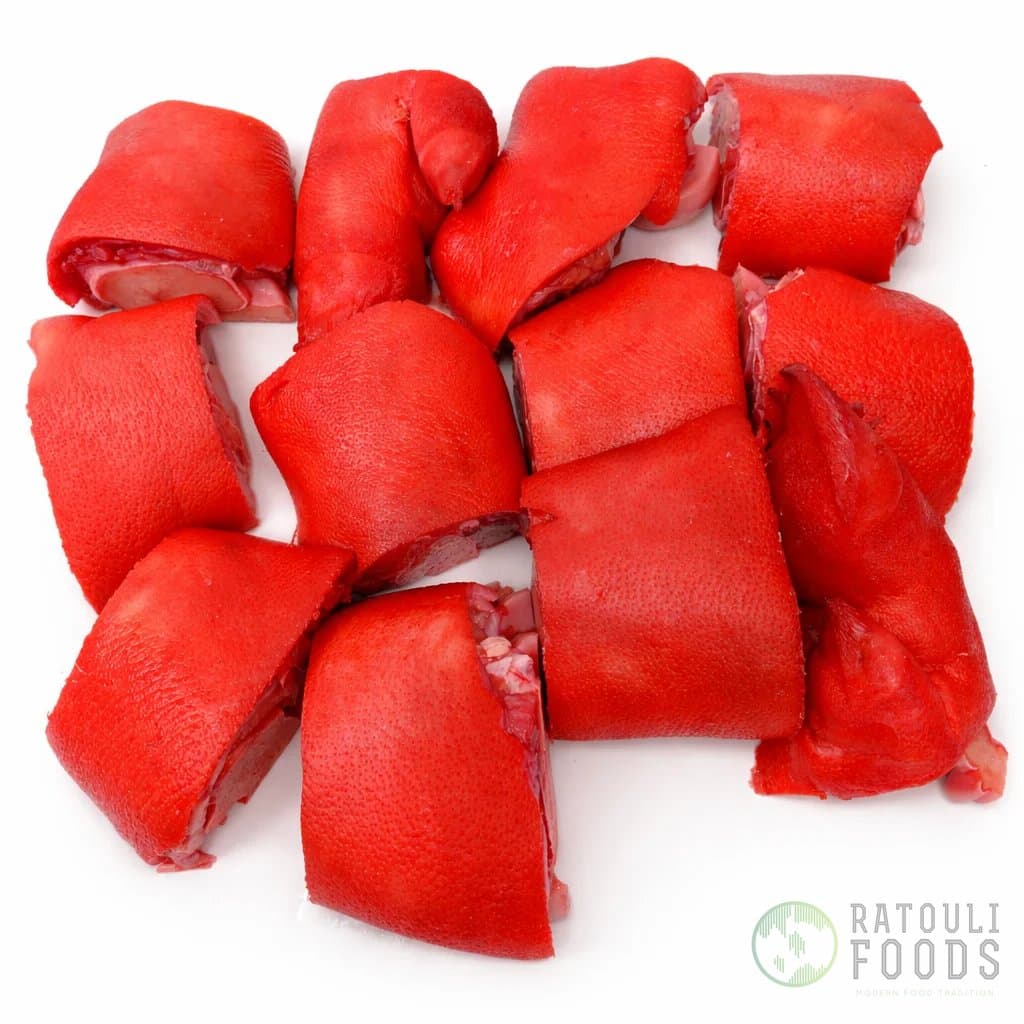
Salted pig tail reads like a slow mover on paper. Map the buyers and it stops looking that way. This is not one product chasing one customer. It is one cut feeding four kitchens, each with its own dish and its own seasonal pull, and that changes how you order and how you split EU and UK volume. Here is the demand map we work from after 14 years moving salted pork across Europe.
Surinamese: the bruine bonen staple
For Surinamese cooks, salted pig tail (varkensstaart, also rabu or rabu salu) is one of the meats that has to go into bruine bonen met rijst. It turns up in okrasoup, pindasoep and pom as well. The method barely changes from one household to the next. You boil the tail first to pull the salt out, drain it, rinse it, fry off onion, garlic and tomato, then put the tail back in. The salt comes out in the cook's own kitchen, so the buyer wants the salted pack, not something pre-rinsed.
The base under this is large. Roughly 350,000 people of Surinamese background live in the Netherlands, closer to 600,000 if you count the third generation, split mainly between Creole (about 48 percent) and Hindustani (about 43 percent). That is steady year-round trade for tokos and Surinamese grocers, not a holiday spike.
Sourcing for your store or wholesale?
Request a quote or browse the full catalogue.
Antillean: sopi di bonchi kora and kadushi
The Antillean kitchen takes the same cut into different soups. Sopi di bonchi kora, the red kidney bean soup, traditionally carries salted or smoked pig tail (rabu). Kadushi, the cactus soup, is eaten with pig tail too. With around 150,000 people of Antillean background in the Netherlands, this is a smaller segment, but it buys the exact salted format the Surinamese trade does. One pack feeds both shelves.
Jamaican and Anglo-Caribbean: stew peas, strongest in the UK
This is where the volume crosses the Channel. In Jamaican and wider Anglo-Caribbean cooking the flagship is stew peas: red kidney beans, salted pig tail, coconut milk, thyme, scallion, garlic, Scotch bonnet, and flour dumplings (spinners). The same cut carries split-peas-and-pigtail soup, pelau, and ground-provision soups. This community sits mostly in the UK. If you supply British grocers and Caribbean butchers, pig tail moves on stew peas more than on anything else, so weight your UK allocation around that one dish.
West-African and the Asian braise trade
Two more buyers fill out the map. In West-African home cooking, Ghanaian especially, salted pork tail shows up often, with the cook pouring off the water to dial the salt down to taste. The pull is real but spread thin, and since it is pork it serves the non-Muslim shopper specifically. Then there is the Asian braise trade: pig tail cut into cross sections and braised low and slow in a soy-forward sauce. Different dish, different buyer, genuine repeat volume worth keeping on the radar.
How to read the format
The pack tells you the channel. Salted bucket or vacuum packs go to Surinamese, Antillean and Caribbean tokos and grocers, where the cook expects to boil the salt out at home. Frozen cartons go to foodservice and butchers who want portion control and clean freezer logistics. We run salted pork lines like our salted pig feet out of our Volendam facility (EU approval NL208262EG, HACCP), DAP delivered across the EU and UK from about one pallet. For spec, pack sizes and current availability on the salted pork range, start here: salted pig feet. If you need salted pig tail specifically, ask us by code and we will tell you what we can source.
Match the format to the community and pig tail stops being a slow mover. It becomes one of the more reliable repeat lines on a diaspora shelf.
Sourcing for your store or wholesale?
Request a quote or browse the full catalogue.