
Salted Pig Feet: Front vs Hind, Whole vs Sawn, Frozen vs Salted
Salted and frozen pig feet move in steady weekly volume across our diaspora-food channels. Before a buyer places the order, almost every question lands on the same three points. Front or hind. Whole or sawn. Salted in a bucket or plain frozen in a carton. This guide answers all three the way our sales desk answers them every week, with the piece weights, carton specs and Grade-A criteria you need to write a purchase order.
Front feet vs hind feet: size and yield
The first spec decision is front (voorpoten) versus hind (achterpoten). The two trade at different sizes, and your customers usually have a clear preference.
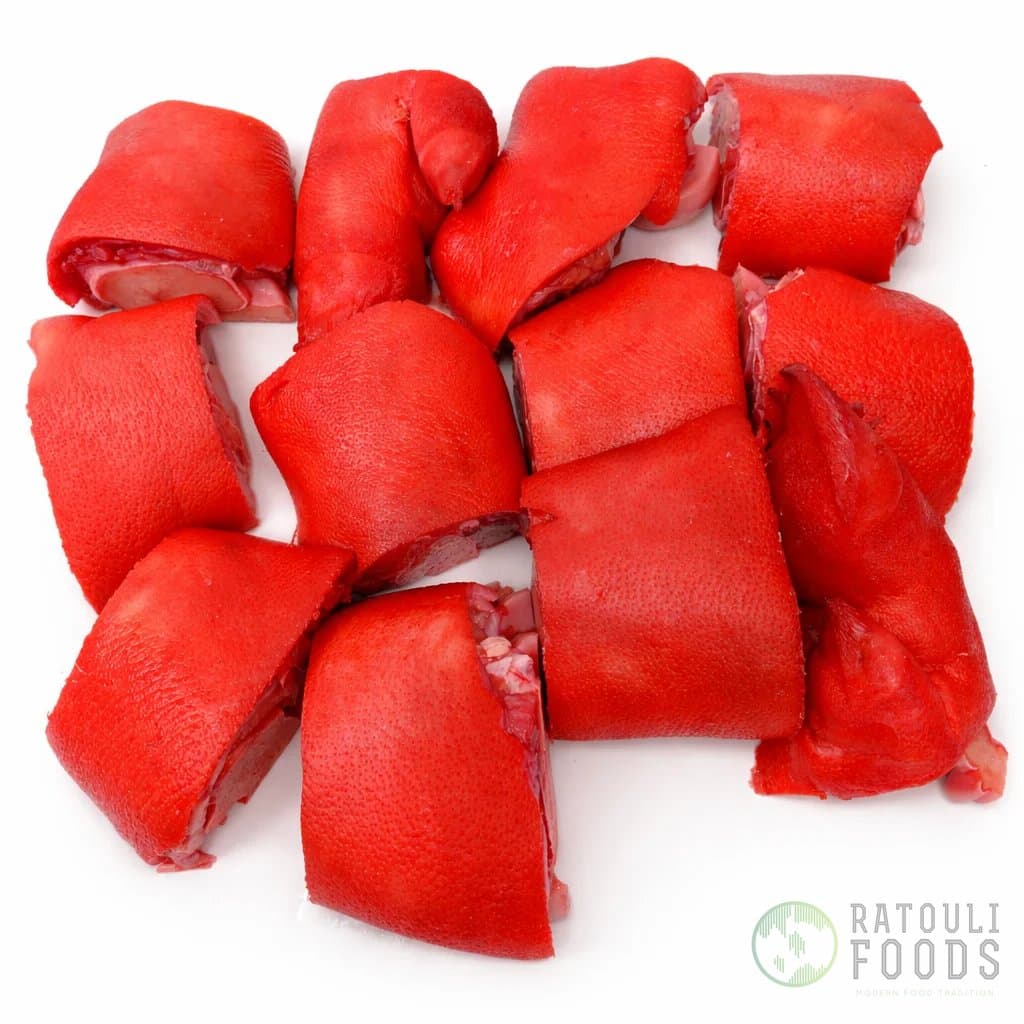
Front feet are the smaller item, commonly quoted at roughly 300 to 350 g per piece and about 17 to 18 cm long. Hind feet are bigger and meatier, usually around 400 to 450 g and 19 to 20 cm. That gap shows up in two places: how many pieces you get per carton, and what the cook expects in the pot. A toko serving Surinamese and Antillean households tends to want the bigger hind foot, more meat and skin per portion. A butcher working a sharp per-kilo shelf price will often take front feet instead. If you stock both, label them as separate lines. Mix front and hind under one code and you will get returns the week a regular gets the size he didn't order.
Sourcing for your store or wholesale?
Request a quote or browse the full catalogue.
Whole vs sawn (varkenspoten gezaagd)
Every foot we supply is cut through the ankle joint, bone in, skin on, dehaired and cleaned. After that you pick whole or sawn.
Sawn feet are cut lengthwise or cross-cut before freezing. The diaspora cook usually prefers them, and there's a practical reason. A sawn foot portions straight into the pot and gives up its collagen faster during the long simmer these dishes run on. Less knife work in the kitchen, richer result sooner. Whole feet sit better on a display counter and suit a butcher who wants to cut to a customer's request in store. Rough pattern across our channels: tokos and foodservice lean sawn, traditional butcher counters lean whole. If you don't know which way your customers reach, order a split carton of each on the first run and let the reorders tell you.
What Grade A means on a frozen pig foot
Grade A isn't a marketing word here. It's a short checklist. On frozen pig feet it means clean white skin, no broken bones, properly dehaired. Broken bones are the most common reason a foot gets downgraded, because they cut the bags and look poor on the counter. Stray hair is next. When a carton arrives, those are the three things to inspect against. Hold your supplier to them and you head off the two complaints that actually reach the end customer.
Cure state: plain frozen vs salted in a bucket
The last choice is how the feet are preserved. It usually comes down to your customer's storage and climate.
Plain frozen feet are packed poly-lined in cartons, several pieces per box, held at roughly -18 to -22 C. Frozen life runs up to about 24 months. This is the standard for buyers with reliable freezer space and freezer transport.
Salted feet go in strong brine in pails or buckets. They are shelf-stable, built for warm climates and routes where freezer capacity is thin, with a shelf life of at least about 18 months. If you ship to markets where the cold chain isn't guaranteed, or your customers store at ambient, the bucket is the format that survives the trip.
Carton and packing specs
Frozen cartons run around 10 kg, with 20 kg also available, poly-lined, several pieces per box. At roughly 350 g, front feet give you more pieces per 10 kg carton than hind feet at 450 g. Worth checking when a customer orders by piece count instead of weight. Storage and transport sit at roughly -18 to -22 C. Salted buckets carry the same Grade-A feet in a shelf-stable wrapper.
We supply pig feet DAP from about one pallet, across the EU and UK, under EU approval NL208262EG and HACCP. The current pork range, weights and pack options are on our pork catalogue. Or send your spec to the sales desk and we'll quote front or hind, whole or sawn, salted or frozen against it.
Sourcing for your store or wholesale?
Request a quote or browse the full catalogue.