

Salted pig feet (pied de porc à la créole): a Creole specialty for wholesale in the EU and UK
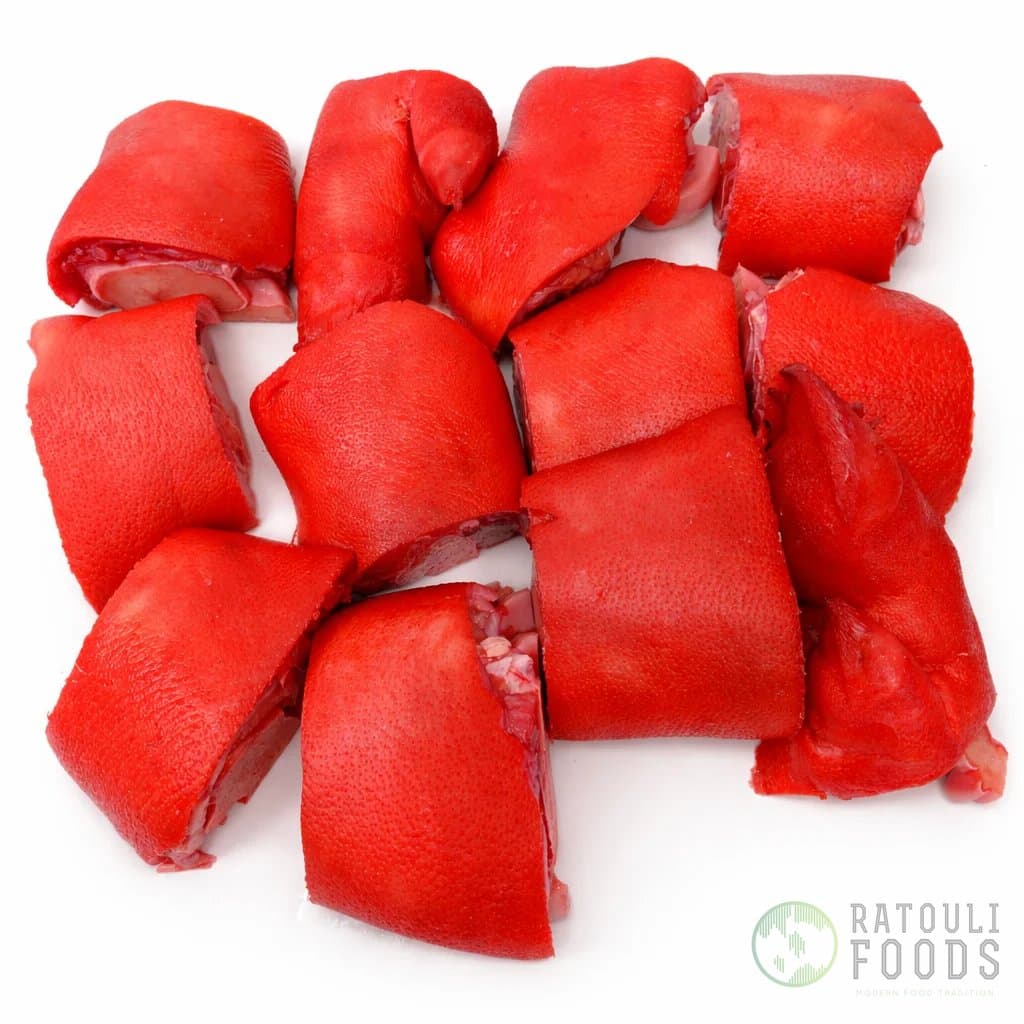
If you sell Caribbean, Creole or Surinamese food in Europe or the UK, you know the demand for salted pig feet. Salted pig feet, pied de porc à la créole: a traditional specialty, heavily salted in a saturated brine, loved in soups and stews like pig foot souse and Creole bean dishes.
What exactly are salted pig feet?
Salted pig feet are pig trotters that have been heavily salted in a saturated brine, a traditional way of preserving them. In the French-speaking Caribbean they are known as pied de porc à la créole.
In our range (Afri-mama brand) we supply them frozen, in boxes of 20 x 1 kg. Produced under EU approval NL208262EG.
Sourcing for your store or wholesale?
Request a quote or browse the full catalogue.
Synonyms customers search for
The same product goes by many names depending on the community:
French (Caribbean and Creole): pied de porc, pied de porc salé, pieds de porc salés, pied de porc à la créole.
English: salted pig feet, salted pork feet, salted pig trotters, pig foot, salted pigfoot.
Spanish (Latino and Caribbean): patas de cerdo saladas, patitas de cerdo.
Dutch: gezouten varkenspoten, varkenspootjes.
It always means the same thing: heavily salted pig feet for soups and stews.
Why salted pig feet are popular
Salted pig feet give a rich, sticky texture and a deep, savoury flavour to dishes, thanks to the gelatine and the salt. They are a staple in:
- Caribbean pig foot souse (Trinidad, Barbados)
- Creole stews with red beans (pois rouges) and bouillon
- Jamaican pig feet stew
- Surinamese and Antillean soups and stews
For your store, salted pig feet are a staple for returning customers in the Caribbean, Creole and Surinamese kitchen.
Salted in a saturated brine: ingredients and processing
The feet are heavily salted in a saturated brine, the traditional preservation method that gives the specialty its flavour and shelf life. We are transparent about the ingredients:
- Pig feet, salt (the brine) and dextrose
- E250 (sodium nitrite): curing salt for preservation and colour retention
- E535: anti-caking agent in the salt
- A permitted EU food colouring, E120 (carmine), for the traditional colour
Produced under HACCP with EU approval number NL208262EG. Available in boxes of 20 x 1 kg, supplied frozen.
Storage: keep at -18°C, maintain the cold chain, thaw safely, cook thoroughly.
Why source from a Netherlands-based supplier?
The biggest pain for stores and wholesalers in the EU and UK is inconsistency: irregular availability, fluctuating quality and unreliable delivery times. From Volendam, with a professional cold chain, we offer:
- Fast distribution across Europe, with short lead times to NL, BE, FR, DE, ES and IT
- Delivery DAP, so you know where you stand
- EU-approved production (NL208262EG) and fixed pack sizes for your shelf
We are glad to serve the French-speaking and Caribbean market too. For suppliers and trade partners looking for a reliable European buyer or distribution partner, we are a steady point of contact.
FAQ: salted pig feet and pied de porc
What is pied de porc à la créole? It is the French-speaking Caribbean name for salted pig feet, a traditional Creole specialty.
How are the feet salted? Heavily, in a saturated brine: the traditional preservation method.
What colouring is used? A permitted EU food colouring, E120 (carmine), for the traditional colour.
Do you supply in the EU and UK? Yes, we supply B2B from the Netherlands to customers in the EU and UK.
What dishes use them? Pig foot souse, Creole bean dishes, bouillon and Caribbean and Surinamese stews.
How do I store them? Keep at -18°C, maintain the cold chain, thaw safely and cook thoroughly.
Sourcing for your store or wholesale?
Request a quote or browse the full catalogue.