
Spareribs: Raw, Marinated or Pre-Cooked? Picking the Format That Fits Your Kitchen
With spareribs, the carton you pick does more to your kitchen and your margin than the price-per-kilo line on the quote. Same pig either way. What changes is how much work is already done before the rack hits your counter. As a buyer you are choosing between three trade forms, and each one shifts cost from one place to another. Sourcing call, not a recipe call.
The three form factors
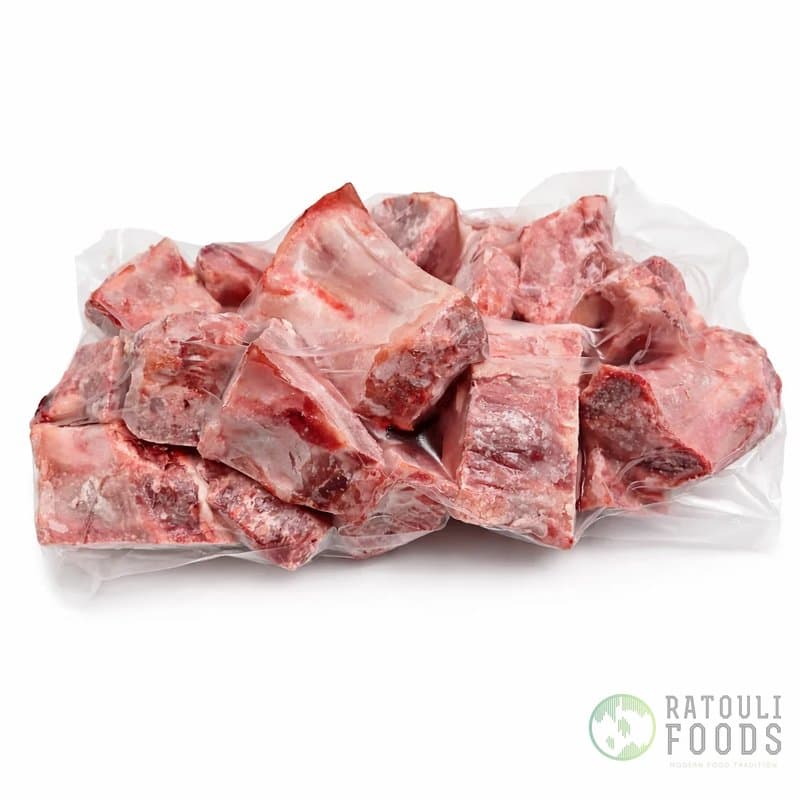
Raw, or naturel, is a plain rack. No seasoning, no cooking, nothing done to it. Cheapest line on the ladder, and everything after that you do yourself.
Gemarineerd, marinated raw, comes seasoned but still uncooked. Someone else handled the marinade, so you skip the mixing and coating, but the cook is still on your side.
Gegaard, pre-cooked, is cooked through already, sous-vide or boiled, then chilled or frozen. It lands ready to finish in the oven or on the grill. The Dutch foodservice and retail trade leans hard on this one because it pulls hours of kitchen time out of the day. You heat and color. You do not cook from raw.
Sourcing for your store or wholesale?
Request a quote or browse the full catalogue.
Labour saved against margin given away
Price order holds steady: raw under marinated, marinated under gegaard. That gap is not a markup for nothing. The gegaard premium is the labour you are buying out of your own kitchen. Someone cooked the rib, vacuum-packed it, and carried the cold chain so your staff does not have to.
So the real question is whether that labour is worth more to you than the margin you hand over. A high-turnover counter with its own recipe and a cook already standing there keeps more buying raw and doing the work in-house. An outlet short on kitchen hands, or one that cannot justify a slow cook for a handful of orders a day, usually comes out ahead paying the gegaard premium and skipping the work.
Shelf life changes the math
Form factor also sets how long the product can sit before it has to move. For a slow-turn buyer that weighs as much as price.
Vacuum-packed cooked ribs are quoted around 20 weeks chilled at 4C max, and roughly a year frozen. Long runway. If you cannot move volume fast, gegaard gives you room to hold stock without writing it off. Raw and marinated raw do not hand you that buffer, so they fit a buyer who turns product quickly and has no reason to carry cooked stock.
This is the cleanest line to draw. Slow-turn outlets benefit from the long shelf life of gegaard. High-turnover counters with their own recipe keep margin buying raw. The shelf life is part of what the gegaard premium pays for, on top of the labour.
Who should stock which
Buy raw or naturel if you marinate or pre-cook in-house and want the seasoning under your control. Tokos selling to home cooks who mix their own ketjap marinade want raw too, because for that shopper the marinade is the whole point. Buy raw when the recipe is yours and you want to protect the flavor and the margin both.
Buy gegaard if you run a slow-turn outlet, you are tight on kitchen time, or you need the long shelf life to manage stock. Marinated raw sits between the two: it saves the seasoning step but leaves the cooking with you, which suits a kitchen that wants a head start without giving up its own grill marks.
Cartons and delivery
Catering cases for cooked vacuum ribs usually run around 9 to 10 kg per carton. You will see formats like 10 kg vacuum-packed cooked, or 3-rack vacuum units packed into the case. Check that against your storage and your portion math before you lock in a format.
We deliver DAP from roughly one pallet across the EU and the UK, under EU approval NL208262EG and HACCP. To compare the live formats and current case sizes, the spareribs catalog page lists what we carry in raw, marinated and gegaard. Tell us your turnover and your kitchen setup and we will point you at the format that fits, not the one with the biggest number on it.
Sourcing for your store or wholesale?
Request a quote or browse the full catalogue.