

Kwaku purchasing list: how much sausage and bakkeljauw you really need per weekend
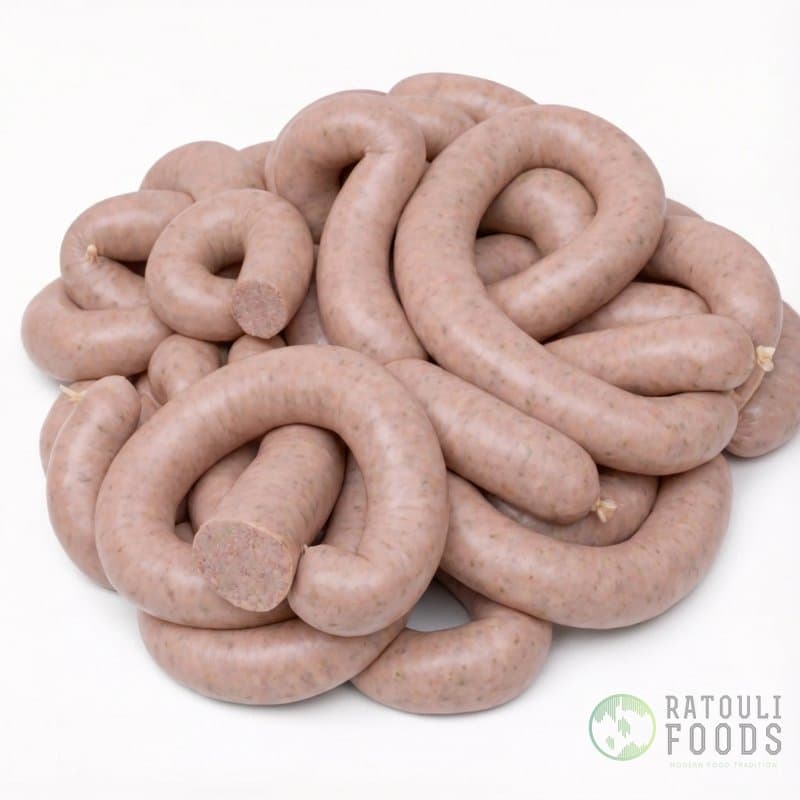
Count on 12 to 15 kilos of Surinamese sausage and 6 to 9 kilos of bakkeljauw (salted cod) per 100 guests per day, and order in 10kg cases of two 5 kilo strings, so you do not run out in the middle of a busy Saturday. Kwaku 2026 runs from Saturday 11 July through Sunday 2 August. Four weekends in Nelson Mandelapark in Amsterdam Zuidoost, and your stock has to last the whole run. This is the purchasing list nobody publishes: what you need per category, how the case format works, and when to have what delivered. Order from me before 11 July and I deliver fresh and on time for your stall.
Work out your weekend: visitor pressure, portion price and revenue per stall
Before you order kilos, work backwards from the till. Kwaku drew over 120,000 visitors (NOS, 2025), spread across four weekends, with tens of thousands of guests per weekend day. In 2025 there were around 100 food stands. You catch a share of that flow, not all of it.
Festival food at Kwaku sits between 6 and 12 euros per portion. Take an average of 8 euros. A stall doing 300 portions on a busy Saturday is looking at around 2,400 euros in revenue that day. If you mainly sell sausage in pieces from the broth and bakkeljauw rolls, every 100 portions translates roughly like this:
- 100 portions of sausage, warm and in pieces, averaging 130 grams per portion, is about 13 kilos of sausage.
- 100 bakkeljauw rolls, about 70 grams of cooked fish per roll, comes down to around 7 kilos of bakkeljauw measured at the weight before soaking.
Always start from your expected portions per day. Everything hangs on that. And estimate on the generous side rather than too tight: at Kwaku you almost always sell out, and reordering costs you a day.
Sourcing for your store or wholesale?
Request a quote or browse the full catalogue.
Kilos per 100 guests: vleesworst, bloedworst, kippenworst and fladder
Per 100 guests you count 12 to 15 kilos of Surinamese sausage and fladder (stewed strips of beef tripe) combined, based on 120 to 150 grams per portion served warm from the broth and cut into pieces. The split depends on your crowd. At the Kwaku table, vleesworst (meat sausage) and bloedworst (blood sausage) move fastest. Kippenworst (chicken sausage) covers guests who do not eat pork, and fladder sells as a festive dish, often alongside the warm sausages.
| Product | Portion | Per 100 guests | In 10kg cases |
|---|---|---|---|
| Vleesworst | approx. 130 g | 5 to 6 kg | half a case |
| Bloedworst | approx. 130 g | 4 to 5 kg | half a case |
| Kippenworst | approx. 130 g | 2 to 4 kg | quarter to half a case |
| Fladder | approx. 100 g | 2 to 3 kg | quarter case |
Add it up and per 100 guests you land on one generous 10kg case of sausage plus some fladder. Expecting 300 guests per day means three to four cases of sausage per day, plus fladder. A stall running the whole weekend quickly reaches six to eight cases of sausage per weekend. Kippenworst is the no-pork choice on the plate: 100% chicken, no pork. Stock plenty of it if you draw a lot of mixed crowd.
Case formats and string maths: the 10kg case (2x5kg) as the base unit
You buy Surinamese sausage wholesale by the 10kg case, and one case is two 5 kilo strings. That is your base unit for all the calculations. One 5 kilo string is roughly good for 38 to 40 portions of 130 grams, so a full case yields around 75 to 80 portions.
In practice that means:
- A busy day of 300 sausage portions is about four cases, eight strings.
- A quieter Sunday afternoon of 150 portions is about two cases.
- A full weekend at 250 portions per day is around six to seven cases.
Count in whole and half strings, not in single sausages. Then your purchasing matches what I deliver and you keep the broth filled all day without guessing. Vleesworst, bloedworst and kippenworst all come in that same 10kg format, so you simply split your cases by flavour based on what your stall sells.
Bringing along bakkeljauw and salted herring: portion maths for 30 to 800 guests
Bakkeljauw is salted, dried cod, and you count about 70 grams of cooked fish per roll or portion. Bakkeljauw first needs to be desalted, boiled out for about 20 minutes and drained 3 times, or soaked overnight with the water refreshed each time. In the process it loses moisture and salt. So calculate with your purchase weight and keep a margin.
Bakkeljauw sells in 10kg catering cases, and with those you can quote for 30 to 800 guests. A handy rule of thumb:
| Guests | Bakkeljauw rolls (approx.) | Bakkeljauw purchase |
|---|---|---|
| 30 | 30 | approx. 2.5 kg |
| 100 | 100 | approx. 7 to 9 kg (1 case) |
| 300 | 300 | approx. 20 to 25 kg (2 to 3 cases) |
| 800 | 800 | approx. 55 to 65 kg (6 to 7 cases) |
Salted herring comes along for anyone who puts it on the plate or in a roll. You calculate similarly there, with smaller portions, so per kilo you reach more guests than with sausage. The bakkeljauw roll is the classic on-the-go bite at Kwaku, so do not underestimate the demand if you put it on your menu.
Reorder rhythm around cashless sales and weekly payout
Kwaku is pin-only. On the grounds you cannot pay with cash; guests pay by pin or use the Kwaku payment card. For you as a stallholder there is something concrete behind that for your cash flow. Kwaku collects the revenue through that cashless system and pays stallholders weekly, in arrears, after deducting pitch fees and drink purchases. So between buying stock and getting paid there is easily a few weeks of slack.
That is why you plan your reorder rhythm around that payout, not against it. Two lines that work:
- Buy your biggest batch before the festival, before 11 July, while your cash flow is not yet under pressure. Then you are covered for the first weekend and part of the second.
- After that, reorder per weekend, early in the week, so a fresh delivery is ready for the Saturday. Your Tuesday reorder round then lines up with the payout from the weekend before.
This way you do not work your entire stock forward with money that is not in yet, and you still never run dry. Order from me and I will lock in a fixed delivery day for you for the whole festival. Saves you thinking about it every week.
Ordering schedule for four weekends: what to deliver when
The four weekends of Kwaku 2026 are 11-12, 18-19, 25-26 July and 1-2 August, each Saturday and Sunday from 14:00 to 23:00. You build your deliveries around that. A workable schedule for a stall running around 250 sausage portions per day, plus bakkeljauw rolls:
| When | What | Guideline |
|---|---|---|
| Before 11 July | Base stock weekend 1 with buffer | 6 to 8 cases of sausage, 2 to 3 cases of bakkeljauw |
| Tue 14 July | Top-up delivery weekend 2 | refill to 6 to 8 cases of sausage |
| Tue 21 July | Top-up delivery weekend 3 | refill based on your usage from weekend 2 |
| Tue 28 July | Top-up delivery weekend 4, the finale | buy tighter, you do not want to end with leftover stock |
The rule of thumb for the closing weekend: buy a bit tighter than the weekends before. You want to sell out on Sunday 2 August, not be left holding cases. Delivery is DAP, so I bring it to your address or your stall. Pickup is also possible if you prefer. Give me your expected portions per day and I will set this schedule to your numbers and deliver fresh, before every weekend.
Sourcing for your store or wholesale?
Request a quote or browse the full catalogue.
Sourcing or reselling salted fish? Our sister company Ratouli Seafood handles the trade side.