
Buying for Kwaku 2026: a wholesale checklist for caterers, restaurants and toko's
Kwaku Summer Festival 2026 runs from Saturday 11 July through Sunday 2 August in Nelson Mandelapark in Amsterdam Zuidoost, four weekends in a row. For caterers, restaurants and toko's that means one thing only: order now. Stallholders locked in their menu and prices before 15 June, so purchasing is in full swing. Anyone who wants to supply, or who runs their own stall, orders their vleesworst (coarse meat sausage), bloedworst (blood sausage), kippenworst (chicken sausage), fladder (stewed tripe strips), bakkeljauw (salted dried cod), salted herring and beef casings 1 to 3 weeks before 11 July. Below is the checklist, by category, with lead times and what an EU-approved supplier (NL208262EG) does differently from an anonymous frozen import.
Kwaku 2026 in brief: dates, weekends, Nelson Mandelapark and what that means for your stock
Kwaku Summer Festival 2026 runs from Saturday 11 July through Sunday 2 August, spread across four weekends. The location is Nelson Mandelapark, Anton de Komplein 240, 1102 DR Amsterdam Zuidoost, reachable via Bijlmer ArenA station. Between the weekends there are three separately ticketed Friday Night Concerts on the Fridays.
The four festival weekends are:
- 11 and 12 July
- 18 and 19 July
- 25 and 26 July
- 1 and 2 August
Each weekend Saturday and Sunday, from 2:00 PM to 11:00 PM. It is one of the largest multicultural festivals in the Netherlands. In 2025 the NOS reported over 120,000 visitors a year, and that same year there were around 100 food stands. Expect tens of thousands of visitors per weekend.
For your stock, what matters most is the rhythm. Not one peak, but four peaks in a row, with the heaviest pressure on Saturday. A box that runs empty in week 1 has to be back on the shelf in week 2. So plan your buying not as a single push, but as supplying and resupplying all through July.
Sourcing for your store or wholesale?
Request a quote or browse the full catalogue.
The buying window is now: why caterers and toko's order 3 weeks before 11 July
The buying window for Kwaku is open. Caterers and toko's order 1 to 3 weeks before 11 July, and stallholders submitted their menu and prices to the organisers before 15 June. So most stalls buy their stock in late June. Wait until the week before the festival and you are at the back of the queue at every supplier in the Netherlands.
There is another reason to be early and on the books with a fixed supplier. Kwaku is pin-only and cashless: all turnover runs through the Kwaku payment card and the card system, no cash can be paid on site, and stallholders are paid weekly in arrears, on Monday, minus pitch fee and drinks purchases. Between paying your facility costs up front and your first payout, you are easily looking at about six weeks. In that period you do not want any trouble with your stock. A supplier who delivers fresh and on time before 11 July takes that risk away.
Concretely: order your vleesworst, bloedworst, kippenworst and fladder by the end of June at the latest, lock in your resupplies per weekend, and agree who to call for a rush order during the festival.
The Kwaku buying list by category: vleesworst, bloedworst, kippenworst, fladder, bakkeljauw, salted herring, beef casings
These are the products that genuinely move at Kwaku and that you want in stock as a caterer, restaurant or toko. The Surinamese sausage stand is its own ritual, alongside the plates of roti and pom. The sausages go into a spiced broth with celery and pepper and are served warm, cut into pieces. Bloedworst and fladder were already sold out of the car boot at the very first Kwaku in 1975. So this is not a new trend, it belongs to the festival.
| Product | What it is | How it moves at Kwaku |
|---|---|---|
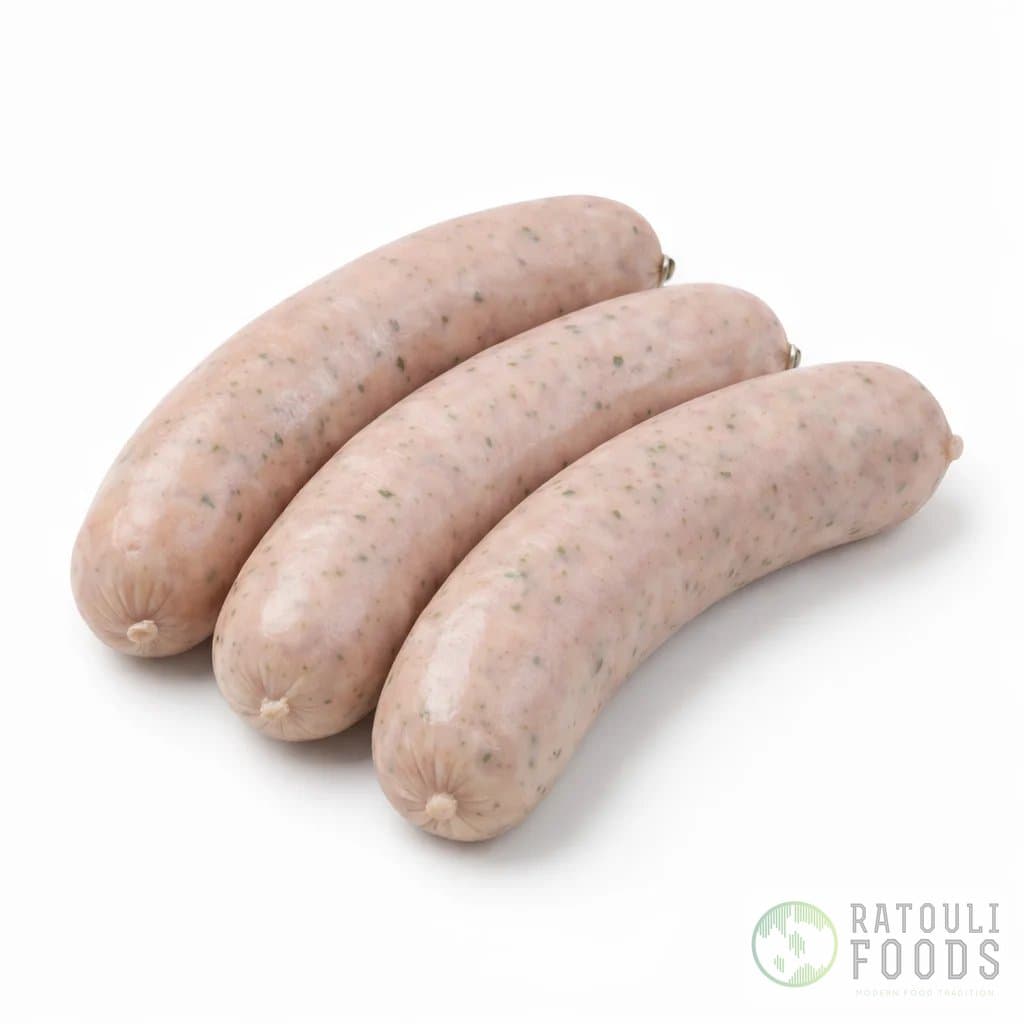
| Vleesworst | Coarse, firmly peppered, thicker than the Dutch sausage. | Warm out of the broth, in pieces. The fixed classic of the stand. |
| Bloedworst | Coarse, less sweet and creamier than boudin noir. | Warm out of the broth, alongside the other sausages. Has moved at Kwaku since 1975. |
| Kippenworst | The chicken version. 100% chicken, 100% halal ingredients, no pork. | Warm out of the broth. The choice for a mixed crowd. |
| Fladder | Thin strips of tripe, stewed in vegetable broth with Madame Jeanette. | In thin strips alongside the warm sausages. Eating fladder is a treat. |
| Bakkeljauw | Salted, dried cod. | The base of broodje bakkeljauw, heri heri and telo. Moves all day long. |
| Salted herring | Salted herring, for the toko and the home cook. | A steady take-home buy on the market tables around the festival. |
| Beef casings | Natural casing for anyone making or stuffing their own sausage. | For toko's and butchers who run their own sausage line. |
The core of the sausage stand is vleesworst, bloedworst, kippenworst and fladder. Bakkeljauw and salted herring are the take-home and home-cooking buys. Beef casings go to the toko and the butcher who stuffs their own. A vendor like CLAK Worst en Food sells exactly these sausages at Kwaku, so the demand for this range is not an assumption. It is simply there, every weekend.
What an EU-approved supplier (NL208262EG) delivers that a polystyrene box cannot
Ratouli Foods supplies as an EU-approved producer under approval number NL208262EG and works to a HACCP-based food safety plan. That is a verifiable number that tells you where your worst and bakkeljauw come from. The difference from an anonymous frozen import in a polystyrene box comes down to three points.
- Origin and traceability. With an EU approval number the whole chain is traceable. With an unknown import box you often know little more than the label on the outside.
- Fresh instead of thawed. A box that thaws and refreezes in transit loses structure and moisture. Fresh sausage delivered on time stands up on Saturday the way it should: firm and full of flavour, ready for the broth.
- A fixed supplier instead of a one-off batch. Across four weekends you want the same quality in week 4 as in week 1, plus someone you can call for a resupply.
On the chicken line it is simple: 100% chicken, 100% halal ingredients, no pork. You can pass that straight on to your own customers, no fuss.
Ordering, lead time and delivery (DAP) for the Kwaku season
The sausage leaves the wholesale operation in 10kg horeca boxes, usually two strings of 5kg per box, the format that large-volume users and caterers are used to. You order by the box, by the string or by the kilo, depending on your usage. Bakkeljauw likewise comes in 10kg catering boxes.
For the Kwaku season you keep to a simple schedule:
- End of June: place your main order for the first weekend (11 and 12 July) and reserve your volume for the weekends after that.
- Weekly: deliver or top up just before each weekend, so you go into Saturday fresh instead of with week-old stock.
- During the festival: keep a fixed line open for a rush resupply if a box runs empty faster than you expected.
Delivery can be DAP, delivered to your address, or you collect, whatever suits your route. Agree your delivery time in advance and you know exactly when the box arrives. The earlier you order, the more room there is in the delivery window before the rush of early July kicks off.
Direct contact: request a quote for your stall, business or toko
If you want to know what a box of vleesworst, bloedworst, kippenworst or bakkeljauw costs and when it can be delivered, request a quote with your desired quantity and your address. Tell us which weekends you are supplying for. Then we reserve your volume for the whole of July and agree the resupply rhythm right away.
Ratouli Foods supplies caterers, restaurants, toko's and stallholders. For the full sausage line with price per box and lead time there is the separate sausage wholesale, and the home cooks who are your customers will find the Kwaku table for home at the sister platform for the home kitchen. Order in good time, deliver fresh, and go into that first Saturday with peace of mind.
Sourcing for your store or wholesale?
Request a quote or browse the full catalogue.