
Why buying from an EU-approved Dutch supplier removes border friction
Bring frozen meat in from outside the EU and you deal with certificates, pre-notification, border checks and inspection fees. Buy from an approved establishment inside the EU and most of that goes away. Here is the plain version, no sales gloss.
Two ways frozen offal reaches your shop
There are really only two routes. One is import from a third country, where the goods clear a border control post, need a health certificate and get inspected before they move on. The other is a delivery from an establishment already inside the EU, where the goods are in free circulation and travel like any other EU shipment.
The route you pick decides your paperwork, your cost and how predictable your delivery date is.
Sourcing for your store or wholesale?
Request a quote or browse the full catalogue.
What an EU establishment number proves
An EU approval number, like our NL208262EG, means the facility is audited and cleared to process products of animal origin. It runs a HACCP plan, keeps traceability on every batch and gets inspected by the national authority. The number is not decoration. It is the first thing a serious buyer checks.
You can look ours up in the public NVWA inspection register. Ask any supplier for theirs and do the same.
Inside the EU: goods in free circulation
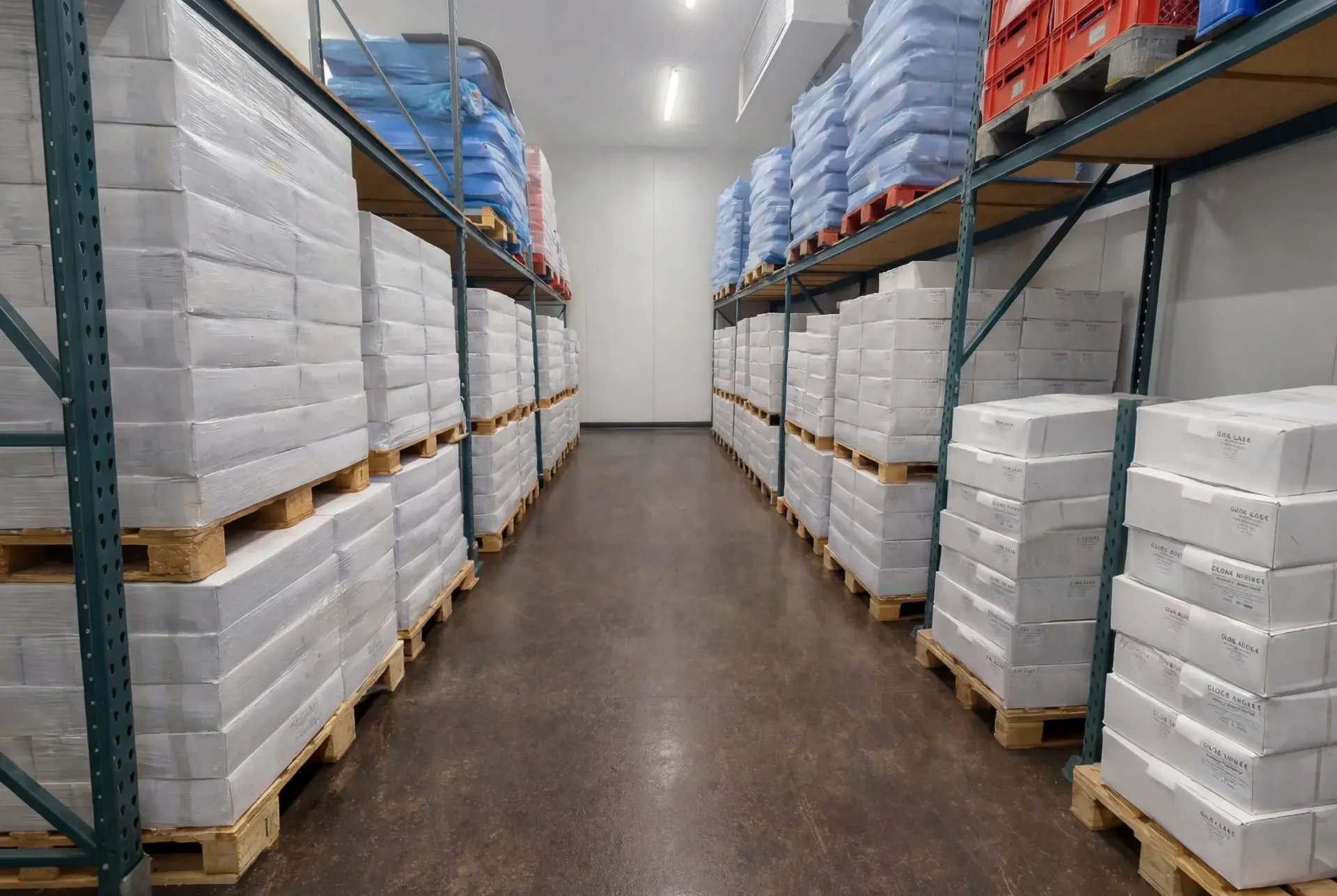
Buy frozen shaki and offal from our facility in Volendam and you are buying from inside the EU. For customers in Germany, France, Belgium, Spain and Italy, that means no third-country import checks, no border control post, no health certificate to arrange on your side. The pallet moves like a domestic delivery.
Faster, cheaper and easier to plan than importing the same product from outside the union.
The honest part about the UK
Since Brexit, a delivery from the EU to the UK counts as an import. It needs pre-notification on the UK system and a health certificate, and it can face checks on arrival. We are set up for this and we handle the export side, but it is not the frictionless intra-EU move. We would rather tell you that up front than pretend otherwise.
For UK buyers it still works. It just carries one step that an EU delivery does not.
What to ask a supplier
Three questions sort the serious suppliers from the rest. What is your EU establishment number? What are the delivery terms, and to which countries? Who handles the import paperwork, you or me?
For EU-mainland customers, the right supplier means almost none of this lands on you. Tell us your country and your volumes and we come back with the landed terms.
Sourcing for your store or wholesale?
Request a quote or browse the full catalogue.