

The margin on abodi: why frozen beef reed is a quiet earner for distributors
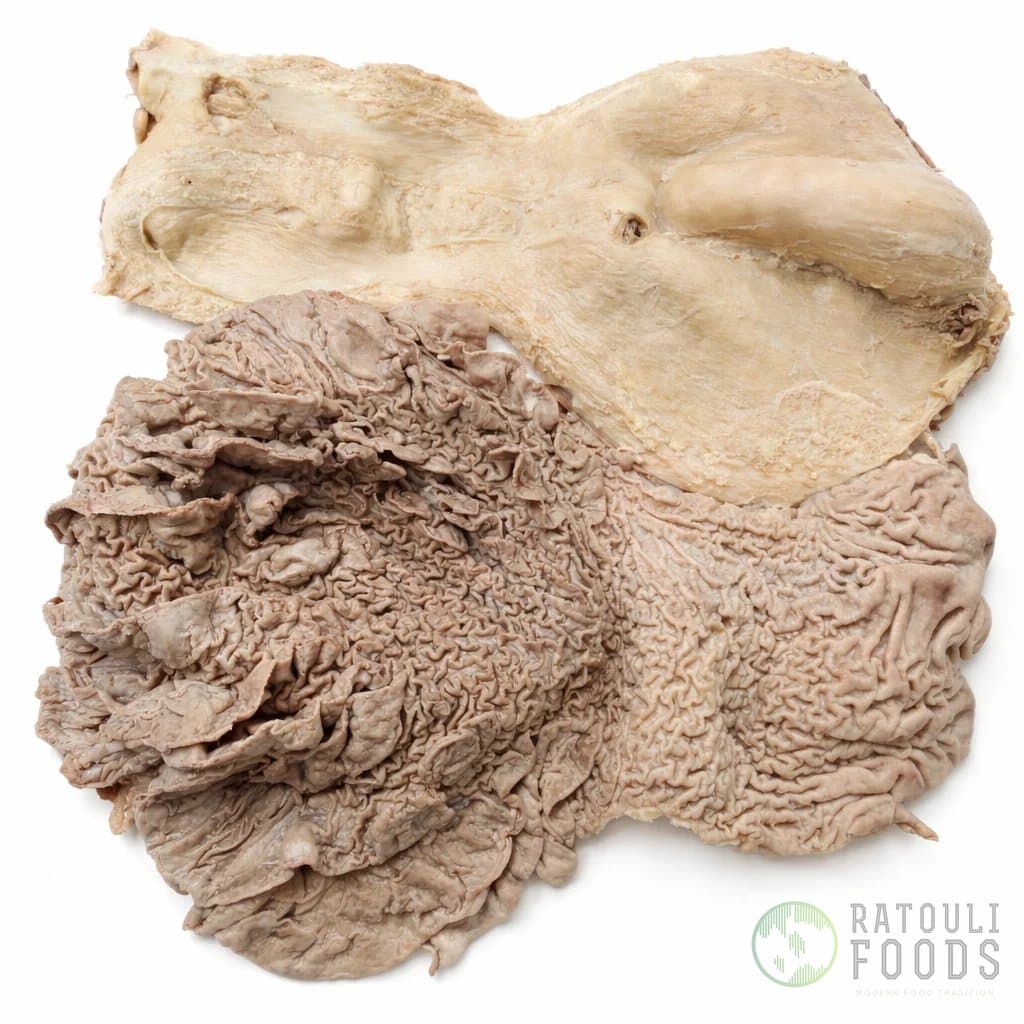
Abodi is beef reed, the cow's abomasum or fourth stomach. Your margin as a distributor sits between your landed case cost per kg and what your afro-store accounts will pay, with those stores reselling frozen at roughly GBP 4 to 8 per kg. It reorders quietly and steadily. Here is how to price the method, not chase a fixed quote.
What Abodi actually is, and why the name matters to your invoice
Get the product right before you talk margin, because the trade often does not. Abodi is beef reed. It is the abomasum, the cow's fourth and final stomach chamber, the true glandular stomach that works with acid and pepsin the way ours does. That is why it is the cheese stomach, the source of rennet. In Florence they sell the same organ as lampredotto in a bread roll. This is a delicacy with a long history behind it, not scrap.
Now the honest part. In the diaspora trade one product picks up half a dozen names: beef reed, reed tripe, reed crown when it is rolled into a ring, cow reed, cow stomach, maw, rennet-bag. In search and on some cases you will see abodi spelled abody, abudi or abuddi. Some sellers tag it loosely as beef intestine, which is wrong. The definition is short. Abodi is beef reed is the abomasum. Pin that down on your own paperwork. When your names wobble, your accounts lose confidence and your reorders soften.
One line to keep clean on every order. Abodi is reed, the abomasum. Shaki is honeycomb tripe, the reticulum, a different chamber. They are not interchangeable, and your customers know it even when the labels do not. Run them as two clean lines.
Sourcing for your store or wholesale?
Request a quote or browse the full catalogue.
The two numbers behind your frozen offal margin
The margin on Abodi is not complicated. Plenty of distributors still price it by feel and give away cash on both ends. List too high and your afro-store accounts trim their orders or call the next importer. List too low and you are shifting frozen weight for nothing. It comes down to two numbers.
First, your landed cost per kg. That is the case price divided by the kilos in the case, plus your share of freight and cold-chain handling. Buy from us and it arrives frozen at -18°C, delivered DAP across NL, BE, DE, FR, ES, IT and the UK. The price you agree is close to the price that lands in your cold store. No surprise import or clearing bill bolted on after the fact. On offal that matters, because a few cents per kg of hidden cost eats a thin line fast.
Second, what the channel below you will carry. Your accounts, the afro and West-African stores, resell frozen Abodi at roughly GBP 4 to 8 per kg, the same band as other frozen tripe and offal on their shelf. Their shelf price is the ceiling on your wholesale price into them. Your gross margin is your sell price to the store minus your landed cost, divided by your sell price. The beef reed wholesale price you set has to leave the store enough room to make their own retail margin, or the line stalls. Reading that gap and pricing inside it, case after case, is the whole game.
Reading the UK retail bands honestly
I will be straight with you. Nobody can hand you a fixed price that holds across every city and every month. Reed moves with the cattle market, with freight, with how many containers landed that week. What I can give you is the band the stores below you work inside, so you can set your wholesale list with their resale in mind.
Treat the table as a working frame, not a quote. It is the retail end. Your job is to sit your wholesale price under it with room for the store to earn.
| Abodi on the store shelf | Typical UK retail band | Who buys it |
|---|---|---|
| Standard frozen reed, mixed cut | GBP 4 to 6 per kg | Everyday pepper soup and assorted meat pots |
| Clean reed, well cut and dressed | GBP 6 to 7 per kg | Buyers who want a tidy, even cut for nkwobi and ofada |
| Premium reed crown, trimmed | GBP 7 to 8 and up per kg | Occasion cooking, festival and Eid spreads |
Read the abodi price per kg at retail, then back into your own. If the store sells clean reed at GBP 6.50 and needs a working margin, your wholesale has to land well under that once their handling is in. Build your list off what your accounts actually tell you, not a number you hope for.
Pack-size economics and why scalded-and-cut protects the line
Pack size is not a packaging detail. It decides how your accounts turn stock and how much they bin, and that decides whether they reorder. We run Abodi in two cases, both scalded, cleaned, cut and frozen: 12 x 1 kg and 24 x 500 gram. They suit different shops. A good distributor carries both.
- 12 x 1 kg suits steady-throughput accounts whose buyers cook in volume for big pots of pepper soup, egusi and assorted meat. Bigger units, fewer to handle, a slightly lower cost per kg, and full kilos that move before thaw-and-refreeze becomes a problem.
- 24 x 500 gram suits higher-footfall and smaller-household shops. The half-kilo unit is an easier price point on the shelf, the store sells a single pack without breaking a kilo, and it carries more individual sale units out of the same freezer space.
Here is the part most margin math skips. The reed lands scalded, cleaned and cut, dressed white instead of green. The hard prep is already done in an EU-approved plant under HACCP, NL208262EG, with a public NVWA inspection record. Raw green stomach looks cheaper on paper, then it costs your account on the back end. Scrubbing with salt and vinegar, scraping the lining, par-boiling, weight lost to trim and drain-off. Every kilo shrinks before it sells. Supply clean reed and your account keeps the margin they planned and throws away far less. That is the account that reorders without being chased. It is smoother than Shaki to chew, takes pepper and spice well, and cooks down clean in a mixed pot where the tougher offal goes in first.
Why a steady reed line reorders well alongside Shaki
Here is the quiet bit, and it is where the money is for a distributor. Abodi is not a hero line. It is a dependable one. It rides in the same assorted-meat pot as Shaki, ponmo and roundabout, so a store that carries one usually wants the set. Supply Shaki and not reed, and you are sending that account to a second importer for half their offal order. Second importers have a habit of taking the whole basket.
So carry both as clean, named lines and let them pull each other. The buyer comes for Shaki, sees you list reliable reed too, and consolidates the order on you. That is a stickier relationship than any single hot product. If you want the companion read, our Shaki retail-margins post walks the same maths from the store's side, and the two pair well when you are setting a joint list.
Then stock the calendar. Offal demand is not flat. It climbs for the New Yam Festival in August, around Eid, and through December, when families cook assorted meat, nkwobi, ofada and ayamase, and big festival pots. Carry deeper reed and Shaki into those weeks, hold your wholesale list steady or firm it, and your margin per kg rises without you touching the product. Reed nutrition sits in the normal tripe range, lean, high in complete protein with a good collagen share and strong on B12, so it earns its shelf space on the plate as well as on the invoice. As a beef reed supplier that delivers DAP, frozen and pre-cut, with the naming kept straight, you give your accounts one less reason to split their order. That is how a quiet line becomes a reliable earner.
Sourcing for your store or wholesale?
Request a quote or browse the full catalogue.
Related guides